Chinese EV makers are outpacing U.S. automakers in overseas investments
Source Entity
US Top News and Analysis
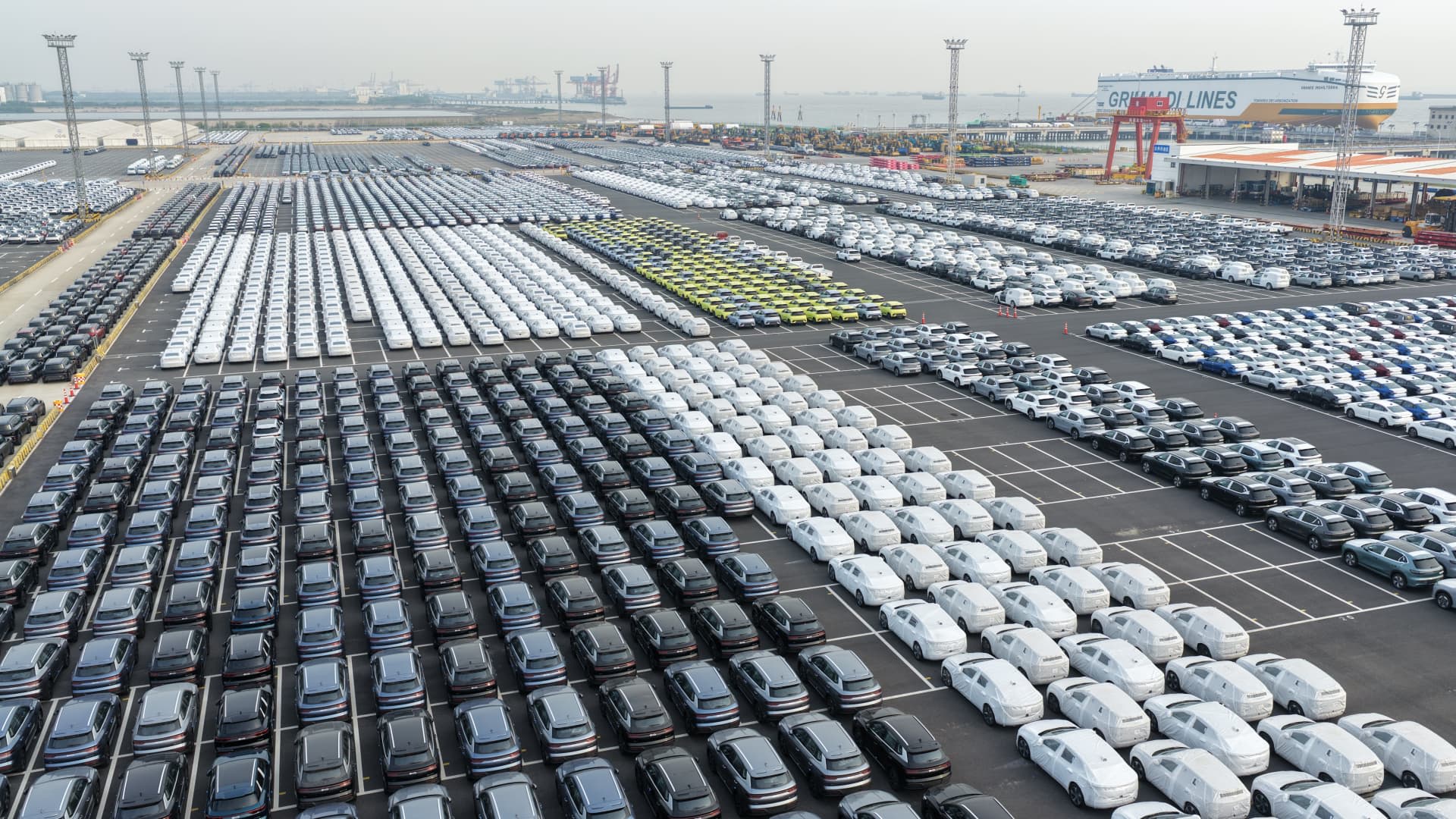
China has a saturated domestic market, which has led Chinese companies to look elsewhere to sell electric vehicles.
The Global Pivot: Chinese EV Expansion and the Race for Market Dominance
The global automotive landscape is currently witnessing a seismic shift as Chinese electric vehicle (EV) manufacturers aggressively pivot from their home turf to international markets. The core driver of this transition is the saturation of the Chinese domestic market, which has seen an unprecedented surge in EV adoption and a proliferation of local brands. This domestic overcrowding has triggered brutal price wars and reduced profit margins, forcing industry giants to seek growth through overseas investments. By establishing production hubs and sales networks abroad, Chinese firms are not merely exporting cars; they are exporting their entire industrial ecosystem.
The Catalyst: Domestic Saturation and Overcapacity
For years, the Chinese government provided massive subsidies and policy support to catalyze the EV transition, leading to a rapid build-up of production capacity. However, as the market reached a tipping point of saturation, the supply of vehicles began to exceed domestic demand. This overcapacity has created a strategic imperative for companies like BYD and Geely to look beyond China's borders. The shift is a survival mechanism; to maintain growth trajectories and utilize their massive manufacturing scales, these companies must capture market share in regions where EV penetration is still in its early or middle stages, such as Southeast Asia, Latin America, and Europe.
Comparative Analysis: China vs. the United States
When compared to U.S. automakers, the pace of Chinese overseas investment is markedly more aggressive. While U.S. legacy automakers like Ford and General Motors have struggled with the costly transition from internal combustion engines to electric powertrains, Chinese firms have entered the global stage with a "born-electric" advantage. Even Tesla, the vanguard of U.S. EVs, operates on a different model focused on a few massive "Gigafactories," whereas Chinese firms are employing a diversified strategy of joint ventures, local plant acquisitions, and Greenfield investments across multiple continents to bypass trade barriers and localize production.
Strategic Geographic Targets and Localized Production
Chinese EV makers are strategically targeting regions that offer a combination of growing demand and favorable trade conditions. Southeast Asia, particularly Thailand and Indonesia, has become a primary hub due to its proximity and growing middle class. In Europe, investments in countries like Hungary serve as a gateway to the European Union's single market, allowing Chinese firms to avoid high import tariffs by producing vehicles within the EU's borders. This strategy of "localization" is critical, as it reduces logistics costs and allows these companies to tailor their vehicle offerings to local consumer preferences and regulatory requirements.
Geopolitical Friction and Trade Implications
This rapid expansion has not occurred without significant friction. The sheer speed at which Chinese automakers are outpacing U.S. and European counterparts has sparked concerns over "economic dumping" and unfair state subsidies. This has led to a wave of protectionist measures, including anti-subsidy probes by the European Commission and increased tariffs by the U.S. government. The tension highlights a broader geopolitical struggle: the battle for control over the future of mobility. The ability of Chinese firms to sustain their investment momentum despite these headwinds will determine whether the global EV standard is defined by Western or Eastern technological frameworks.
The Technological Edge: Vertical Integration
One of the primary reasons Chinese firms can outpace U.S. investments is their superior vertical integration. Many Chinese EV makers own their battery supply chains or have deep partnerships with battery giants like CATL. Since the battery is the most expensive component of an EV, this integration allows for lower production costs and faster scaling. While U.S. automakers are still racing to secure mineral supplies and build domestic battery plants, Chinese firms are leveraging their established supply chain dominance to fund and accelerate their overseas expansions, creating a competitive gap that is increasingly difficult to close.
Conclusion: A New Era of Automotive Hegemony
In summary, the movement of Chinese EV makers into global markets is a direct consequence of domestic saturation and a calculated strategic play for global leadership. By outinvesting U.S. automakers in key overseas regions, China is positioning itself as the primary architect of the global electric transition. As these companies continue to localize production and refine their global supply chains, the automotive industry is likely to move toward a multi-polar reality where Chinese brands are as ubiquitous in Europe and Asia as American brands were in the 20th century. The outcome of this investment race will ultimately reshape global trade dynamics and the environmental trajectory of the transport sector.