Christopher Nolan says people ‘disdain’ AI and the idea it will replace humans is ‘nonsense’
Source Entity
Guardian staff and agencies
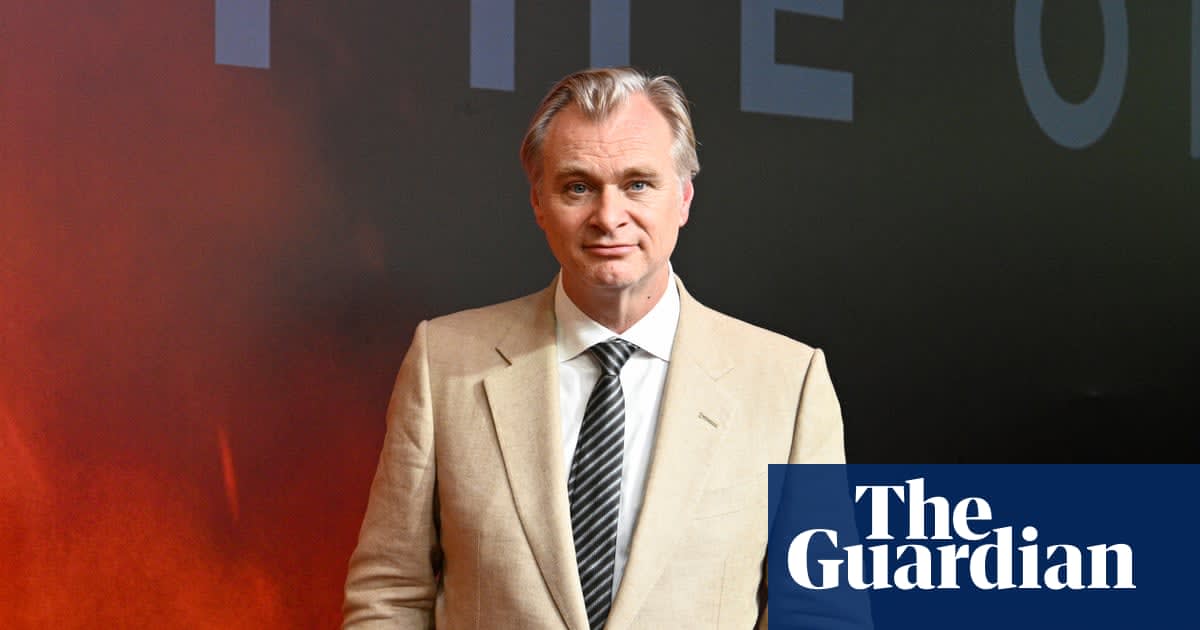
<p>Odyssey director addresses industry fears over artificial intelligence and says rightwing criticism of Lupita Nyong’o as Helen of Troy is ‘irrelevant’</p><p>The Oscar-winning director Christopher Nolan believes the kind of movies he makes – big-budget action films shot mostly on location – would survive the spread of artificial intelligence, a technology he says many people “disdain”.</p><p>The Oppenheimer and The Dark Knight director is promoting <a href="https://www.theguardian.com/film/2026/jul/07/christopher-nolan-odyssey-critic-reactions-damon-pattinson-holland-hathaway">his latest blockbuster</a>, an adaptation of the Greek epic The Odyssey, which will be released in cinemas this week.</p> <a href="https://www.theguardian.com/film/2026/jul/13/christopher-nolan-odyssey-director-comments-ai-artificial-intelligence">Continue reading...</a>
The Humanist Stand: Christopher Nolan on the AI Frontier
In the midst of an escalating global debate regarding the role of generative artificial intelligence in the arts, Oscar-winning director Christopher Nolan has firmly planted his flag in the camp of human exceptionalism. While promoting his latest cinematic undertaking, Odyssey—a grand adaptation of the Greek epic—Nolan has characterized the fear that AI will replace human creators as "nonsense." This stance is not merely a dismissal of technology but a defense of the tactile, experiential nature of cinema that Nolan has championed throughout his career.
The Resilience of Practical Cinema
Nolan’s confidence stems from his specific approach to filmmaking: the creation of big-budget action films shot primarily on location. By emphasizing the physical reality of production, Nolan argues that the "soul" of cinema is found in the unpredictable synergy between human actors, physical environments, and the director's vision. In an era where AI can generate photorealistic imagery, Nolan posits that the audience's innate desire for authenticity—knowing that a scene was captured in a real place with real people—creates a value proposition that algorithms cannot replicate. This philosophy mirrors his previous commitments to practical effects in films like Oppenheimer and The Dark Knight, suggesting that the more digital the world becomes, the more valuable the physical becomes.
Deconstructing the 'AI Disdain'
Interestingly, Nolan observes that many people "disdain" AI, suggesting a growing cultural backlash against the sterilization of art. By labeling the idea of human replacement as "nonsense," he addresses the existential anxiety currently permeating the entertainment industry, from screenwriters to VFX artists. Nolan's perspective suggests that while AI may serve as a tool for efficiency or rote tasks, it lacks the intentionality and emotional intelligence required to steer a narrative epic like Odyssey. He views the creative process not as a series of data points to be optimized, but as a series of human choices driven by intuition and experience.
Casting Controversy and Artistic Sovereignty
Beyond the technological debate, Nolan's comments regarding the casting of Lupita Nyong’o as Helen of Troy highlight his commitment to artistic sovereignty over political pressure. By dismissing right-wing criticism of the casting as "irrelevant," Nolan reinforces the idea that the reimagining of classical myths should be driven by talent and vision rather than rigid adherence to historical or ethnic stereotypes. This intersection of technology and casting reflects a broader theme in Nolan's current work: a refusal to let external "algorithms"—whether they be software or social media echo chambers—dictate the parameters of his storytelling.
Broader Implications for the Film Industry
The timing of these statements, coinciding with the release of Odyssey, serves as a manifesto for the "prestige" blockbuster. As studios increasingly experiment with AI-driven scripts and digital doubles, Nolan's success provides a blueprint for a counter-movement. If Odyssey performs well, it will likely embolden other directors to double down on location shooting and human-centric casting, potentially creating a bifurcated market: one side consisting of AI-optimized content and the other of high-art, human-driven cinema.
Conclusion: The Future of the Epic
Ultimately, Christopher Nolan's assertions suggest a future where AI and high-end cinema coexist, but do not merge. By framing the replacement of humans as an impossibility, he challenges the industry to stop viewing AI as an inevitable successor and instead view it as a separate, lesser entity. As Odyssey hits theaters, it stands as a testament to Nolan's belief that the grandest stories are those told through the lens of human experience, captured in the physical world, and cast with a vision that transcends narrow cultural expectations.