Cancelled by your future self? The fear isn’t censorship. It’s permanence
Source Entity
The Indian Express
Written by Azhar Ahmad and Maleeha Shafi While editing a college magazine, our team once decided against publishing an article written by a professor. The piece wasn’t inaccurate, poorly argued or co...
The Digital Panopticon: Analyzing the Fear of Permanence
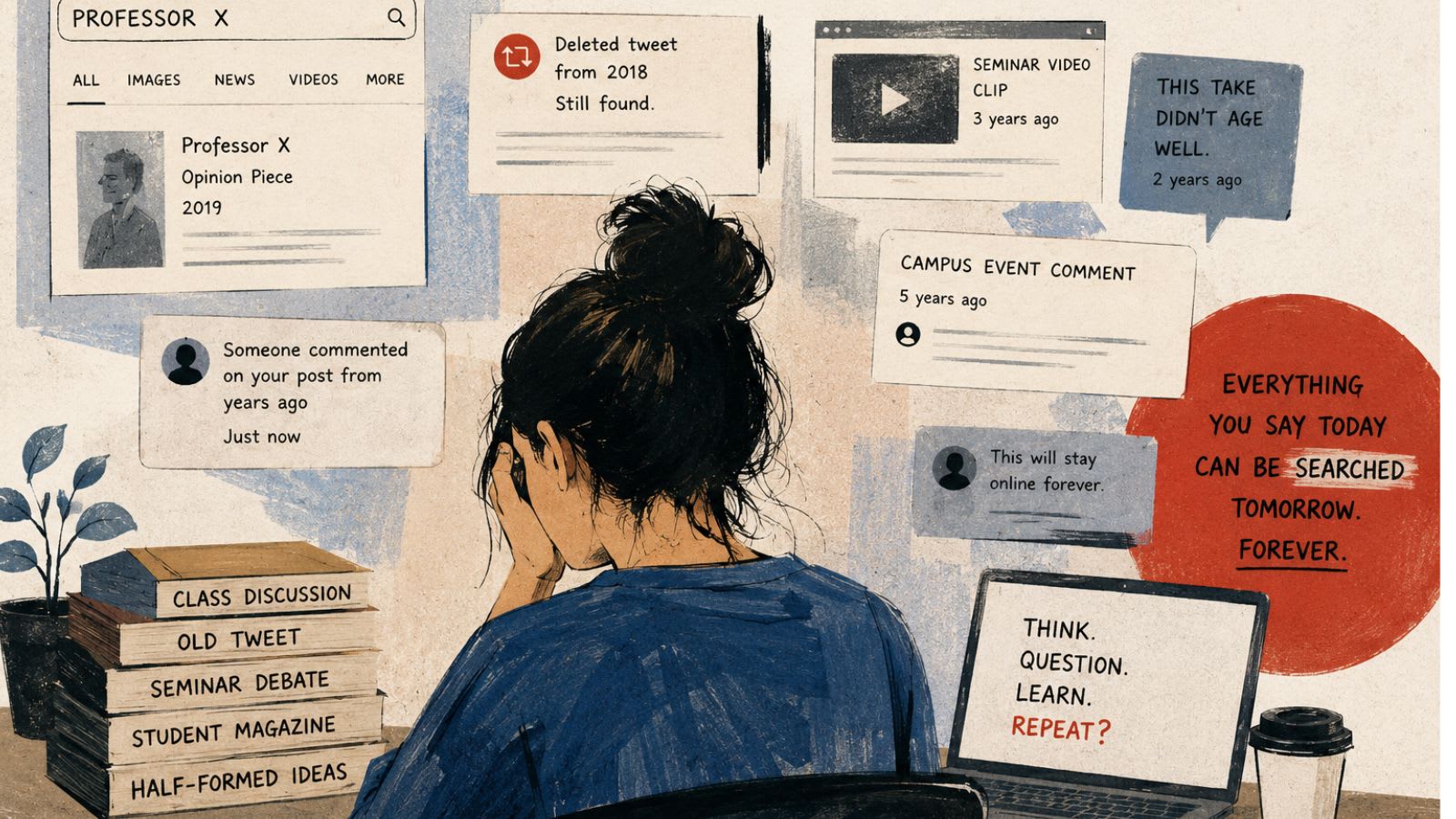
In the essay "Cancelled by your future self? The fear isn’t censorship. It’s permanence," authors Azhar Ahmad and Maleeha Shafi present a poignant critique of the modern digital existence. The core premise shifts the conversation around 'cancel culture' away from the traditional lens of censorship—the act of silencing a voice—and toward the terrifying reality of an indelible record. By using an anecdote about the editorial decision to withhold a professor's article, the authors highlight a fundamental shift in how we perceive the lifespan of our ideas. We are no longer fighting to be heard; we are fighting to be allowed to change.
The Erosion of Ephemerality
Historically, human communication was largely ephemeral. Spoken words vanished into the air, and print media, while permanent, was often geographically limited and physically degradable. The digital revolution has fundamentally altered this dynamic. Every social media post, email, and digital comment is essentially archived in a global, searchable database. As the authors suggest, this permanence creates a state of constant surveillance—not necessarily by a government entity, but by the collective memory of the internet. The 'fear' discussed is the realization that our current selves are permanently tethered to every iteration of our past selves, regardless of how much we have grown or evolved in the interim.
The Temporal Clash of Social Norms
One of the most critical implications of digital permanence is the conflict between evolving social standards and static archives. Social morality is not a fixed point; it is a fluid set of norms that shift over time. However, a digital footprint is a frozen snapshot of a specific moment. When a person is 'cancelled' for a comment made a decade ago, it is often a clash between the moral framework of the present and the documented behavior of the past. This creates a precarious environment where individuals are judged by their least evolved version, effectively denying the human capacity for intellectual and emotional growth.
The Psychological Burden of the Permanent Record
This permanence introduces a unique psychological stressor: the anxiety of the 'future self.' The authors argue that the dread is not about being silenced today, but about being condemned tomorrow. This leads to a chilling effect on authentic expression. If every thought is potentially permanent and subject to future re-evaluation, individuals may adopt a sanitized, performative version of themselves to avoid future liability. This 'preventative censorship' is a internal mechanism where the individual censors themselves not out of a lack of conviction, but out of a fear of the permanent record.
Future Trends: The Quest for Digital Forgetting
Looking forward, this tension is likely to drive a demand for new legal and technological frameworks centered on the 'Right to be Forgotten.' We are already seeing the beginnings of this with GDPR regulations in Europe, but the cultural shift will require more than just legislation. There will likely be a growing movement toward 'digital hygiene' and the adoption of platforms that prioritize ephemerality (such as disappearing messages) as a way to reclaim the human right to evolve. The struggle will be between the internet's nature as an archive and the human need for forgiveness and renewal.
Conclusion: Reclaiming the Right to Evolve
Ultimately, Ahmad and Shafi's analysis serves as a warning about the dehumanizing nature of total recall. By framing the issue as a fear of permanence rather than a fear of censorship, they highlight the existential threat posed by a world that never forgets. To survive the digital age without losing our authenticity, society must develop a collective capacity for grace—recognizing that the version of a person captured in a digital archive from years ago is not necessarily the person standing before us today.