Increased drone surveillance of illegal July 4th fireworks led to $100K fine
Source Entity
Jeremy Hsu
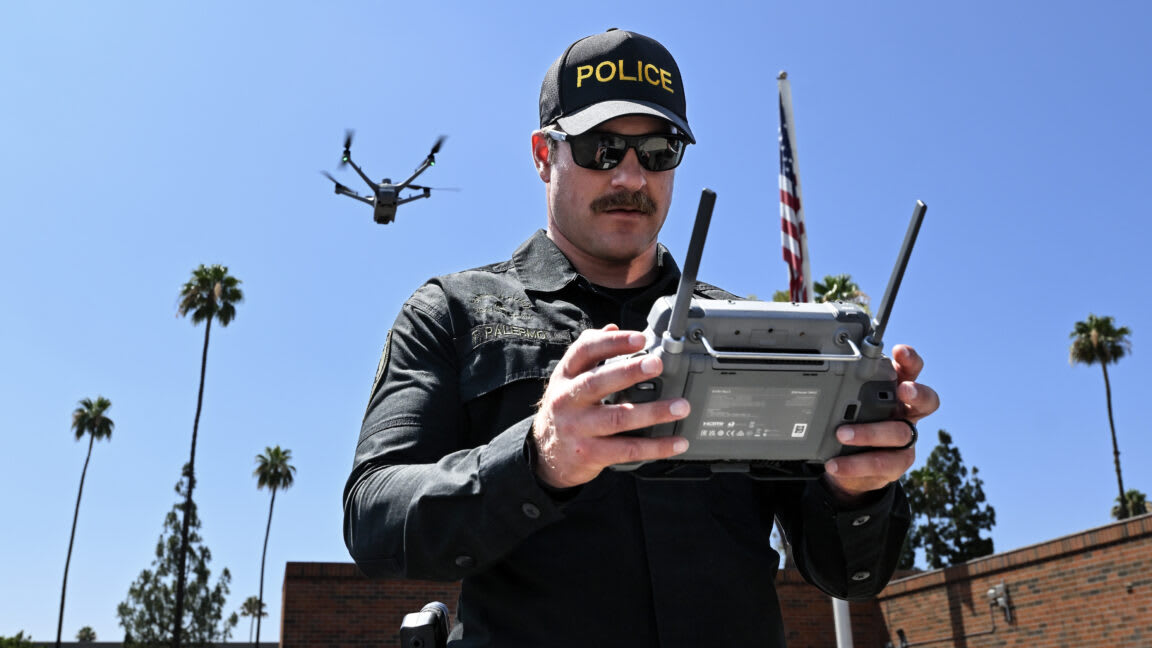
More police and firefighters use drones to catch and deter illegal fireworks.
The Digital Eye in the Sky: Drone Enforcement and the $100K Fireworks Crackdown
For decades, the enforcement of illegal fireworks bans during Independence Day celebrations was a game of cat-and-mouse. Police officers and firefighters relied on auditory cues and citizen reports to locate violators, often arriving too late to catch the perpetrators in the act. However, a paradigm shift is occurring. The recent imposition of a staggering $100,000 fine—facilitated by increased drone surveillance—signals a new era of precision policing and public safety management during high-risk holidays.
The Technological Shift in Surveillance
The deployment of Unmanned Aerial Vehicles (UAVs), or drones, by police and fire departments represents a move from reactive to proactive enforcement. Unlike ground patrols, which are limited by fences, traffic, and visibility, drones provide a bird's-eye view of entire neighborhoods in real-time. Equipped with high-definition cameras and, in some cases, thermal imaging, these drones can pinpoint the exact coordinates of a firework launch almost instantaneously. This capability eliminates the anonymity that previously protected those ignoring local ordinances, turning the sky into a surveillance grid that makes evasion nearly impossible.
Analyzing the Financial Deterrent
The $100,000 fine mentioned in the report is a critical data point. Such a massive penalty suggests that authorities are no longer treating illegal fireworks as mere nuisances but as significant public safety threats. From a legal perspective, the use of drone footage provides "irrefutable evidence"—time-stamped, geo-located video that can be used in court to secure convictions and high-value fines. This financial blow serves as a powerful deterrent, shifting the cost-benefit analysis for individuals or organized groups who might otherwise risk a small ticket for the sake of a celebration.
Public Safety and Environmental Imperatives
To understand why authorities are investing so heavily in drone technology for this purpose, one must look at the broader environmental context. In many regions, July 4th coincides with peak drought conditions and high fire risks. A single misplaced firework can ignite a catastrophic wildfire or destroy urban structures, placing an immense strain on firefighting resources. By using drones to catch and deter illegal launches, fire departments are not just enforcing a law; they are practicing preventative disaster management to avoid the multi-million dollar costs associated with fire suppression and property loss.
The Tension Between Tradition and Regulation
This trend highlights an escalating tension between traditional cultural celebrations and the modern state's capacity for surveillance. While fireworks are a staple of American Independence Day, the "panopticon effect" created by aerial drones changes the social dynamic of the holiday. The knowledge that one is being watched from above creates a psychological deterrent that may eventually lead to a cultural shift toward professional, city-sanctioned displays over private, illegal ones. This represents a broader trend where technology is used to sanitize and regulate public behavior for the sake of collective safety.
Future Trends: AI and Autonomous Detection
Looking ahead, the integration of Artificial Intelligence (AI) will likely enhance these efforts. We can expect the transition from manually piloted drones to autonomous swarms capable of "acoustic triangulation." In this scenario, ground-based sensors would detect the sound of a firework launch and automatically dispatch a drone to the exact location to record the violator. This automation will further increase the efficiency of law enforcement, making the $100,000 fine not an anomaly, but a standard outcome for those who defy safety regulations.
Conclusion
The transition to drone-led enforcement for July 4th fireworks is a clear intersection of public safety necessity and technological advancement. By leveraging UAVs, authorities have effectively closed the gap between the commission of an offense and the collection of evidence. While the $100,000 fine serves as a stark warning, the true victory for city officials lies in the deterrence factor, ensuring that the celebration of independence does not result in the destruction of community property or the loss of life due to preventable fires.