Elon Musk Confirms Starlink Can Deliver Reliable 10 Gigabit-a-Second Upload and Download Speeds Anywhere On Earth
Source Entity
Yahoo Finance
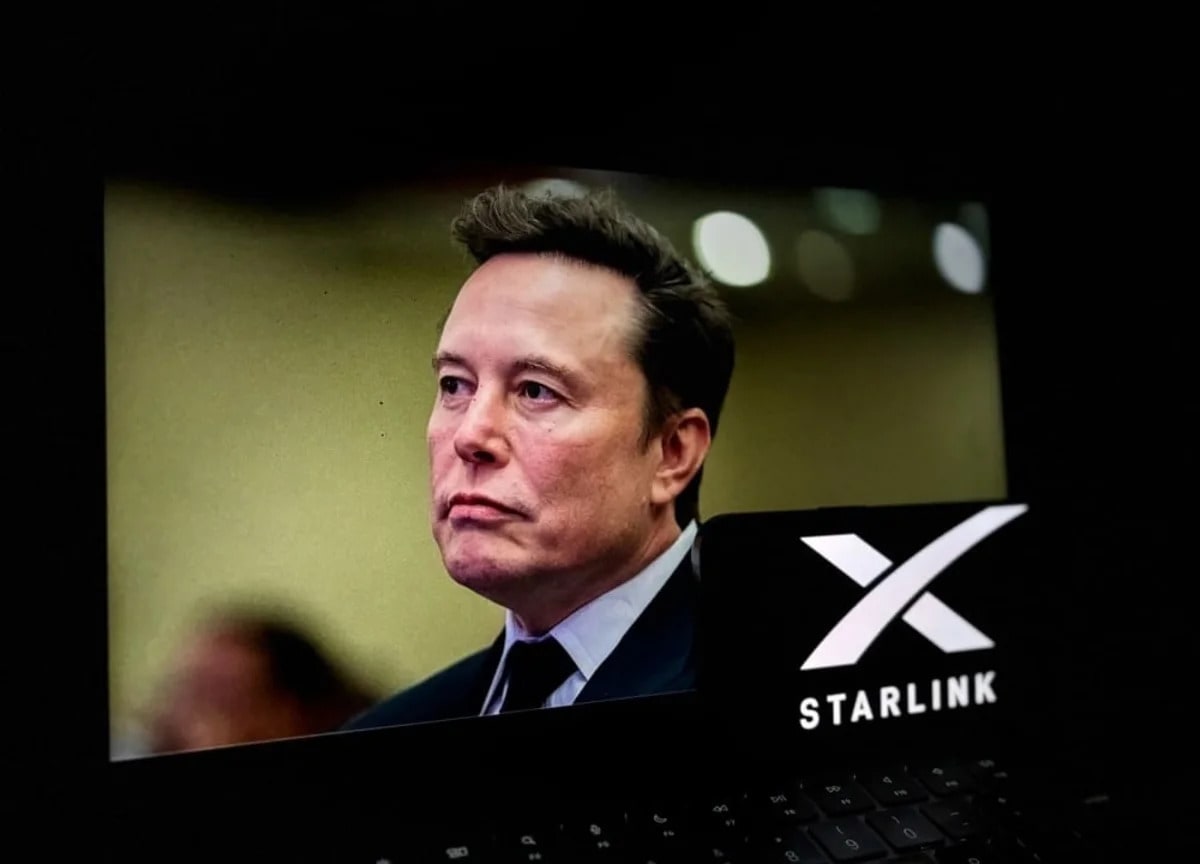
Benzinga and Yahoo Finance LLC may earn commission or revenue on some items through the links below. Elon Musk said Thursday that SpaceX's Starlink can now provide reliable 10-gigabit-per-second uplo...
The Dawn of Ultra-High-Speed Global Connectivity
Elon Musk's recent confirmation that SpaceX's Starlink can now deliver reliable 10 gigabit-per-second (Gbps) upload and download speeds globally represents a potential paradigm shift in how the world accesses data. For years, satellite internet was viewed as a last-resort option—slow, latent, and prone to instability. By targeting 10 Gbps, Starlink is not merely competing with other satellite providers; it is positioning itself to outperform the vast majority of terrestrial fiber-optic connections available to residential and small-business users today.
Technical Implications and Infrastructure
To achieve such staggering speeds, Starlink must leverage its sophisticated Low Earth Orbit (LEO) constellation and advanced inter-satellite laser links. Unlike traditional geostationary satellites that orbit at 35,000 km, Starlink's LEO satellites operate much closer to Earth, significantly reducing latency. The move to 10 Gbps suggests a massive increase in spectral efficiency and data throughput capabilities. The "reliability" aspect mentioned by Musk is the most critical component; maintaining a 10 Gbps stream requires seamless hand-offs between satellites moving at thousands of miles per hour, all while mitigating atmospheric interference and signal degradation.
Bridging the Global Digital Divide
The broader implications for global equity are profound. For decades, the "digital divide" has hindered economic and educational growth in rural and underdeveloped regions where laying physical fiber-optic cables is geographically impossible or financially unviable. By providing 10 Gbps speeds "anywhere on Earth," Starlink effectively eliminates the geographic lottery of internet access. This capability could catalyze a revolution in telemedicine, allowing high-resolution, real-time surgical consultations in remote villages, and empower remote education with immersive, high-bandwidth tools that were previously reserved for elite urban institutions.
Disruption of the Telecommunications Market
From a business perspective, this announcement puts immense pressure on traditional Internet Service Providers (ISPs). Most consumer fiber plans peak at 1 Gbps; a reliable 10 Gbps satellite service renders the physical tether of a cable almost obsolete for a wide range of users. This competitive pressure may force terrestrial providers to accelerate their own infrastructure upgrades or lower prices to retain customers. Furthermore, it sets an incredibly high bar for competitors like Amazon's Project Kuiper, which is striving to build a similar LEO network, potentially cementing SpaceX's dominance in the satellite broadband market.
Enabling the Next Generation of Technology
Looking toward future trends, 10 Gbps speeds are the prerequisite for the next wave of computing. The transition toward a truly hyper-connected world—characterized by the "Internet of Everything"—requires massive bandwidth. This includes the seamless integration of 8K video streaming, real-time holographic communication, and the widespread adoption of Augmented Reality (AR) and Virtual Reality (VR) for professional collaboration. Moreover, the ability to upload at 10 Gbps is a game-changer for cloud computing and Big Data, allowing remote enterprises to sync massive datasets with central servers in seconds rather than hours.
Conclusion
In summary, Elon Musk's claim regarding Starlink's 10 Gbps capability is more than just a technical milestone; it is a strategic move to redefine the internet as a global utility rather than a localized service. While the rollout and accessibility of the hardware required to handle such speeds will be the next hurdle, the underlying network capability signals a future where high-speed connectivity is a universal constant, regardless of a user's coordinates on the map.