Elon Musk is building a form of capitalism that Adam Smith would hate
Source Entity
Latest News: Today's Latest News Headlines from India & World | Hindustan Times | Hindustan Times
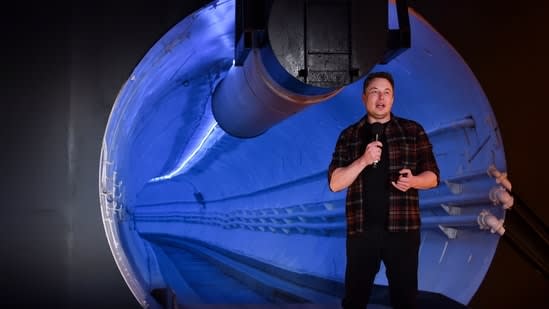
An AI shaped under the governance of Mr Musk’s xAI will not carry the same values as one shaped under a structure that still answers to somebody.
The Convergence of AI and Autocratic Capitalism
The emergence of xAI, Elon Musk's venture into artificial intelligence, represents more than just a technical challenge to industry giants like Google and OpenAI; it signifies a fundamental shift in the philosophy of corporate governance. The assertion that Musk is building a form of capitalism that Adam Smith would hate strikes at the heart of the tension between classical market dynamics and the modern era of the 'technoking.' While Adam Smith's vision of capitalism relied on the 'invisible hand'—a system where competition and decentralized decision-making lead to optimal societal outcomes—Musk's approach is characterized by extreme vertical integration and singular, centralized control.
The Conflict with Classical Economic Theory
Adam Smith's economic framework was built upon the premise that individuals acting in their own self-interest within a competitive market would naturally create value for society. However, the structure of xAI suggests a departure from this equilibrium. By consolidating power and reducing the layers of accountability, Musk is creating a corporate environment where the 'hand' is no longer invisible but is instead the direct hand of a single architect. This model bypasses the traditional checks and balances of corporate boards and shareholder pressures that typically temper the impulses of a CEO, effectively replacing market-driven governance with personal ideology.
AI Governance and the Absence of Oversight
At the core of the concern is the governance of the AI itself. The provided context emphasizes that an AI shaped under the governance of xAI will not carry the same values as one shaped under a structure that "still answers to somebody." In traditional corporate structures, AI development is often subject to ethical review boards, fiduciary duties to a diverse set of shareholders, and regulatory compliance frameworks. When an AI is developed in a vacuum of accountability, its objective functions and 'moral' alignments are determined solely by the founder's worldview. This creates a precarious situation where the AI's values are not a reflection of a societal consensus or a market requirement, but a mirror of one man's philosophy.
The Risks of Singular Value Alignment
This lack of external answerability has profound implications for the safety and deployment of Artificial General Intelligence (AGI). If the governance of xAI is purely autocratic, the risk of 'value drift' increases—where the AI optimizes for goals that may be beneficial to Musk's broader ecosystem (including X and Tesla) but potentially detrimental to the broader public interest. Unlike traditional firms that must balance profit with public image and legal liability to survive, a structure that answers to no one can afford to take ideological risks that could have systemic consequences for the information ecosystem.
Broader Implications for the Tech Industry
Musk's trajectory with xAI may signal a broader trend toward 'founder-led absolutism' in the technology sector. As AI becomes the primary engine of economic productivity, the entities that control these models will wield power comparable to nation-states. If the dominant model of AI capitalism is one that rejects traditional oversight, we may see a future where the digital infrastructure of the world is governed by a handful of individuals whose only accountability is to their own vision. This represents a pivot from the competitive, fragmented market Smith envisioned toward a new form of digital feudalism.
Conclusion: A New Economic Paradigm
In summary, the development of xAI is a litmus test for the future of capitalism in the age of AI. By stripping away the traditional mechanisms of corporate accountability, Elon Musk is not merely building a company, but testing a hypothesis: that progress is faster when the friction of governance is removed. However, the cost of this speed is the loss of the systemic safeguards that classical capitalism intended to provide. The result is a high-stakes gamble where the values of the most powerful technology in human history are tethered to a single individual, fundamentally challenging the democratic and market-based ideals of the modern economic era.
Verification Required?