Google CEO Sundar Pichai shares thanks note for Jeff Bezos and Lauren Sánchez’s fund
Source Entity
TOI TECH DESK
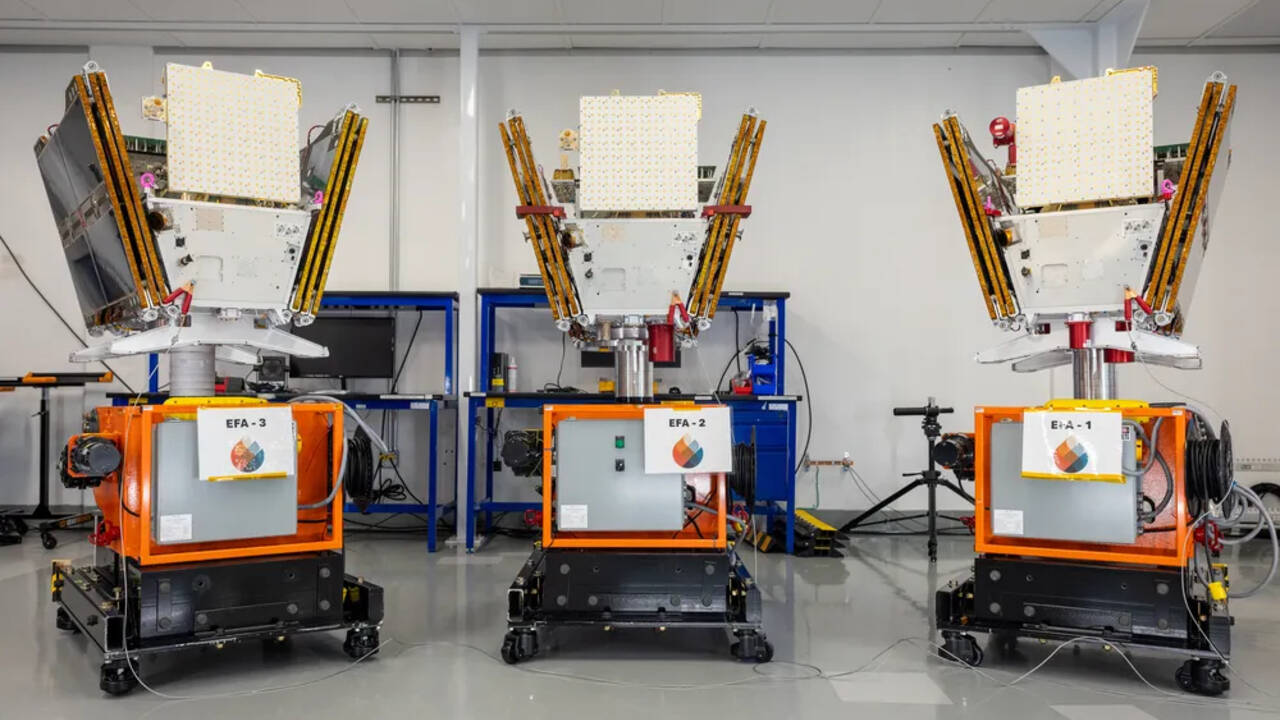
Google CEO Sundar Pichai thanked partners for launching new wildfire detection satellites. These advanced FireSat satellites can spot fires invisible to existing technology. The expanded satellite network builds upon a successful pilot program launched last year. The Bezos Earth Fund provided a significant new investment to support this vital project. This initiative aims to provide near real-time wildfire updates globally.
Scaling Global Vigilance: The Google and Bezos Earth Fund FireSat Initiative
In a significant move toward mitigating the devastating impacts of climate-driven disasters, Google CEO Sundar Pichai recently expressed his gratitude to Jeff Bezos and Lauren Sánchez for the Bezos Earth Fund's substantial investment in the FireSat project. This partnership represents a convergence of massive philanthropic capital and cutting-edge technological infrastructure, aimed at solving one of the most pressing environmental challenges of the 21st century: the increasing frequency and intensity of wildfires. By deploying a specialized network of satellites, the initiative seeks to close the critical gap between fire ignition and emergency response.
The Technological Leap: Beyond Conventional Detection
At the core of this initiative is the FireSat satellite network, which is designed to identify wildfires that are essentially "invisible" to existing satellite technology. Most current monitoring systems rely on coarse resolution or infrequent revisit times, often missing small, nascent ignitions until they have already grown into uncontrollable blazes. FireSat utilizes advanced sensors capable of detecting smaller heat signatures and providing near real-time updates. This capability is transformative; by identifying a fire in its earliest stages, emergency services can intervene before a localized spark evolves into a regional catastrophe, potentially saving thousands of lives and protecting vast tracts of biodiversity.
From Pilot to Global Deployment
This expanded network is not a speculative venture but a scaling of a successful pilot program launched last year. The transition from a pilot phase to a full-scale global deployment indicates that the underlying technology has been validated and is ready for operational use. The pilot likely served as a proof-of-concept, demonstrating that the satellites could accurately pinpoint heat sources without an overwhelming number of false positives. With the new funding from the Bezos Earth Fund, Google can now move toward a constellation of satellites that ensures comprehensive global coverage, removing the "blind spots" that currently plague international wildfire monitoring.
The Synergy of AI and Space Infrastructure
While the satellites provide the raw data, the true power of FireSat lies in the integration with Google's AI and data processing capabilities. The ability to process terabytes of satellite imagery in near real-time requires immense computational power and sophisticated machine learning algorithms to distinguish between a controlled burn and a dangerous wildfire. This synergy between Bezos's funding and Google's technical ecosystem creates a feedback loop: the satellites provide the eyes in the sky, and Google's AI provides the brain to interpret that data, delivering actionable intelligence to first responders and government agencies worldwide.
Broader Environmental and Socio-Economic Implications
The implications of the FireSat project extend far beyond simple fire detection. Wildfires are a primary driver of carbon emissions, creating a vicious cycle where fires release CO2, which accelerates warming, leading to more fires. By suppressing fires earlier, this project directly contributes to carbon sequestration efforts by preserving forests. Furthermore, the socio-economic burden of wildfires—including the destruction of infrastructure, loss of agriculture, and skyrocketing insurance costs—is immense. A global, near real-time detection system provides a layer of systemic resilience for vulnerable communities, particularly in the Global South where detection infrastructure is often lacking.
Future Trends: Predictive Modeling and Autonomous Response
Looking forward, the data harvested by FireSat will likely feed into a new generation of predictive wildfire models. By combining real-time heat maps with weather data and vegetation moisture levels, Google and its partners may soon be able to predict not just where a fire is, but where it is most likely to start. We can anticipate a future where this data is integrated directly into public alert systems and perhaps even autonomous firefighting drones that are dispatched the moment FireSat detects a thermal anomaly. This shift from reactive to proactive disaster management marks a new era in planetary stewardship.
Conclusion
The collaboration between Sundar Pichai's Google and the Bezos Earth Fund is a landmark example of how private sector resources and technological expertise can be harnessed for the global public good. FireSat is more than just a technological upgrade; it is a critical piece of infrastructure in the global fight against climate change. By providing the world with a near real-time "smoke detector" from space, this initiative significantly enhances the capacity of humanity to protect its forests, its people, and its future.