Grok uploaded my user directory to xAI's servers
Source Entity
Hacker News
<a href="https://news.ycombinator.com/item?id=48892512">Comments</a>
Security Alert: Grok CLI Reportedly Exfiltrates User Home Directories
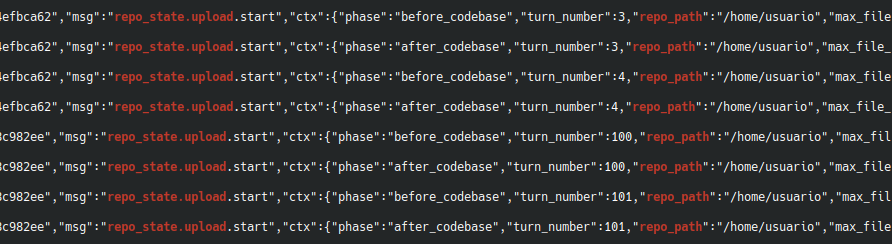
Recent reports emerging from the developer community, specifically via discussions on Hacker News, have highlighted a critical security and privacy incident involving the Grok Command Line Interface (CLI). Users have discovered that the tool unexpectedly uploaded their entire home directories to xAI's servers and Google Cloud Storage (GCS). This event represents a significant breach of user trust and a potentially catastrophic security failure, as the home directory in Unix-like systems typically contains the most sensitive configuration files and personal data of a user.
The Technical Gravity of Home Directory Uploads
To understand the severity of this event, one must consider what resides within a standard user home directory. Beyond simple documents, these directories contain hidden configuration folders (dotfiles) that often store plaintext API keys, SSH private keys in the .ssh folder, bash history containing sensitive commands, and cloud provider credentials (such as .aws or .gcloud folders). If the Grok CLI recursively uploaded the entire directory, it has effectively exfiltrated the "keys to the kingdom" for the affected users, potentially granting xAI or any unauthorized actor with access to those GCS buckets full access to the users' remote servers and cloud infrastructure.
Architectural Failure vs. Intentional Design
From a software engineering perspective, a CLI tool designed for AI interaction should operate on a principle of least privilege. The act of uploading a full home directory is not a standard operation for a productivity tool and suggests either a severe bug in the file-handling logic or a dangerously over-aggressive data collection strategy. Whether this was an accidental recursive upload triggered by a misplaced wildcard or a deliberate attempt to gather context for the AI model, the lack of granular user consent and explicit warnings makes this a critical failure in the tool's design and safety auditing process.
xAI's Rapid Deployment Culture
This incident reflects a broader trend seen in xAI's operational philosophy, which mirrors the "move fast and break things" ethos often associated with Elon Musk's ventures. While rapid iteration allows for the quick deployment of cutting-edge LLM features, the application of this speed to system-level tools (CLIs) is perilous. Unlike a web-based chatbot where the sandbox is the browser, a CLI tool operates directly on the host operating system. The failure to implement strict path-limiting or a "whitelist" approach to file access indicates a gap in the security review pipeline before the tool reached the public.
The Risks of 'Agentic' AI Integration
This event serves as a cautionary tale for the industry's shift toward "Agentic AI"—tools that don't just answer questions but perform actions on a user's behalf. As AI companies strive to give their models more context to be more helpful, the temptation to scrape local environments increases. However, as seen with the Grok CLI, the line between "contextual awareness" and "unauthorized data exfiltration" is thin. This will likely accelerate the demand for sandboxed AI environments where the model interacts with a virtualized file system rather than the actual user home directory.
Future Trends and Mitigation Requirements
Moving forward, it is predictable that users will become increasingly skeptical of granting high-level shell permissions to AI-driven tools. We are likely to see a push toward "Local-first AI" or the adoption of strict capability-based security models where users must explicitly approve every single file path accessed by a CLI. For xAI, the immediate necessity is a transparent audit of what data was collected, a confirmation of whether that data was used for training, and a clear directive for users to rotate all SSH keys and API secrets that may have been compromised.
Summary of Impact
In summary, the Grok CLI incident is a stark reminder of the security risks inherent in integrating AI tools directly into the local operating system. By uploading entire home directories to the cloud, xAI has potentially exposed users to identity theft and system compromise. This event underscores the urgent need for rigorous security auditing in the race to deploy AI agents, emphasizing that convenience must never supersede the fundamental security principle of data minimization.
Multiple Citing Sources