How Growize Farms is reimagining future of agriculture
Source Entity
Latest News: Today's Latest News Headlines from India & World | Hindustan Times | Hindustan Times
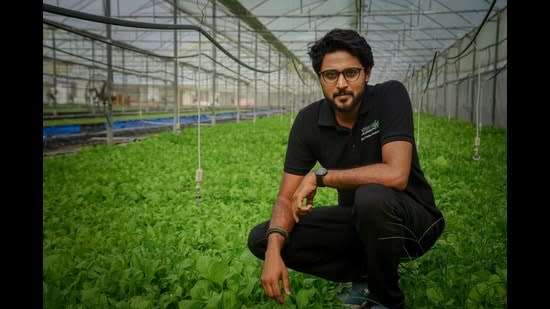
The Bengaluru-based company’s co-founder Arvind Narayanan says Growize brings structure, and modern systems to commercial agriculture
The Modernization of Agriculture: An Analysis of Growize Farms
Introduction
Growize Farms, emerging from the technological epicenter of Bengaluru, represents a strategic shift in how commercial agriculture is approached in India. By focusing on the intersection of structured management and agricultural production, the company seeks to move beyond traditional farming methods toward a more industrialized, efficient model. Co-founder Arvind Narayanan has explicitly stated that the company's mission is to bring "structure and modern systems" to the sector, signaling a transition from legacy-driven farming to a data-informed, business-centric operation.
The Imperative for Structural Reform
Arvind Narayanan's emphasis on "structure" highlights a critical pain point in commercial agriculture: the lack of standardized operational procedures. Traditionally, commercial farming has often relied on intuitive knowledge and fragmented processes, which can lead to significant waste and unpredictable yields. By introducing structure, Growize Farms is likely implementing rigorous protocols for crop rotation, soil health monitoring, and resource allocation. This systemic approach reduces the volatility associated with farming, transforming it from a high-risk gamble into a predictable business enterprise.
Integrating Modern Systems into Commercial Farming
The "modern systems" mentioned by the company likely encompass a wide array of AgTech integrations. In the context of Bengaluru's tech ecosystem, this typically involves the deployment of IoT (Internet of Things) sensors for real-time moisture and nutrient tracking, AI-driven predictive analytics for weather and pest control, and streamlined supply chain management software. By digitizing the agricultural lifecycle, Growize Farms can optimize every input—from seed quality to water usage—ensuring that commercial farming is not just larger in scale, but smarter in execution.
The Broader Indian Agricultural Landscape
To understand the significance of Growize Farms, one must consider the broader Indian agricultural context. India is currently witnessing a transition from subsistence farming to high-value commercial agriculture. However, this transition is often hindered by a lack of professional management. Growize Farms is positioning itself as a bridge in this gap, applying the corporate rigor of the tech world to the organic complexity of the field. This alignment is essential for India to meet the food security demands of its growing population while maintaining environmental sustainability.
Economic Scalability and Commercial Viability
By treating agriculture as a structured business, Growize Farms is addressing the scalability issue that plagues many small-to-medium commercial farms. Modern systems allow for a "modular" approach to farming, where successful protocols can be replicated across different geographies with minimal variance. This scalability is key to attracting investment and ensuring that commercial agriculture can compete with other industrial sectors in terms of ROI (Return on Investment). The shift toward professionalized management likely leads to higher quality produce, which in turn commands better pricing in both domestic and export markets.
Future Trends in AgTech
The trajectory of Growize Farms suggests a future where the role of the "farmer" evolves into that of an "agricultural manager." We can predict a trend where more startups in the Bengaluru region will pivot toward "Farm-as-a-Service" (FaaS) models, providing the structure and systems that Narayanan advocates for to other landholders. As climate change introduces more variables into farming, the reliance on the structured, systemic approach championed by Growize will likely become a necessity rather than a competitive advantage, as only structured systems can adapt quickly to shifting environmental data.
Conclusion
In summary, Growize Farms is not merely planting crops but is planting the seeds of a systemic overhaul in commercial agriculture. By prioritizing structure and modern systems, Arvind Narayanan and his team are tackling the inefficiencies that have historically limited the growth of the sector. If successful, the Growize model could serve as a blueprint for the professionalization of agriculture across India, leading to a more resilient, profitable, and sustainable food production system.
Verification Required?