SpaceX Falcon lands on legs, China's on a net — how will Isro's reusable rocket come home?
Source Entity
Latest News: Today's Latest News Headlines from India & World | Hindustan Times | Hindustan Times
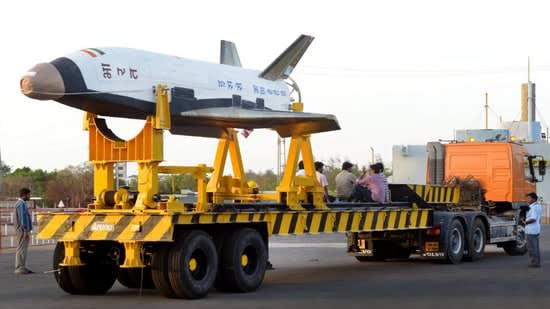
From helicopter drop-tests to a still-unscheduled orbital trial, what Isro's RLV programme has achieved, and how it differs from SpaceX and China.
The Race for Reusability: Analyzing ISRO's RLV Ambitions
The global aerospace landscape is currently undergoing a paradigm shift, moving away from the era of expendable launch vehicles toward a sustainable model of reusability. The core objective is simple yet daunting: drastically reduce the cost of accessing space by ensuring that the most expensive components of a rocket—the first stage and boosters—can be recovered and flown again. While the world has watched SpaceX revolutionize this field, the Indian Space Research Organisation (ISRO) is carving its own path with its Reusable Launch Vehicle (RLV) program, introducing a distinct engineering philosophy to the conversation.
Divergent Engineering: Legs, Nets, and Wings
To understand the significance of ISRO's approach, one must first analyze the existing benchmarks. SpaceX utilizes propulsive landing, where the Falcon 9 booster uses its own engines to decelerate and land vertically on retractable legs. This requires immense precision and a significant fuel reserve. In contrast, China has explored various recovery methods, including the use of nets or mechanical catchers to snag returning stages. ISRO, however, is focusing on a winged, autonomous landing approach. Unlike the vertical descent of a SpaceX booster, ISRO's RLV is designed more like a space plane, utilizing aerodynamic lift to glide back to a runway, thereby distributing the landing force across a wider surface area and potentially offering more flexibility in landing sites.
The Path to Mastery: From Helicopter Drops to Orbital Trials
ISRO's progress is characterized by a methodical, incremental testing strategy. The program has successfully conducted a series of RLV-LEX (Landing Experiment) trials, where a prototype was dropped from a helicopter to test its autonomous navigation, approach, and touchdown capabilities. These tests are critical because they validate the vehicle's ability to 'think' and adjust its flight path in real-time without human intervention. However, the transition from a low-altitude helicopter drop to a full-scale orbital trial represents a massive leap in complexity. An orbital reentry involves enduring extreme thermal stress and hypersonic speeds, necessitating advanced heat-shielding materials and more robust control surfaces that can survive the transition from vacuum to atmosphere.
Strategic and Economic Implications for India
For ISRO, the RLV program is not merely a technical exercise but a strategic economic imperative. India has long been known for providing cost-effective satellite launch services via the PSLV and GSLV. However, as the commercial launch market becomes more competitive, the ability to reuse hardware will be the primary driver of price leadership. By mastering RLV technology, India can further lower the cost per kilogram to orbit, making it an even more attractive destination for global commercial satellite operators and enabling more ambitious domestic missions, such as the establishment of a permanent space station or lunar colonies.
Overcoming the 'Valley of Death' in Aerospace Development
Despite the successful drop-tests, the lack of a scheduled orbital trial highlights the inherent risks of aerospace engineering. The 'valley of death' for the RLV program lies in the integration of the propulsion system with the gliding airframe. Developing a vehicle that can both launch a payload into orbit and then glide back to Earth requires a delicate balance of weight, strength, and aerodynamics. ISRO must ensure that the added weight of the wings and landing gear does not overly compromise the payload capacity, which is the primary metric of a rocket's utility.
Future Trends: A Multi-Polar Reusable Economy
Looking forward, the success of the RLV program will likely signal the emergence of a multi-polar reusable launch economy. We are moving toward a future where different recovery methods—propulsive, winged, and captured—will coexist based on the specific mission requirements. Winged vehicles like ISRO's RLV are particularly suited for payloads that require a gentle return to Earth or for vehicles that can operate as shuttles between Earth and low-Earth orbit (LEO). As ISRO moves toward its orbital trials, the global community will see if the gliding approach provides a more sustainable alternative to the fuel-heavy propulsive landing model.
Conclusion
ISRO's RLV program represents a bold step toward democratizing space access. While SpaceX and China have set the pace with their respective methods, India's focus on autonomous gliding landings offers a unique technical alternative. The journey from helicopter-assisted tests to orbital reality is fraught with challenges, but the successful realization of this technology will solidify India's position as a top-tier space power, ensuring that the 'homecoming' of its rockets is as precise and efficient as their ascent.
Verification Required?