The New York nurses replaced by AI: ‘It should concern every patient who cares about quality of care’
Source Entity
Michael Sainato
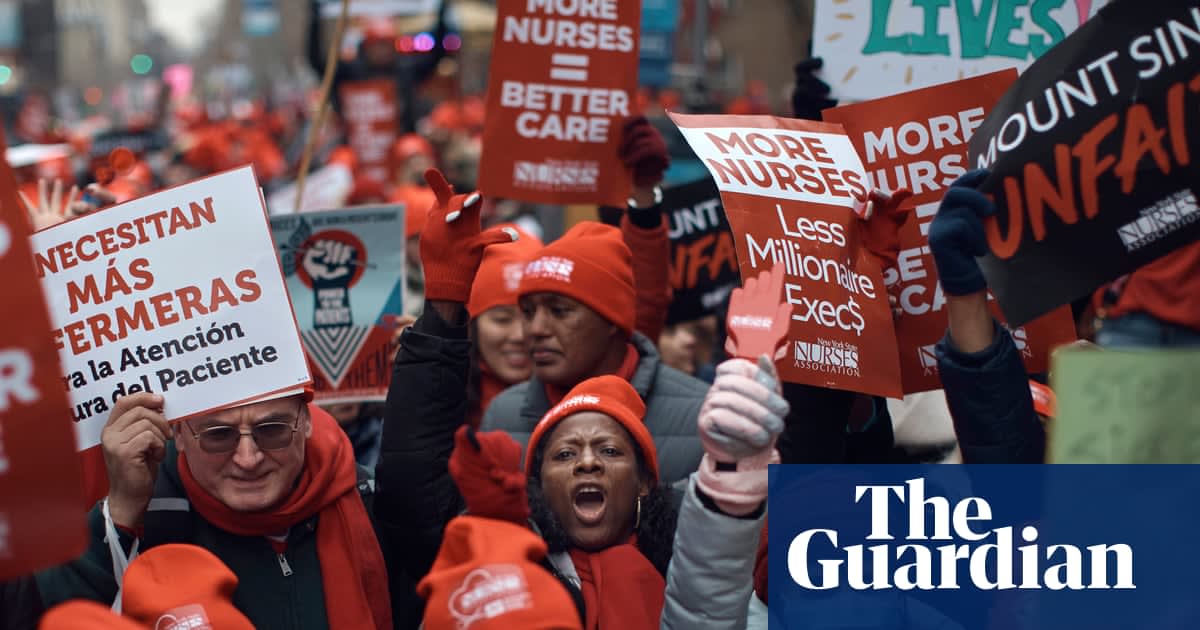
<p>The union for 12 nurses laid off by Montefiore hospital say company broke contract they recently won through a strike</p><p>Marilyn Shuler has worked as a utilization review nurse for 39 years at Montefiore hospital in the Bronx in New York City, helping to read patient charts and communicate with insurance companies over coverage.</p><p>After nearly four decades in her job, Shuler is one of 12 nurses who was laid off Sunday after being replaced with AI-powered software, according to the New York State Nurses Association (NYSNA), which represents nurses at the hospital.</p> <a href="https://www.theguardian.com/technology/2026/jul/13/nurses-new-york-ai">Continue reading...</a>
The Automation of Advocacy: AI Replacement of Nurses at Montefiore Hospital
In a move that signals a precarious shift in the intersection of healthcare and technology, Montefiore hospital in the Bronx, New York, has replaced 12 utilization review nurses with AI-powered software. This decision has not only resulted in the loss of seasoned professionals—including Marilyn Shuler, a veteran with 39 years of experience—but has also ignited a fierce labor dispute. The New York State Nurses Association (NYSNA) contends that these layoffs are a direct violation of a contract the union recently won through a strike, suggesting a systemic tension between corporate cost-cutting measures and the contractual protections of healthcare workers.
Understanding the Role of Utilization Review
To understand the gravity of these layoffs, one must examine the specific function of a utilization review nurse. These professionals act as the critical bridge between clinical care and insurance reimbursement. Their primary responsibility involves auditing patient charts to ensure that the care provided is medically necessary and communicating with insurance companies to secure coverage. This is not a purely administrative task; it requires a deep understanding of clinical nuances, patient history, and the ability to advocate for a patient's needs against the rigid criteria often imposed by insurance providers. By replacing this human oversight with AI, the hospital is transitioning from a nuanced, advocacy-based model to an algorithmic one.
Labor Conflict and Contractual Breach
The timing of these layoffs is particularly contentious. The NYSNA emphasizes that the hospital's actions undermine a hard-won agreement achieved through collective bargaining and industrial action. When workers strike for better conditions and job security, the subsequent replacement of those roles with automation can be viewed as a strategic evasion of labor commitments. This creates a dangerous precedent in the healthcare sector, where the 'efficiency' of AI is used as a justification to bypass union-negotiated protections, potentially weakening the bargaining power of healthcare workers across the United States.
The Risk to Patient Quality of Care
At the heart of the controversy is the warning that this shift "should concern every patient who cares about quality of care." While AI can process vast amounts of data faster than any human, it lacks the critical thinking, empathy, and professional intuition that a nurse with decades of experience brings to the table. AI software may identify a lack of specific keywords in a chart and trigger an insurance denial, whereas a human nurse would recognize the clinical necessity of a treatment based on a patient's unique presentation. The risk is a transition toward "algorithmic medicine," where patient access to care is determined by software parameters rather than clinical judgment.
Broader Implications for Healthcare Technology
This event at Montefiore is likely a bellwether for a broader trend in healthcare administration. As Large Language Models (LLMs) and specialized medical AI become more capable of parsing unstructured clinical notes, hospitals are incentivized to reduce overhead. However, the deployment of AI in high-stakes environments like insurance authorization raises significant ethical questions regarding accountability. If an AI erroneously denies a life-saving treatment, the lines of responsibility between the software provider, the hospital administration, and the insurance company become dangerously blurred.
Conclusion: The Balance of Efficiency and Empathy
The replacement of nurses at Montefiore hospital underscores a growing conflict between the drive for technological efficiency and the necessity of human expertise in medicine. While AI can certainly assist in streamlining documentation, using it to entirely replace the advocacy role of a nurse threatens the patient-provider relationship and the integrity of care coordination. As this legal and labor battle unfolds, it will serve as a critical case study in how society chooses to balance the cost-saving potential of artificial intelligence with the irreplaceable value of human professional judgment in the healthcare system.