The Old Farmer's Almanac has a fall forecast. Astrology has a different outlook for the season
Source Entity
Latest News: Today's Latest News Headlines from India & World | Hindustan Times | Hindustan Times
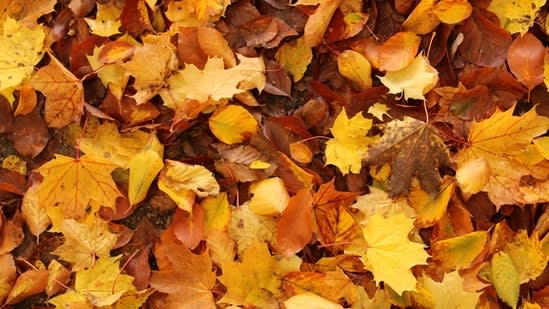
The Old Farmer's Almanac, recently published its Fall 2026 forecast. In astrology, this event begins the Libra season.
Divergent Perspectives on Autumn: The 2026 Seasonal Outlook
The intersection of traditional meteorological forecasting and celestial astrology provides a fascinating glimpse into how humans attempt to predict and categorize the natural world. The recent publication of the Old Farmer's Almanac Fall 2026 forecast, alongside the astrological onset of Libra season, presents two distinct frameworks for understanding the transition into autumn. While one relies on historical patterns and climate trends, the other looks to the positioning of celestial bodies to define the energetic shift of the season.
The Legacy of the Old Farmer's Almanac
The Old Farmer's Almanac is renowned for its long-term weather predictions, which are rooted in a complex blend of solar activity, lunar cycles, and historical meteorological data. By forecasting for Fall 2026, the Almanac continues its tradition of providing agricultural and domestic guidance well in advance. Historically, these forecasts have served as critical tools for farmers and gardeners to plan their harvests and prepare for the winter months. In the modern era, these predictions often serve as a cultural touchstone, blending folklore with a desire for predictability in an increasingly volatile global climate.
Astrological Transitions: The Arrival of Libra
Simultaneously, the astrological community marks this period as the beginning of Libra season. In astrology, the transition to Libra typically coincides with the autumnal equinox in the Northern Hemisphere, a moment of equilibrium where day and night are of equal length. Libra, symbolized by the scales, represents balance, harmony, and partnership. Unlike the Almanac's focus on temperature and precipitation, the astrological outlook focuses on the psychological and social 'weather,' suggesting a season of diplomacy and aesthetic refinement as the earth tilts away from the sun.
Comparative Analysis of Forecasting Methodologies
Comparing these two outlooks reveals a fundamental divide in human perception: the empirical versus the symbolic. The Almanac attempts to quantify the physical environment, utilizing patterns to predict tangible outcomes like rainfall or frost. Conversely, astrology interprets the cosmos as a mirror of human experience, where the movement of the sun into Libra is seen as a catalyst for behavioral shifts. Despite their different methodologies, both systems share a common goal: reducing the uncertainty of the future and providing a structured narrative to navigate the changing seasons.
Broader Implications and Future Trends
As we look toward 2026, the reliance on both traditional almanacs and astrology may increase as a response to the unpredictability of modern climate change. When standard short-term meteorological models struggle with extreme weather volatility, people often return to ancestral or symbolic systems to find a sense of order. This trend suggests a growing synthesis of 'folk science' and spiritual guidance in the public consciousness, where individuals seek holistic ways to align their lives with the rhythms of the planet.
Conclusion
The contrast between the Old Farmer's Almanac's Fall 2026 forecast and the start of Libra season underscores the enduring human desire to anticipate the future. Whether through the study of climate patterns or the alignment of the stars, these tools provide a framework for preparation and reflection. Together, they offer a comprehensive, albeit divergent, roadmap for the autumnal transition, blending the practical needs of the earth with the symbolic aspirations of the sky.
Verification Required?