Peace meet held at Gandhi Centre
Source Entity
India Latest News: Top National Headlines Today & Breaking News | The Hindu
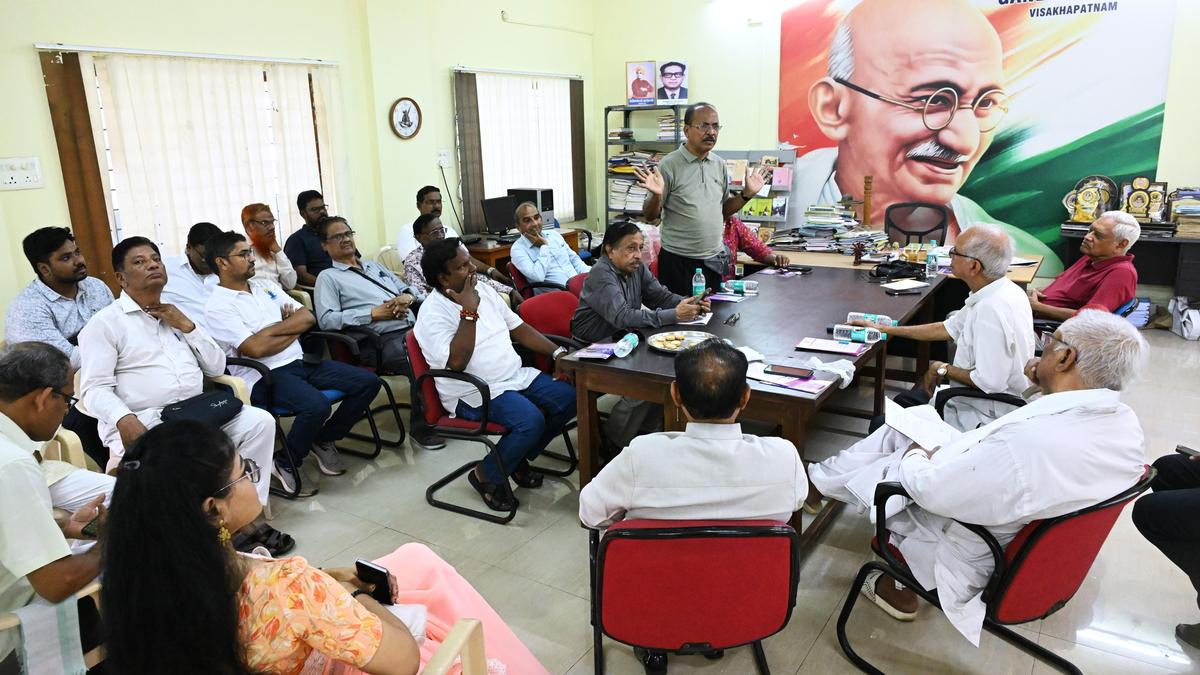
A discussion on world peace, organised by the B.V. Foundation for Peace and Harmony, an affiliated body of the International Association for Religious Freedom (IARF), was held at the Gandhi Centre on ...
Promoting Global Harmony: Analysis of the Peace Meet at the Gandhi Centre
In an era marked by increasing geopolitical volatility and social fragmentation, the recent peace meet held at the Gandhi Centre serves as a critical reminder of the necessity for grassroots diplomatic engagement. Organized by the B.V. Foundation for Peace and Harmony, an affiliated body of the International Association for Religious Freedom (IARF), the event focused on the overarching theme of world peace. This gathering was not merely a symbolic gesture but a structured attempt to synthesize the principles of religious liberty with the practical pursuit of global stability.
The Institutional Synergy of B.V. Foundation and IARF
The collaboration between the B.V. Foundation and the IARF highlights a strategic approach to peace-building. By linking the pursuit of "harmony" with the "freedom of religion," the organizers posit that peace cannot be achieved in a vacuum of coercion. The IARF's involvement suggests that the foundation of world peace lies in the protection of individual conscience and the right to believe—or not believe—without fear of persecution. This ideological framework suggests that when religious freedoms are upheld, the primary drivers of sectarian conflict are mitigated, creating a fertile ground for sustainable peace.
The Symbolic Weight of the Gandhi Centre
The choice of the Gandhi Centre as the venue is deeply significant and provides a historical anchor to the proceedings. Mahatma Gandhi's philosophy of Satyagraha (truth-force) and Ahimsa (non-violence) remains the gold standard for peaceful conflict resolution worldwide. By hosting the discussion at a center dedicated to his legacy, the B.V. Foundation explicitly aligned its goals with the Gandhian tradition of dialogue and empathy. This setting transforms the event from a simple meeting into a continuation of a historical lineage that seeks to resolve human disputes through moral persuasion rather than force.
Broader Implications for Global Diplomacy
While the meet may appear as a localized event, its implications resonate on a global scale. In the current international climate, where formal state-level diplomacy often reaches a stalemate, "track two diplomacy"—conducted by non-governmental organizations and foundations—becomes essential. These forums allow for the exchange of ideas without the constraints of official government mandates. The focus on "world peace" at the Gandhi Centre reflects a broader trend where civil society is taking the lead in advocating for humanitarian values over nationalist interests.
Religious Freedom as a Catalyst for Peace
A central pillar of the analysis of this event is the role of the IARF. The association's mission to promote religious freedom is intrinsically tied to the event's objective of world peace. Historically, the denial of religious freedom has been a precursor to systemic violence and war. By centering the discussion on these themes, the organizers are advocating for a world where pluralism is viewed not as a source of friction, but as a strength. This perspective is vital for addressing modern conflicts that are often exacerbated by religious intolerance.
Future Trends in Peace Advocacy
Looking forward, events such as this indicate a shift toward more inclusive, interdisciplinary approaches to peace. We can predict an increase in collaborations between religious freedom advocates and peace foundations as the world grapples with rising polarization. The success of such meets depends on their ability to translate high-level discussions into actionable community programs. The B.V. Foundation's initiative likely signals a move toward creating "peace hubs"—physical and intellectual spaces where diverse groups can reconcile differences through structured dialogue.
Conclusion
The peace meet at the Gandhi Centre represents a convergence of historical wisdom and modern advocacy. By leveraging the legacy of Gandhi and the institutional support of the IARF, the B.V. Foundation for Peace and Harmony has created a platform for essential discourse. Ultimately, the event underscores the belief that world peace is not a distant utopia but a practical goal achievable through the steadfast protection of human rights and the unwavering commitment to non-violent communication.
Verification Required?