Are you filthy enough for a $700 portable shower?
Source Entity
Thomas Ricker
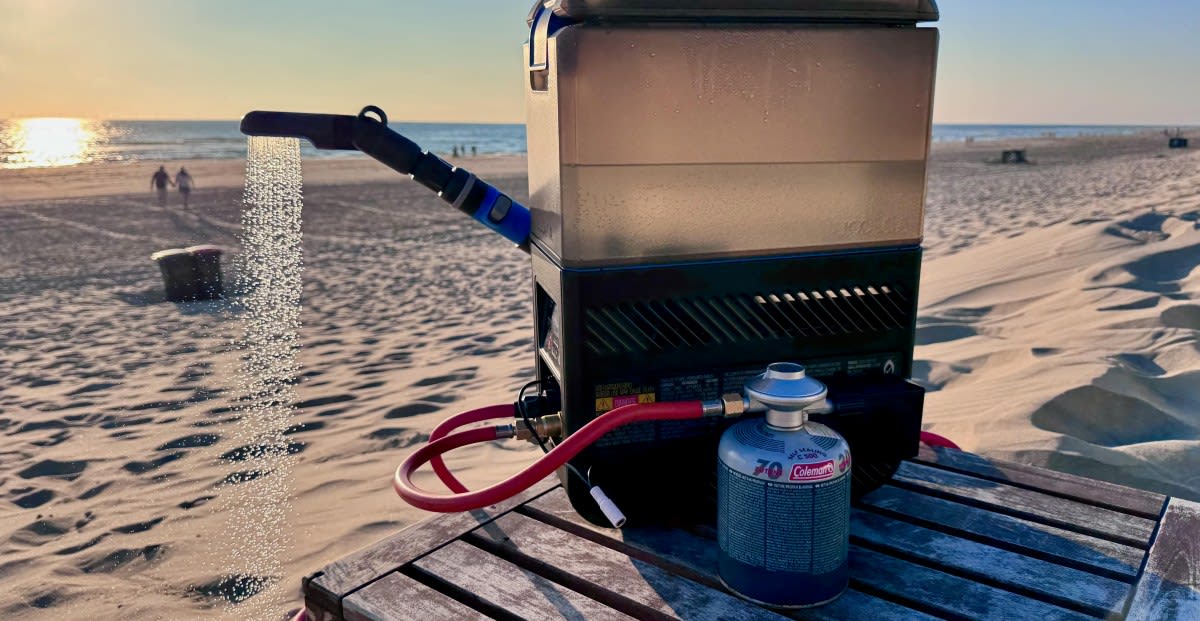
Hot showers, like electricity, are a luxury that's easy to take for granted. That all changes after a few nights camping at a music festival, a week toiling at a backcountry job site, or overlanding all summer in the great unknown. An itchy scalp and the vague smell of warm clams suddenly make the idea […]
The Intersection of Luxury and Utility: Analyzing the $700 Portable Shower
In the modern outdoor recreation market, there is a growing trend toward 'glamping' and high-end overlanding, where the goal is not merely survival, but the replication of home comforts in the wilderness. The introduction of a portable shower priced at $700 represents a significant shift in the consumer gear landscape. While traditional camping hygiene has long relied on rudimentary methods—such as baby wipes or inexpensive solar-heated bags—this premium product targets a demographic that views hygiene not as a luxury, but as a critical component of mental well-being and physical health during extended excursions.
Targeting the 'Hard-Use' Luxury Demographic
The product specifically appeals to three distinct user profiles: music festival attendees, backcountry workers, and overlanders. For the festival-goer, the shower solves the problem of multi-day grime in crowded, often unsanitary environments. For the backcountry worker, it provides a necessary respite from grueling labor in remote job sites where infrastructure is non-existent. Most notably, the 'overlanding' community—individuals who undertake self-reliant journeys to remote destinations—represents the core market. For these users, a $700 investment is often seen as a justifiable expense when integrated into a larger vehicle build that may cost tens of thousands of dollars.
The Economics of Premium Outdoor Gear
From a business perspective, the $700 price point suggests a product that moves beyond simple gravity-fed water. To justify such a cost, the device likely incorporates advanced pressurized pumps, heating elements, or high-efficiency battery systems. This reflects a broader economic trend in the outdoor industry where 'premiumization' is occurring. Consumers are increasingly willing to pay a significant premium for gear that promises reliability and a 'seamless' experience, moving away from the 'roughing it' mentality of previous generations toward a model of 'optimized exploration.'
Psychological and Physiological Implications
The text highlights the visceral discomfort of an "itchy scalp" and the "smell of warm clams," pointing to the psychological toll of prolonged lack of hygiene. In remote settings, a hot shower serves as more than just a cleaning mechanism; it acts as a psychological reset. The ability to maintain a standard of cleanliness in the 'great unknown' can significantly impact morale and productivity, particularly for those working in backcountry sites. This transforms the portable shower from a mere gadget into a tool for mental health and occupational endurance.
Future Trends in Portable Infrastructure
Looking forward, the existence of such a high-priced portable shower suggests a future where remote living becomes more accessible through modular technology. As battery density improves and water-heating efficiency increases, we can expect a surge in 'off-grid luxury' appliances. This trend will likely expand into other areas of portable infrastructure, such as high-end mobile climate control and advanced water filtration systems, further blurring the line between traditional camping and domestic living.
Conclusion
Ultimately, the $700 portable shower is a testament to the evolving nature of outdoor adventure. By targeting those who spend extended periods away from civilization—whether for work, leisure, or art—the product fills a specific niche where utility meets luxury. While the price may seem exorbitant to the casual camper, for the dedicated overlander or backcountry professional, it represents an investment in quality of life and personal dignity in the face of the elements.