Quantum error correction can constantly recalibrate a processor
Source Entity
John Timmer
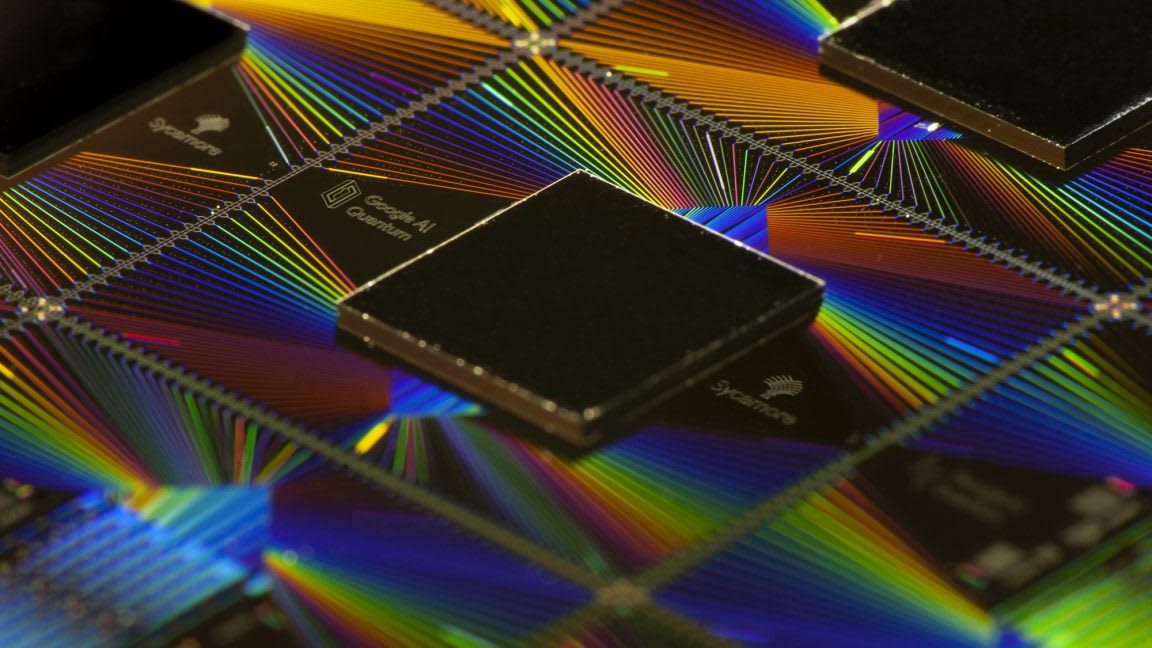
Reinforcement learning uses error information to adjust control algorithms.
The Dawn of Adaptive Quantum Stability
Quantum computing promises a paradigm shift in computational power, yet it has long been hindered by the extreme fragility of quantum bits, or qubits. The recent development of a system where quantum error correction (QEC) can constantly recalibrate a processor represents a pivotal shift in how we approach the problem of decoherence. By integrating reinforcement learning (RL), researchers are moving away from static, pre-programmed error correction and toward an autonomous, self-healing architecture. This innovation addresses the fundamental challenge of 'noise'—environmental interference that causes qubits to lose their quantum state, leading to computational errors.
The Battle Against Decoherence and Noise
To understand the significance of this breakthrough, one must first understand the nature of quantum noise. Qubits are hypersensitive to temperature fluctuations, electromagnetic interference, and even cosmic rays. In traditional quantum setups, calibration is a manual, labor-intensive process where engineers tune control pulses to ensure the qubits behave predictably. However, these calibrations drift over time, meaning a processor that is accurate at 9:00 AM might be riddled with errors by noon. The ability to recalibrate constantly means the system no longer relies on a snapshot of stability but instead maintains a continuous state of equilibrium.
How Reinforcement Learning Drives Recalibration
The core of this advancement lies in the application of reinforcement learning, a subset of machine learning where an agent learns to make decisions by receiving rewards or penalties. In this specific application, the RL agent monitors the error information emanating from the quantum processor. When a gate operation fails or a qubit decoheres, the RL algorithm analyzes the telemetry and adjusts the control algorithms—the precise microwave or laser pulses used to manipulate the qubits. By treating the reduction of error rates as the 'reward,' the AI iteratively optimizes the processor's control parameters in real-time, effectively 'learning' the specific noise profile of the hardware and neutralizing it.
From Static Correction to Dynamic Adaptation
Historically, quantum error correction has relied on 'surface codes' or redundant qubits to protect information. While effective, this approach requires a massive overhead; thousands of physical qubits might be needed to create a single, stable 'logical qubit.' The shift toward RL-driven recalibration introduces a layer of dynamic adaptation. Instead of simply absorbing errors through redundancy, the system proactively prevents them by adjusting the underlying control mechanisms. This hybrid approach—combining algorithmic error correction with AI-driven hardware tuning—could significantly lower the physical qubit requirement for practical quantum computing.
Paving the Way for Fault-Tolerant Quantum Computing
This development is a critical stepping stone toward the era of Fault-Tolerant Quantum Computing (FTQC). Currently, we reside in the NISQ (Noisy Intermediate-Scale Quantum) era, where devices are powerful but prone to errors that limit the depth of the circuits they can run. By implementing a system that constantly recalibrates itself, the industry moves closer to the 'threshold theorem'—the point where error correction becomes efficient enough that the computer can run indefinitely without crashing. This will be the prerequisite for executing complex algorithms, such as Shor's algorithm for cryptography or advanced molecular simulations for drug discovery.
Future Implications and Industry Trends
Looking forward, the integration of AI into the quantum control stack is likely to become standard practice. We can expect to see 'AI-managed' quantum clouds where the backend automatically tunes itself to the specific workload being processed. This reduces the burden on human physicists and allows for more scalable deployments. As reinforcement learning models become more sophisticated, they may not only correct existing errors but predict potential drift before it occurs, creating a preemptive stability layer that ensures unprecedented fidelity in quantum operations.
Summary
In conclusion, the use of reinforcement learning to enable constant recalibration of quantum processors marks a transition from passive error management to active, intelligent optimization. By utilizing real-time error data to refine control algorithms, this method tackles the volatility of qubits head-on. This synergy between artificial intelligence and quantum physics is essential for moving beyond the limitations of the NISQ era and achieving the stability required for a true computational revolution.