Internet calls Ravi Kishan's daughter Rivva Kishan ‘biggest snake’ as she betrays ‘sister’ Dolly Javed on Alliance
Source Entity
Latest News: Today's Latest News Headlines from India & World | Hindustan Times | Hindustan Times
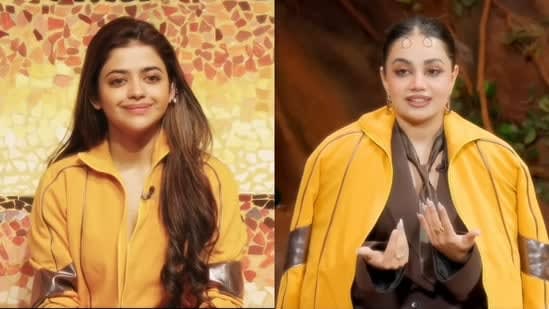
Rivva Kishan faces backlash for voting against contestant Dolly Javed, whom she considers a younger sister, to honour her commitment to Kushal Tandon.
The Price of Strategy: Analyzing Rivva Kishan's Controversial Move
In the high-stakes environment of reality television, the line between strategic gameplay and personal betrayal is often blurred. The recent controversy surrounding Rivva Kishan on the show Alliance serves as a quintessential example of this tension. By voting against Dolly Javed—a contestant she had emotionally bonded with and referred to as a 'younger sister'—Rivva has found herself at the center of a digital firestorm. This event highlights the volatility of interpersonal relationships within competitive formats where emotional vulnerability is often used as a tool for social positioning.
The Conflict: Loyalty vs. Strategy
The core of the backlash stems from the perceived hypocrisy of Rivva's actions. In the context of the show, Rivva had cultivated a close, familial bond with Dolly Javed, utilizing the term 'sister' to signify a deep level of trust and mutual protection. However, when faced with a critical decision, Rivva chose to honor a strategic commitment to Kushal Tandon over her emotional bond with Dolly. This decision, while logically sound from a game-theory perspective—prioritizing a strong alliance to ensure survival in the competition—was viewed by the audience as a cold-blooded betrayal of a familial promise.
The 'Snake' Narrative and Social Media Dynamics
The internet's reaction, labeling Rivva as the 'biggest snake,' reflects a broader trend in digital fandom where contestants are quickly categorized as either 'heroes' or 'villains.' The term 'snake' has become shorthand in reality TV discourse for a player who utilizes emotional manipulation to achieve a strategic end. Because Rivva's betrayal involved a 'sisterly' bond, the audience's reaction was amplified; the betrayal was not seen as a move against a competitor, but as a violation of a sacred social contract, leading to a rapid wave of condemnation across social platforms.
The Legacy Factor: The Ravi Kishan Connection
Adding a layer of complexity to this narrative is Rivva's identity as the daughter of Ravi Kishan, a veteran actor and public figure with a massive following. In the Indian entertainment landscape, the children of celebrities are often held to a higher standard of public conduct, as their actions are seen as a reflection of their family's values. The scrutiny Rivva is facing is not merely about her gameplay, but about how her perceived 'betrayal' aligns with the public image of the Kishan family. This puts her in a precarious position where her attempts to establish her own identity as a strong competitor are clashing with the expectations of traditional familial loyalty.
The Trope of Emotional Alliances in Reality TV
Historically, Indian reality shows have frequently featured the 'emotional alliance' trope, where contestants form deep, familial-like bonds to secure safety. However, these alliances are inherently unstable because the format eventually necessitates a betrayal. Rivva's situation is a recurring pattern in the genre: the transition from 'emotional support' to 'strategic target.' The backlash she is experiencing is a manifestation of the audience's investment in these artificial bonds, showing that viewers often value emotional authenticity over the skill of strategic maneuvering.
Future Implications for Rivva's Public Image
Moving forward, Rivva Kishan faces the challenge of narrative recovery. To pivot away from the 'snake' label, she will likely need to either double down on her 'villain' persona—which can ironically lead to increased popularity and screen time—or offer a sincere apology that addresses the emotional weight of her decision. If she continues to prioritize strategic alliances over emotional ties, she may be viewed as a formidable player, but she risks alienating a demographic of viewers who prioritize 'heart' over 'game.'
Conclusion
Ultimately, the clash between Rivva Kishan, Dolly Javed, and Kushal Tandon is more than just a plot point in a reality show; it is a study in the ethics of competition. While Rivva succeeded in honoring her commitment to Kushal, the cost was her perceived integrity in the eyes of the public. This incident underscores the inherent danger of using familial labels in a competitive environment, where the objective of the game eventually renders such bonds obsolete.
Verification Required?