We scaled PgBouncer to 4x throughput
Source Entity
Hacker News
<a href="https://news.ycombinator.com/item?id=48872874">Comments</a>
Scaling PostgreSQL Performance: The 4x PgBouncer Breakthrough
Introduction to Connection Pooling
In the realm of high-performance database management, connection overhead is a critical bottleneck. PostgreSQL, while incredibly robust, traditionally employs a process-per-connection model. This architecture means that every new connection consumes significant memory and CPU resources due to process creation and context switching. To mitigate this, engineers rely on middleware like PgBouncer, a lightweight connection pooler designed to manage a large number of incoming client connections while maintaining a smaller, more efficient set of connections to the actual database.
The Significance of the 4x Throughput Milestone
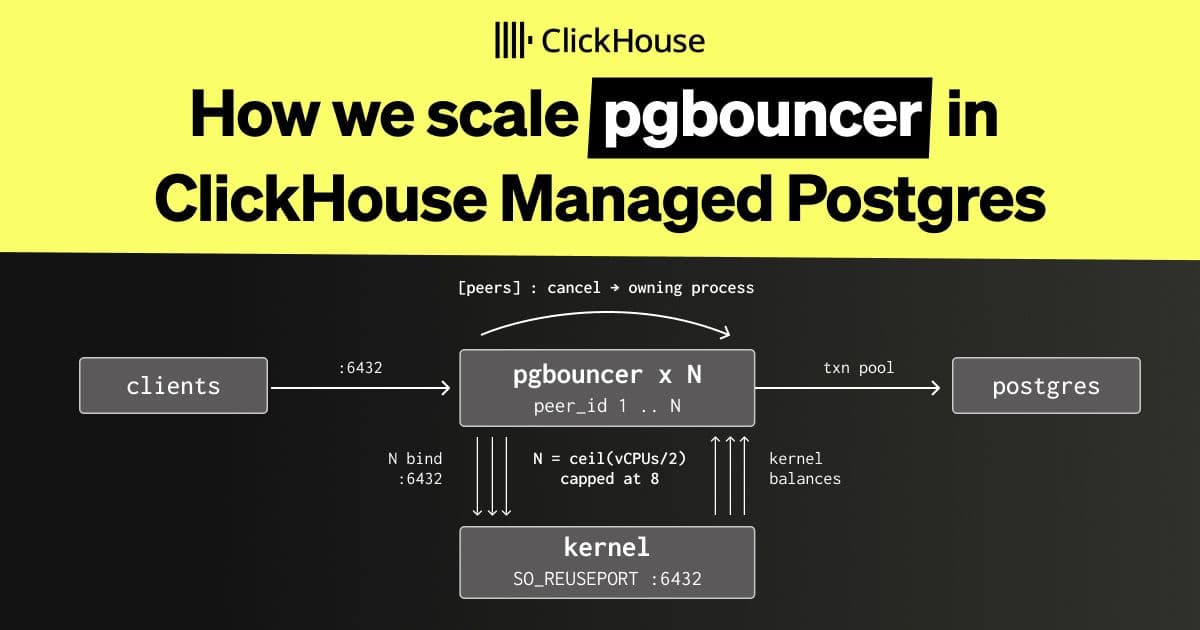
The report of scaling PgBouncer to achieve 4x throughput represents a major milestone for backend engineering teams. Throughput in this context refers to the number of transactions or queries processed per unit of time. Increasing this capacity by 400% suggests that the underlying bottleneck—likely related to connection management, locking mechanisms, or network I/O—has been significantly optimized. For high-scale applications, such an increase allows for much higher concurrency without requiring a linear increase in database hardware.
Technical Context and Challenges
Scaling a connection pooler is not merely about increasing numbers; it involves managing the delicate balance between latency and concurrency. As the number of connections grows, the overhead of managing the pool itself can become a limiting factor. Achieving a 4x increase implies that the engineering team likely addressed deep-seated issues such as mutex contention, improved the efficiency of the event loop, or optimized how the pooler interacts with the operating system's networking stack to handle massive request volumes.
Broader Implications for Cloud Infrastructure
This optimization has profound implications for cloud-native architectures and microservices. In modern environments where hundreds or thousands of ephemeral containers might connect to a central database, the ability to handle massive connection spikes is vital. A more efficient PgBouncer means that companies can maintain high availability and performance while potentially reducing their cloud spend by utilizing fewer, more efficient database instances to handle the same amount of traffic.
Future Trends in Database Middleware
Looking forward, we can expect to see a continued focus on "intelligent" middleware. As database workloads become more complex, simple connection pooling may evolve into more sophisticated proxy layers that handle load balancing, query routing, and even basic security filtering at the edge. The success in scaling PgBouncer serves as a proof of concept that even mature, established tools can yield massive performance gains through targeted, deep-level engineering.
Conclusion
In summary, the achievement of 4x throughput in PgBouncer is a significant technical feat that addresses the fundamental challenges of PostgreSQL scaling. By optimizing the connection pooling layer, engineers have opened the door to more efficient, scalable, and cost-effective database architectures, setting a new benchmark for high-concurrency system design.