‘These are some of the most complex structures ever created’: how tech reporting moved into the physical world
Source Entity
Gautam Malkani
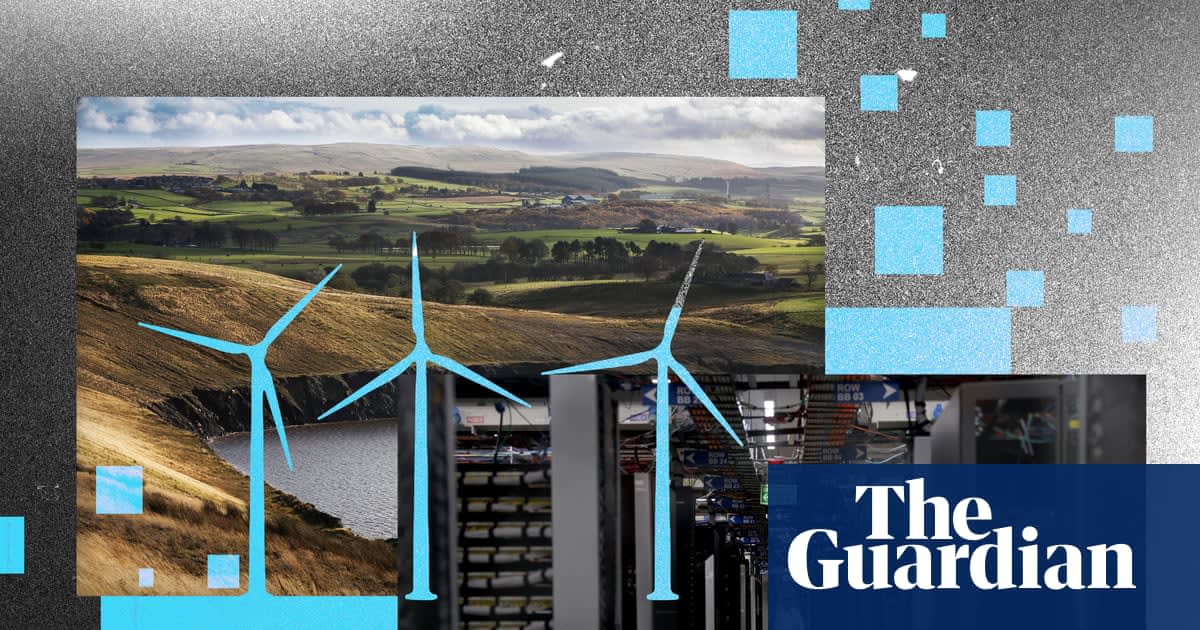
<p>The Guardian’s global tech reporting team are investigating the impact of the vast datacentres being built to power the AI revolution. We spoke to them about how their beat has become increasingly offline</p><p>Journalists often use the term “shoe-leather reporting” to refer to the on-the-ground legwork that goes into covering certain stories. As the tech industry’s focus has shifted from screen-based realities to the physical world of colossal AI datacentres and social media harms, comfortable footwear has become more essential to a tech reporter’s job.</p><p>Earlier this week, we published the Guardian’s <a href="https://ablink.email.theguardian.com/ss/c/u001.Yw_JkLMEmFuifc_XG18IRyTNtZQ7fIEMgszcCSneHEA13-uHzzNLsl3ZqJFCJlFe_55BMaCDFia1qGCi512R5Fhvf7DvBP6sg6v0uKzIIZbIqEwgSFEnUG6sx1MTCmXRNnPeUdkB-duGBX-K3zQopk_hKEF99Ym0b9ZHfi_rqjqWFduc38h4slfxLqh25a_J/4s4/3Z4BPV8_TYuqC0M517tRtA/h50/h001.BkF8KOQOtEWnDZUGiewMsqzAwhgoy7ZJFYH_F2y-lZw">latest investigation into the datacentres</a> and energy infrastructures that underpin AI – revealing that an £8.2bn AI complex in rural Scotland has misrepresented its plans to be powered entirely by on-site renewables. “Our reporting is showing that you can’t simply wave a magic wand and have a datacentre appear,” says Aisha Down, who covers AI for the Guardian and went to Scotland to investigate the story. “There are a lot of huge physical constraints and reality checks. These physical, tangible things are what makes or sinks the AI boom.”</p> <a href="https://www.theguardian.com/membership/2026/jul/12/tech-reporting-physical-world-ai-revolution-datacentres">Continue reading...</a>
The Materiality of Intelligence: Tech Journalism's Shift to the Physical World
For decades, technology reporting was largely a digital pursuit, centered on software updates, app launches, and the ethereal nature of "the cloud." However, as the artificial intelligence revolution accelerates, the focus of investigative journalism is shifting toward the tangible. The Guardian's recent pivot toward "shoe-leather reporting" highlights a critical realization: the digital frontier is built upon a massive, resource-heavy physical foundation. This shift reflects a broader need to scrutinize the environmental and infrastructural costs that accompany the rapid deployment of Large Language Models (LLMs) and generative AI.
The Scottish Case Study: Greenwashing in the AI Race
A primary example of this investigative shift is the Guardian's exposure of an £8.2bn AI complex in rural Scotland. The facility, a colossal investment intended to anchor AI capabilities, claimed it would be powered entirely by on-site renewables. However, investigation revealed these plans were misrepresented. This discrepancy is not merely a corporate PR failure but a systemic issue within the tech industry, where the desire to project a "green" image often clashes with the brutal energy requirements of high-density computing. The scale of the investment—over eight billion pounds—underscores the immense capital being poured into hardware, often with insufficient transparency regarding sustainable energy procurement.
The Fallacy of the "Magic Wand"
As journalist Aisha Down aptly noted, there is a dangerous perception that datacentres can simply "appear" via a magic wand. In reality, these structures are among the most complex engineering feats of the modern era. They require not only vast tracts of land but also specialized cooling systems and immense electrical loads that can strain local grids. When companies misrepresent their energy sources, they hide the true ecological footprint of AI. The "physical constraints" mentioned in the reporting are the real-world bottlenecks—land use, water for cooling, and power grid capacity—that will ultimately determine the pace and sustainability of the AI boom.
The Evolution of Tech Journalism
The transition to "shoe-leather reporting" signifies a maturation of the tech beat. By moving away from press releases and screen-based analysis toward on-the-ground investigations, journalists are uncovering the gap between corporate narratives and physical reality. This approach allows reporters to verify claims through site visits and local infrastructure audits, ensuring that the "cloud" is stripped of its metaphor and revealed as a series of energy-hungry warehouses. This methodology is essential for holding Big Tech accountable as they expand their physical footprints into rural and environmentally sensitive areas.
Broader Implications and Future Trends
Looking forward, the tension between AI ambitions and physical reality is likely to intensify. As more nations strive for "AI sovereignty" by building domestic datacentres, we can expect an increase in conflicts over energy resources and land rights. The Scottish example serves as a warning: without rigorous oversight and factual reporting, the AI revolution could lead to widespread "greenwashing," where the carbon costs of computing are obscured by misleading sustainability claims. The future of AI will not be decided solely by algorithmic efficiency, but by the ability to secure sustainable power and physical space.
Conclusion: Anchoring Innovation in Reality
In summary, the Guardian's investigation into the Scottish AI complex illustrates a pivotal moment in tech reporting. By grounding their analysis in the physical world, journalists are exposing the material costs of digital innovation. The revelation that an £8.2bn project misrepresented its renewable energy goals proves that the most critical stories in tech are no longer found in code, but in the concrete, cables, and power grids that make AI possible. The sustainability of the AI boom now depends on a transparent alignment between technological ambition and physical possibility.