Trump urges Americans to buy Dell, but analysts say Wall Street isn't listening
Source Entity
TOI TECH DESK
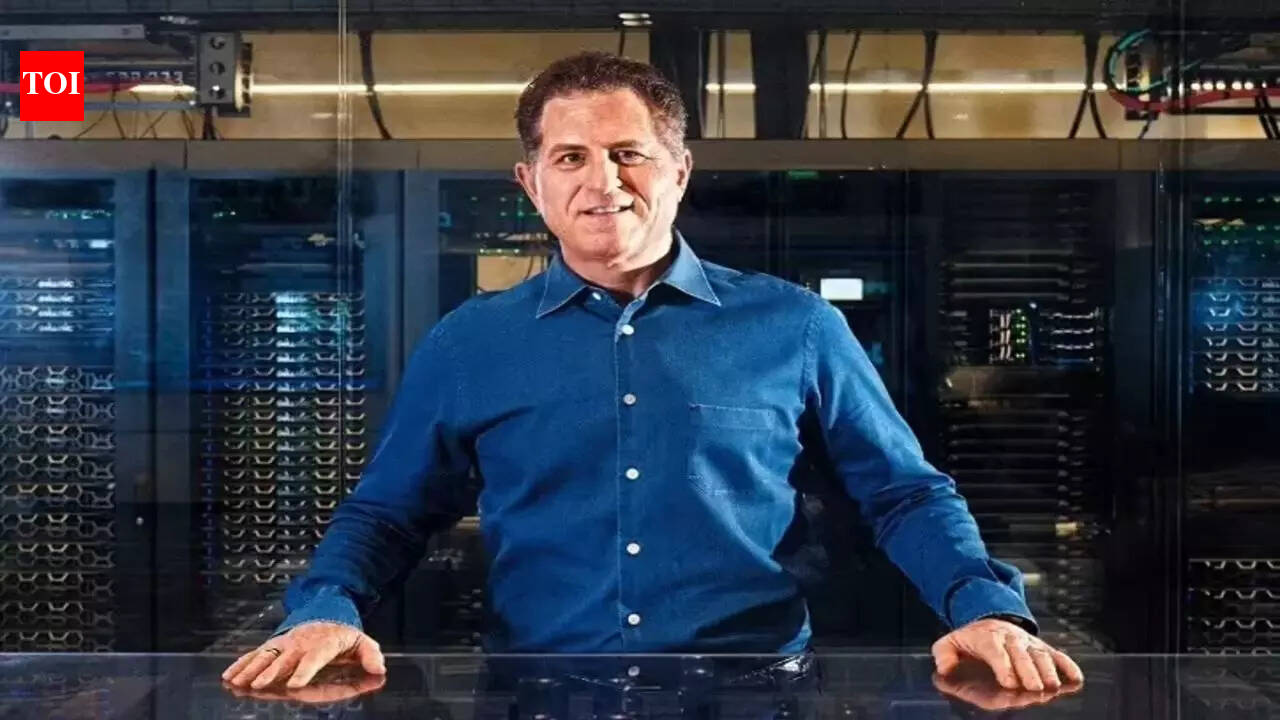
President Trump's Oval Office endorsement of Dell computers coincided with a stock surge. Analysts attribute Dell's stock rise to booming AI server business demand. Michael Dell has now become one of the world's five richest people. Dell Technologies reported strong quarterly results and increased AI revenue expectations. Ethics concerns were raised regarding presidential endorsements of specific companies.
The Intersection of Political Endorsement and Market Fundamentals
In a striking overlap of political rhetoric and corporate performance, President Trump's recent Oval Office endorsement of Dell computers has sparked a significant debate regarding what truly drives stock market valuations. While the endorsement provided a high-profile boost to the brand's visibility, the financial community remains divided on whether the subsequent surge in Dell's stock price was a result of presidential favor or a reflection of the company's underlying technological pivot. This event highlights the tension between the 'Trump effect'—where the President's public statements can move markets—and the data-driven reality of Wall Street's valuation models.
The AI Infrastructure Gold Rush
Despite the political noise, financial analysts are pointing toward a more systemic driver: the explosive growth of the Artificial Intelligence (AI) sector. Dell Technologies has strategically positioned itself as a critical provider of AI servers, which are the backbone of the generative AI revolution. As enterprises worldwide scramble to integrate Large Language Models (LLMs) into their operations, the demand for high-performance computing hardware has skyrocketed. Dell's strong quarterly results and increased AI revenue expectations suggest that the company is successfully capturing this market share, transforming from a traditional PC manufacturer into a powerhouse of AI infrastructure.
Analyzing the Disconnect: Wall Street vs. The Oval Office
Wall Street's apparent indifference to the presidential endorsement suggests a maturation of market analysis in the face of political volatility. Analysts argue that while a presidential shout-out might create a short-term retail trading spike, institutional investors are focused on 'hard' metrics: order backlogs, margin expansion, and the scalability of AI server production. The narrative that Dell's rise is independent of political backing serves as a testament to the sheer magnitude of the AI boom, which is currently outweighing almost all other macroeconomic or political variables in the tech sector.
The Ascent of Michael Dell
The financial implications of this growth are most evident in the skyrocketing net worth of Michael Dell, who has now ascended to the ranks of the world's five richest individuals. This ascent is not merely a personal victory but a signal of a broader shift in the tech hierarchy. Wealth is shifting from software-as-a-service (SaaS) and consumer-facing apps toward the 'plumbing' of the internet—the physical hardware and servers that make AI possible. Michael Dell's position reflects the critical importance of supply chain management and hardware reliability in an era where compute power is the most valuable currency in the global economy.
Ethical Implications of Presidential Endorsements
However, the event has not passed without scrutiny, as ethics concerns have been raised regarding the propriety of a U.S. President endorsing a specific private corporation. Such actions can create perceived conflicts of interest and may lead to accusations of cronyism or unfair market advantages. From a governance perspective, the use of the Oval Office to promote a single brand risks undermining the neutrality of the executive branch and could potentially distort competition within the technology sector, regardless of whether the company's products are objectively superior.
Future Outlook and Market Trends
Looking forward, Dell's trajectory will likely depend more on its ability to maintain its AI server momentum than on any political alliance. As competition from rivals like Hewlett Packard Enterprise (HPE) and Super Micro Computer intensifies, Dell must continue to innovate its hardware offerings. We can expect a trend where 'AI-adjacent' hardware companies continue to see volatility tied to political cycles, but the long-term winners will be those who can deliver the physical infrastructure required for the next generation of computing. The Dell saga serves as a case study in how genuine technological disruption can overshadow even the most powerful political endorsements.