Why the UN’s first scientific report on AI wants governments to act before it’s too late
Source Entity
Soumyarendra Barik
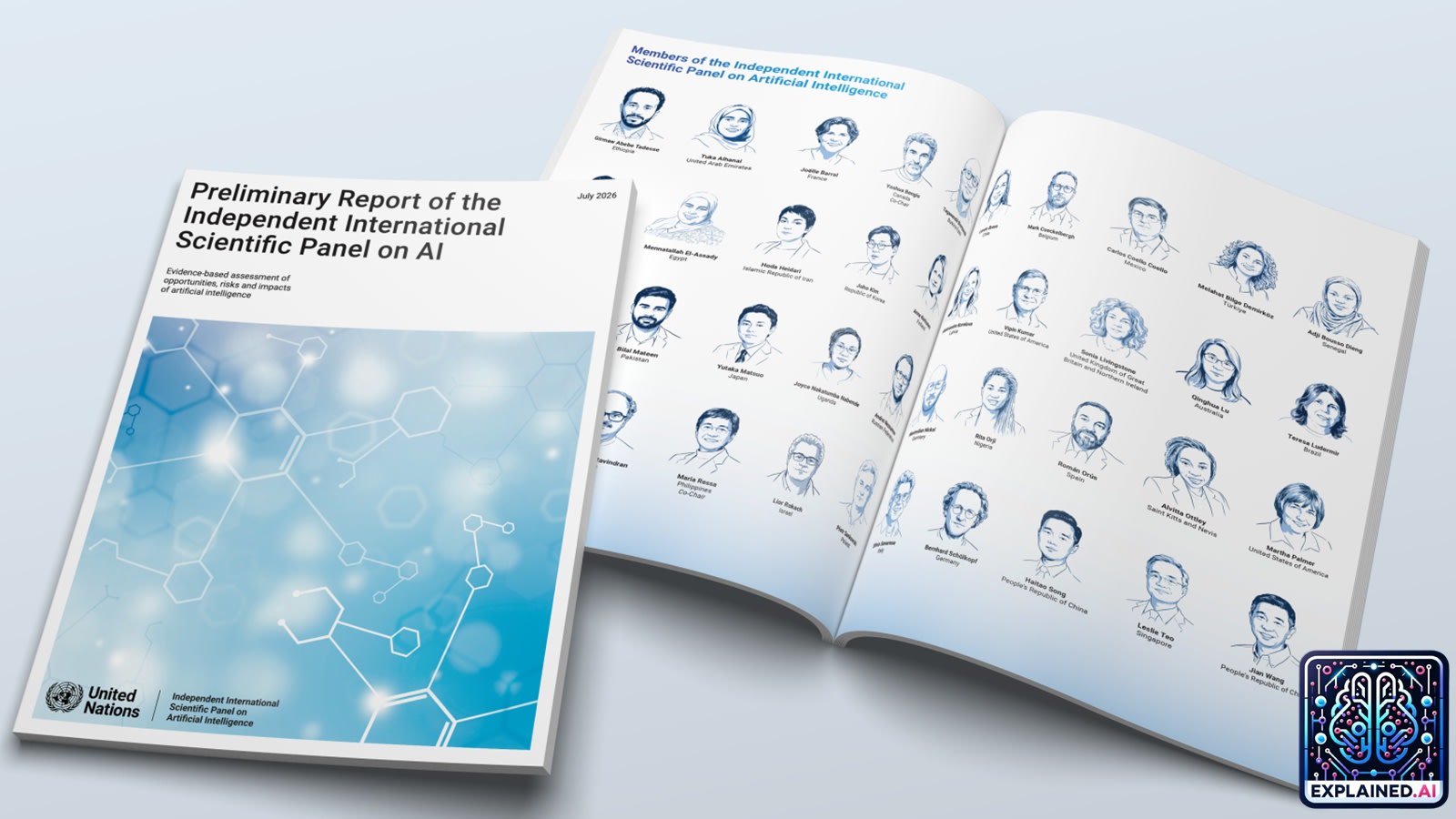
Artificial intelligence (AI) is advancing at a pace that governments are struggling to understand, let alone regulate. That is the central message of the Preliminary Report of the Independent Internat...
The Race Against the Machine: Analyzing the UN's Urgent Warning on AI
The release of the United Nations' first scientific report on artificial intelligence marks a pivotal moment in global governance. For years, the discourse surrounding AI has been dominated by private corporations and a handful of technologically advanced nations. By stepping in with a formal scientific advisory report, the UN is signaling that AI is no longer just a commercial or technical concern, but a systemic global risk that requires a multilateral response. The central thesis of the report is a stark warning: the gap between the velocity of AI innovation and the speed of legislative oversight is widening to a dangerous degree.
The Regulatory Lag and the "Understanding Gap"
One of the most critical points raised in the report is the struggle of governments to even comprehend the technology they are tasked with regulating. Unlike previous industrial revolutions where the underlying mechanics were transparent to policymakers, the "black box" nature of deep learning and generative AI creates an information asymmetry. While developers at leading AI labs understand the weights and biases of their models, legislators often rely on outdated frameworks. This "understanding gap" means that by the time a law is debated, drafted, and passed, the technology it aims to regulate has often evolved into a new iteration, rendering the legislation obsolete upon arrival.
The Necessity of a Multilateral Framework
Because AI development is borderless, the UN's call for action emphasizes that fragmented, nation-by-nation regulation is insufficient. If one country imposes strict safety guardrails while another allows unrestricted development to gain a competitive economic edge, a "race to the bottom" occurs. This dynamic incentivizes companies to migrate their operations to the least regulated jurisdictions, effectively neutralizing the safety efforts of responsible nations. The UN report argues for a coordinated international scientific consensus, suggesting that AI safety must be treated with the same global urgency as climate change or nuclear non-proliferation, where collective agreements are the only way to ensure survival.
Implications of Inaction: What "Too Late" Means
When the report warns that governments must act "before it's too late," it refers to several cascading risks. In the short term, the lack of regulation exacerbates the spread of sophisticated misinformation and the erosion of cognitive sovereignty. In the medium term, the uncontrolled automation of labor markets could trigger unprecedented socioeconomic instability. Most critically, the report hints at the long-term risk of losing human agency over autonomous systems. If AI systems are integrated into critical infrastructure—such as power grids, financial markets, and defense systems—without robust, scientifically-backed safety protocols, the potential for systemic failure becomes an existential threat.
Balancing Innovation with Existential Safeguards
Critics often argue that heavy-handed regulation stifles innovation. However, the UN's approach suggests that scientific oversight is actually a prerequisite for sustainable innovation. By establishing clear, globally recognized safety boundaries, governments can provide the certainty that businesses need to invest in AI responsibly. The report advocates for a shift from "reactive" regulation—where laws are passed after a disaster occurs—to "proactive" governance, where safety benchmarks are integrated into the development lifecycle of AI models from the outset.
Conclusion: A Call for Global Scientific Diplomacy
In summary, the UN's preliminary report serves as a wake-up call to the international community. It highlights a dangerous trajectory where technological capability is decoupled from human oversight. The path forward requires a unprecedented level of cooperation between the scientific community, private tech giants, and sovereign states. If the world fails to bridge the gap between AI's exponential growth and the linear pace of governance, the risks outlined by the UN may transition from theoretical warnings to irreversible realities.