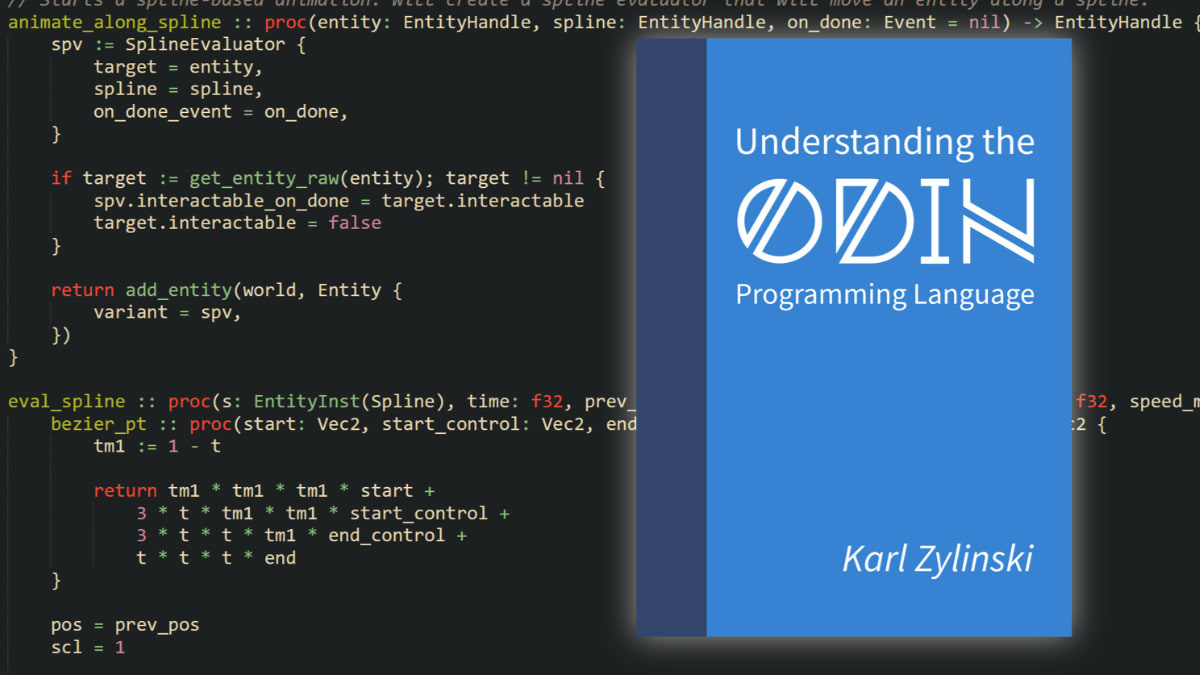
Understanding the Odin Programming Language
Source Entity
Hacker News
<a href="https://news.ycombinator.com/item?id=48880499">Comments</a>
Understanding the Odin Programming Language: A Modern Approach to Systems Programming
The Odin programming language has emerged as a compelling alternative for developers who require the raw power of C but desire a more modern, ergonomic syntax. Designed with a focus on high performance and simplicity, Odin is not merely a "better C" but a language built from the ground up to support data-oriented design. By prioritizing transparency and control, it seeks to bridge the gap between the extreme low-level nature of assembly and the often overly complex abstractions found in modern high-level languages.
The Core Philosophy: Data-Oriented Design
Central to Odin's identity is its commitment to Data-Oriented Design (DOD). Unlike traditional Object-Oriented Programming (OOP), which often leads to fragmented memory layouts and "pointer chasing" that can degrade performance, Odin encourages developers to think about how data is laid out in memory. This approach maximizes CPU cache efficiency by ensuring that related data is stored contiguously. In an era where memory latency is often a bigger bottleneck than CPU clock speed, Odin's design allows developers to write code that is naturally more sympathetic to modern hardware architecture.
Positioning as a Successor to C
Odin positions itself as a spiritual and technical successor to C. It maintains a similar level of control over hardware and memory management—notably lacking a garbage collector—but introduces essential modern features. These include slices, dynamic arrays, and a more robust type system that reduces the boilerplate and error-prone nature of C. By eliminating the "cruft" and legacy baggage associated with C++, Odin provides a streamlined path for systems programming, allowing developers to maintain a mental model of exactly what the machine is doing at any given moment.
Impact on Game Development and High-Performance Computing
The language has found a particularly strong foothold in the game development community. In an industry where every millisecond of frame time is critical, Odin's predictability and lack of hidden overhead make it an ideal tool. Its ability to interface directly with C libraries allows it to integrate seamlessly into existing engines and toolchains. Furthermore, the language's focus on simplicity makes it easier to maintain large codebases without the cognitive load imposed by the complex template metaprogramming often found in C++.
Community Reception and the Developer Shift
As evidenced by discussions on technical forums like Hacker News, there is a growing trend among systems programmers to seek languages that prioritize "programmer productivity" without sacrificing "machine efficiency." Odin appeals to a specific segment of the community that finds Rust's borrow checker too restrictive for certain low-level tasks and C++'s specification too bloated. The interest in Odin reflects a broader industry desire for tools that are powerful yet lean, emphasizing a "back to basics" approach combined with 21st-century language design.
Conclusion and Future Outlook
In summary, Odin represents a significant shift toward simplicity and transparency in the realm of systems programming. While it may not reach the massive ubiquity of C or the corporate backing of Rust, its specialized focus on data-oriented design ensures it remains a powerful niche tool. As hardware continues to evolve and the importance of cache-efficient code grows, Odin is well-positioned to be the language of choice for those pushing the absolute limits of hardware performance.