
The Legacy of the Static Role
The traditional job description is a relic of the industrial age, designed for a world of assembly lines and predictable outputs. It operates on the flawed premise that a human being's value can be captured in a static list of responsibilities and a singular title. For decades, companies have hired for 'roles'—Marketing Manager, Senior Analyst, Project Lead—treating these titles as containers for talent. But these containers are leaking. In a global economy defined by volatility, the time it takes to write, approve, and hire for a specific job description often exceeds the shelf-life of the requirements themselves.
Why do we cling to these rigid definitions? The answer lies in the comfort of administrative control. Human Resources departments rely on job descriptions to standardize pay scales and organize org charts. Yet, this obsession with categorization ignores the reality of how work actually gets done. High-impact employees rarely stay within the lines of their JD; they migrate toward the problems that need solving, regardless of whether those tasks fall under their official remit. By forcing talent into predefined boxes, organizations aren't managing labor—they are throttling it.

Defining Software-Defined Labor
Enter 'Software-Defined Labor' (SDL). To understand this shift, look to the world of networking. Software-Defined Networking (SDN) decoupled the control plane from the data plane, allowing networks to be programmed and reconfigured in real-time without touching the physical hardware. SDL applies this logic to human capital. It decouples the 'Role' (the control plane) from the 'Skill' (the data plane). In this model, a professional is no longer a 'Job Title'; they are a collection of modular, deployable capabilities—essentially a human API.
"The future of work isn't about finding the right person for the job; it's about assembling the right skills for the mission."— Strategic Analysis of Labor Modularity
In an SDL environment, the organization stops asking, 'Who is our Head of Growth?' and starts asking, 'Which combination of skills—data storytelling, rapid prototyping, and behavioral psychology—do we need to solve this specific customer acquisition problem?' The worker, in turn, stops identifying as a 'Marketing Manager' and begins identifying as a portfolio of competencies. This isn't just a semantic change; it is a fundamental restructuring of the psychological contract between employer and employee. It replaces the safety of a title with the resilience of a versatile skill set.
| Feature | Industrial Job Model | Software-Defined Labor |
|---|---|---|
| Unit of Value | The Role (Title) | The Capability (Skill Module) |
| Contract Basis | Long-term employment for a role | Dynamic deployment for a mission |
| Skill Acquisition | Linear/Specialized | Modular/T-Shaped |
| Allocation Method | Static Org Chart | Real-time Skill Matching |
| Success Metric | KPIs tied to job description | Outcomes tied to project delivery |
This transition is not happening in a vacuum; it is being accelerated by the dissolution of geographic barriers and the rise of specialized talent marketplaces. When the talent pool is global, the friction of traditional hiring becomes an unacceptable cost.
A Global Redistribution of Talent
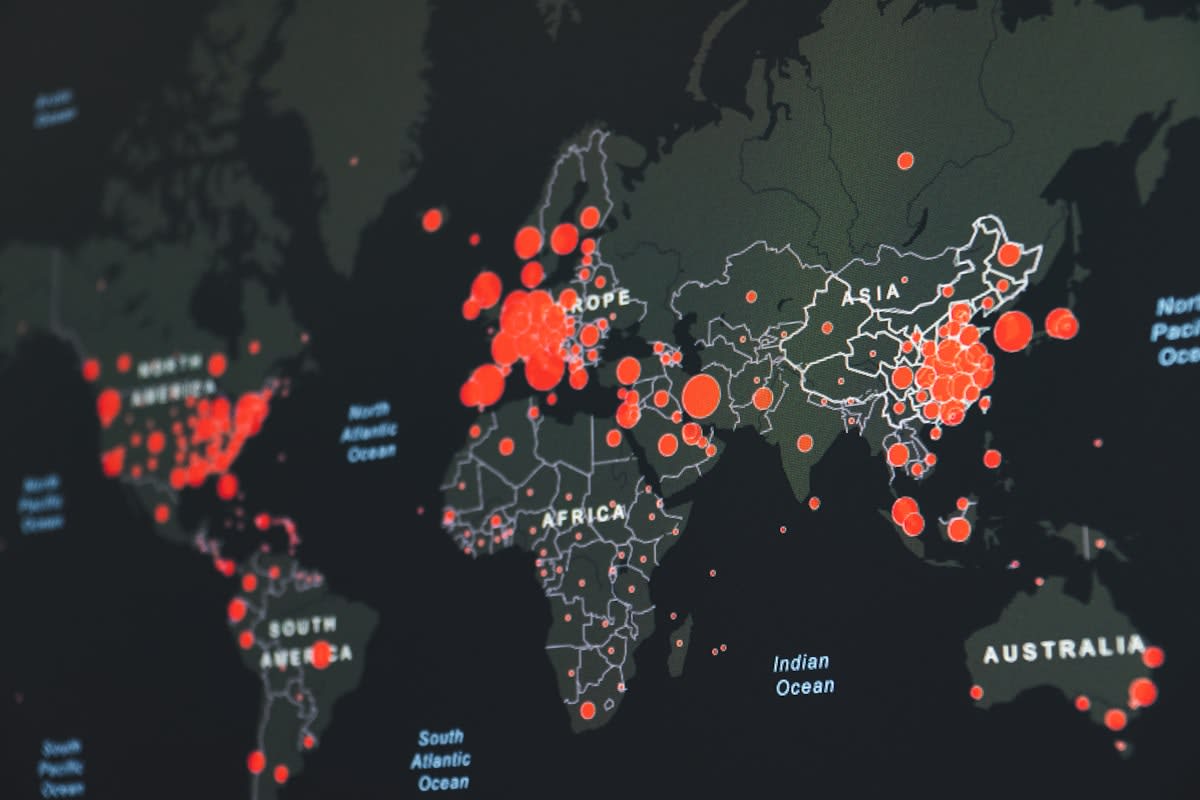
We see this shift manifesting differently across the globe, yet the systemic driver remains the same. In the tech hubs of Singapore, firms are increasingly moving toward 'squad' structures where roles are fluid and determined by the sprint goal rather than a contract. In Berlin's creative agencies, the 'Generalist' is being rebranded as a 'Modular Expert,' capable of pivoting from brand strategy to UX design within a single project lifecycle. Even in Nairobi's burgeoning digital economy, the gig economy is evolving from simple task-execution into high-level modular consulting.
Does this mean the end of stability? On the contrary, it offers a more robust form of security. A person tied to a 'Job Description' is vulnerable the moment that specific role becomes redundant. A person who operates as a modular skill set is an adaptable asset. If the market for 'Project Managers' dips, but the demand for 'Agile Orchestration' and 'Cross-Functional Communication' rises, the modular professional simply re-indexes their portfolio. They don't need a new job; they need a new deployment.
The New Career Architecture
The 'Skill-API' mindset requires a shift in how we document our careers. Instead of a chronological resume of titles, the modular professional maintains a live registry of validated capabilities, evidence of deployment, and the specific 'interoperability' of those skills when combined.
The Strategic Advantage of Modularity
For the organization, the move to SDL creates an unprecedented level of agility. Imagine a company that can reconfigure its entire operational structure in 48 hours because it views its workforce as a library of skills rather than a hierarchy of people. This reduces the 'hiring lag'—the dead time between identifying a need and filling a role—by an estimated 40% in high-velocity sectors. When you stop hiring for roles, you stop waiting for the 'perfect candidate' and start assembling the 'perfect team'.
But the real victory is in the elimination of the 'specialization trap.' For too long, professionals were told to narrow their focus to become indispensable. In the SDL era, hyper-specialization without modularity is a liability. The most valuable assets are now those who possess 'interstitial skills'—the ability to bridge the gap between two disparate modules, such as the ability to translate deep technical architecture into commercial strategy. This cross-pollination is where the most significant value is created.
- Cognitive Flexibility: The ability to switch between strategic and tactical modules rapidly.
- Rapid Upskilling: The capacity to acquire a new 'module' (skill) and deploy it within a single project cycle.
- Interoperability: Knowing how to combine disparate skills (e.g., Data Analysis + Empathy) to solve complex problems.
- Outcome-Orientation: Shifting focus from 'performing duties' to 'delivering specific modular outputs'.
We are moving toward a world where the 'career' is no longer a ladder, but a graph. The nodes are skills, and the edges are the projects that connect them. In this landscape, the most successful individuals will be those who treat their own professional development like a software product: constantly updating, refactoring, and adding new features to remain compatible with the evolving needs of the global market.