
We have been lied to about the value of the niche. For a generation, the prevailing wisdom in corporate boardrooms and academic halls was that the narrower your expertise, the higher your premium. The 'specialist' was the untouchable asset, the person with the rare key to a specific, complex lock. But look at the current labor shifts, and you will see a different story emerging. The lock is changing, and the specialists are finding themselves holding keys to doors that no longer exist. Why are we still clinging to a model of professional development that rewards silos in an age of systemic convergence?
The shift is not a slow fade; it is a structural realignment. We are seeing a move away from isolated expertise toward what can be described as versatile specialization. The goal is no longer to be the best at one thing, but to be the best at integrating one deep skill with a broad set of complementary competencies. This isn't about becoming a jack-of-all-trades and master of none. It is about becoming a master of one who can speak the language of five others. The market is now aggressively pricing in versatility as a risk-mitigation strategy against automation.
The AI Engineering Pivot: Convergence as a Requirement
Consider the current academic and industrial pivot in the United States. In Oklahoma, the shift toward a Bachelor of Science in Artificial Intelligence Engineering represents a fundamental change in how we conceive of technical expertise. The program does not treat AI as a separate tool, but as a layer that must be embedded within existing engineering specializations like civil and aerospace engineering (Source: Oklahoma State Regents, 2026). The objective is clear: create a versatile skill set that remains applicable across a broad range of emerging careers. This is a direct admission that a degree in aerospace engineering alone is no longer sufficient.
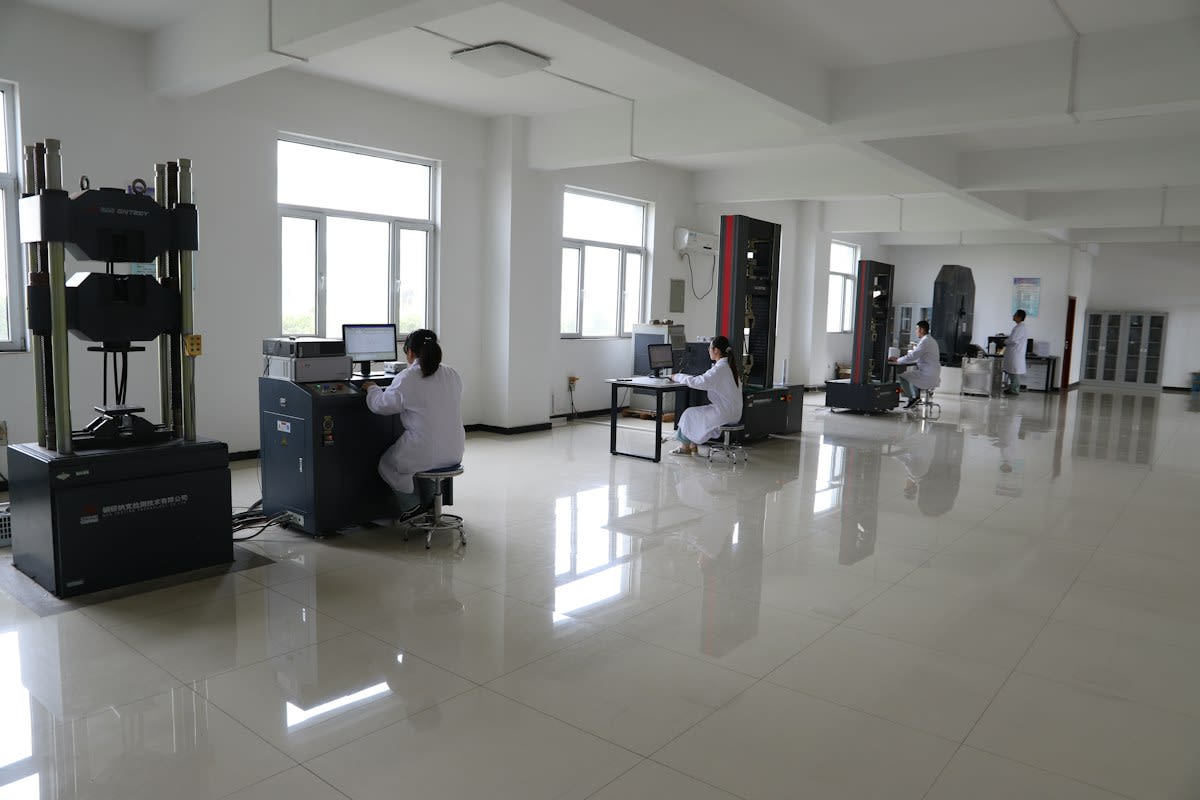
The data reflects this urgency. Labor market analysis from October 2024 through December 2025 shows a strong demand for roles that combine technical proficiency with customer engagement and organizational performance (Source: Oklahoma State Regents, 2026). Even at the associate degree level, the demand is palpable, with 829 openings identified from August 2025 onward that require a blend of practical experience and modern technical literacy (Source: Oklahoma State Regents, 2026). The delta between 2024 and 2026 is stark: we have moved from valuing the 'technical expert' to valuing the 'technical translator'.
"The combination of artificial intelligence competencies and engineering specialization will provide graduates with a versatile skill set applicable to a broad range of emerging and high-demand careers."— Oklahoma State Regents Meeting Agenda, 2026
This trend isn't limited to the tech sector. It is appearing in high-touch, high-stakes environments like healthcare. In the nursing field, the most significant growth is not found in the most narrow specialties, but in those who offer versatility. Nurse midwives, for instance, are seeing an expected job growth of 11.1% through 2034, a rate that exceeds the national average (Source: BLS via All Nursing Schools, 2024). Their value lies in their ability to operate as primary care providers for both women and newborns, bridging the gap between specialized delivery and general primary care. Versatility is the engine of their growth.
As a journalist who has spent years interviewing hiring managers and C-suite executives, I have noticed a recurring, invisible friction in the hiring process. There is an internal debate happening right now in HR departments: do we hire the person who knows everything about one specific software or process, or the person who can learn three new tools in a month and apply them to a business problem? The 'expert' is often viewed with suspicion now—not because they lack knowledge, but because they are perceived as rigid. The fear is that the hyper-specialist will struggle to pivot when the underlying technology shifts.
The Cognitive Cost of AI Dependency
While versatility is the goal, there is a dangerous shortcut that many professionals are taking: outsourcing their core cognitive functions to Generative AI. This creates a paradoxical vulnerability. As we rely more on AI to handle the 'deep work' of our specialization, we risk a form of professional atrophy. We aren't becoming versatile; we are becoming dependent.

Research into AI dependency reveals a troubling framework of 'cognitive preoccupation' and 'withdrawal' (Source: Goh et al., 2025). A study involving 1,333 participants identified that reliance on Generative AI can lead to negative psychological and behavioral consequences when the tool is unavailable (Source: Goh et al., 2025). If your specialization is merely the ability to prompt an AI to do the work, you aren't a specialist—you are a user. When the AI evolves or the access changes, the user is the first to become obsolete.
The real danger is 'AI attachment dysregulation,' where the professional bond with the tool replaces the mastery of the craft (Source: Cureus, 2026). This is the ultimate obsolescence trap. The specialist who uses AI to enhance their deep knowledge is a superpower; the specialist who uses AI to replace their deep knowledge is a liability. The former is versatile; the latter is fragile.
Fact-Check & Accuracy Note
Claims regarding the 11.1% growth in nurse midwifery are sourced from the U.S. Bureau of Labor Statistics. Data regarding the 829 associate-level openings and AI Engineering curricula are sourced from the October 2026 Oklahoma State Regents agenda. The findings on AI dependency and the 1,333-participant study are attributed to Goh et al. (2025) and published in Cureus. The debate over whether AI causes cognitive atrophy or enables higher-level thinking remains an ongoing area of psychological research.
How do we navigate this without falling into the trap of superficiality? The answer lies in the 'embedded specialization' model. Rather than seeking a new degree every time the wind blows, the modern professional must build a portfolio of 'stacked' competencies. This means combining a hard technical skill with a human-centric skill, and then layering AI fluency over both.
| Professional Model | Core Focus | Market Risk | Adaptability Score |
|---|---|---|---|
| Hyper-Specialist | Depth in one narrow niche | High (Tool Obsolescence) | Low |
| AI-Dependent User | Prompting/Tool Execution | Critical (Platform Shift) | Very Low |
| Versatile Specialist | Depth + Cross-Domain Integration | Low (High Pivot Capacity) | High |
We see this play out in real-time in global markets. In China, for example, nursing environments are under constant scrutiny to improve practice through systemic factors rather than just individual clinical skills (Source: Frontiers in Health Services, 2026). The professionals who thrive there are those who can navigate the organizational performance and the clinical reality simultaneously. They don't just 'do nursing'; they manage the environment of care.
The transition from specialist to versatile professional requires a mental shift. It requires the courage to be a beginner again in a secondary domain. It means the aerospace engineer spending time understanding retail logistics or the nurse spending time on organizational performance. This cross-pollination is where the highest value is now created.
Editorial Note
Editorial Note: This analysis intentionally avoids the 'crisis' narrative often associated with AI. The data suggests that while some roles are disappearing, the demand for versatile, integrated skill sets is actually increasing. The opportunity lies in the transition, not in the avoidance of technology.
Ultimately, the fastest path to career obsolescence is the belief that you have 'arrived' at a level of expertise that no longer requires expansion. The moment you define yourself solely by a single tool or a single niche, you have drawn a target on your back. The future belongs to the architects of convergence—those who can weave together the precision of the specialist with the agility of the generalist.