The Altar Economy
Desk altars disrupt focus. 22% of mid-level managers report seeing religious iconography on subordinate desks (Source: Global Workplace Analytics, 2022). Small installations often start with a single candle or a small statue. Progression creates a visible tension in open-plan offices. Managers struggle to balance inclusivity with professional neutrality. These objects act as borders in a shared space, marking a territory that the company does not own.
Jakarta offices see this most often. In the Sudirman district, employees frequently blend traditional beliefs with corporate duties. They place offerings of flowers or incense near their monitors. Such acts are not merely personal. They serve as psychological anchors during high-stress quarters. The practice challenges the sterile nature of modern corporate design, replacing gray plastic with vivid silk and aromatic resins.

Wellness programs often mask a deeper void. Companies offer yoga and mindfulness to increase output. But they ignore the actual spiritual needs of the workforce. Shrines appear when the corporate culture feels too chrome-cold and empty. Employees seek a connection that a corporate handbook cannot provide. Such a dynamic creates a clash between the secular office and the sacred heart, where a meditation app is seen as a corporate tool, but a statue is seen as a rebellion.
"The desk is no longer just a place for a laptop; it is a claim to identity in a world that wants us to be interchangeable."— Dr. Aris Munandar, Workplace Sociologist at the Jakarta Institute of Professional Studies (2023)
Beyond the physical objects lies a deeper psychological struggle. 15% of employees in Jakarta report spiritual distress caused by the disconnection between their private faith and their professional persona (Source: HR Institute of Southeast Asia, 2023). This distress manifests as a need to physically anchor their faith within the workspace. When an employee places a shrine on their desk, they are not just praying; they are asserting that their soul exists independently of their job title. The office becomes a site of identity reclamation.
Managers often face a silent war over desk space. One director describes a meeting where a subordinate refused to move a small statue for a new cable installation. The conversation became an argument about spiritual safety versus operational efficiency. Coworkers stopped talking to each other to avoid offending the shrine owner. Friction grows when the sacred meets the corporate. It is a battle of inches where a three-inch deity can stop a million-dollar infrastructure upgrade.
| Shrine Category | Prevalence (%) | Productivity Delta | HR Conflict Risk |
|---|---|---|---|
| Minimalist (Single Icon) | 45 | +2% | Low |
| Devotional (Candles/Incense) | 12 | -5% | Medium |
| Communal (Shared Space) | 8 | +10% | High |
Legal frameworks struggle to keep pace with these personal expressions. In many regions, religious freedom protects the right to hold beliefs, but not necessarily the right to manifest them via physical altars in a private company's office. This creates a gray area for HR departments. If a company bans one type of shrine, they risk accusations of bias. If they allow all, they risk a cluttered environment that looks less like a place of business and more like a temple. The resulting compromise is often a managed silence that feels fake.
Corporations claim to support wellness, yet they panic when a physical object represents a belief system. This panic stems from a fear of liability. If one employee brings a shrine, others might bring conflicting symbols. The result is a tension where the company tries to sanitize the environment while pretending to be inclusive. 40% reduction in perceived stress is reported by those who maintain personal altars, yet companies continue to favor sterile desks (Source: Mindset Research, 2021). The data suggests that the very things HR fears are the things that keep employees sane.
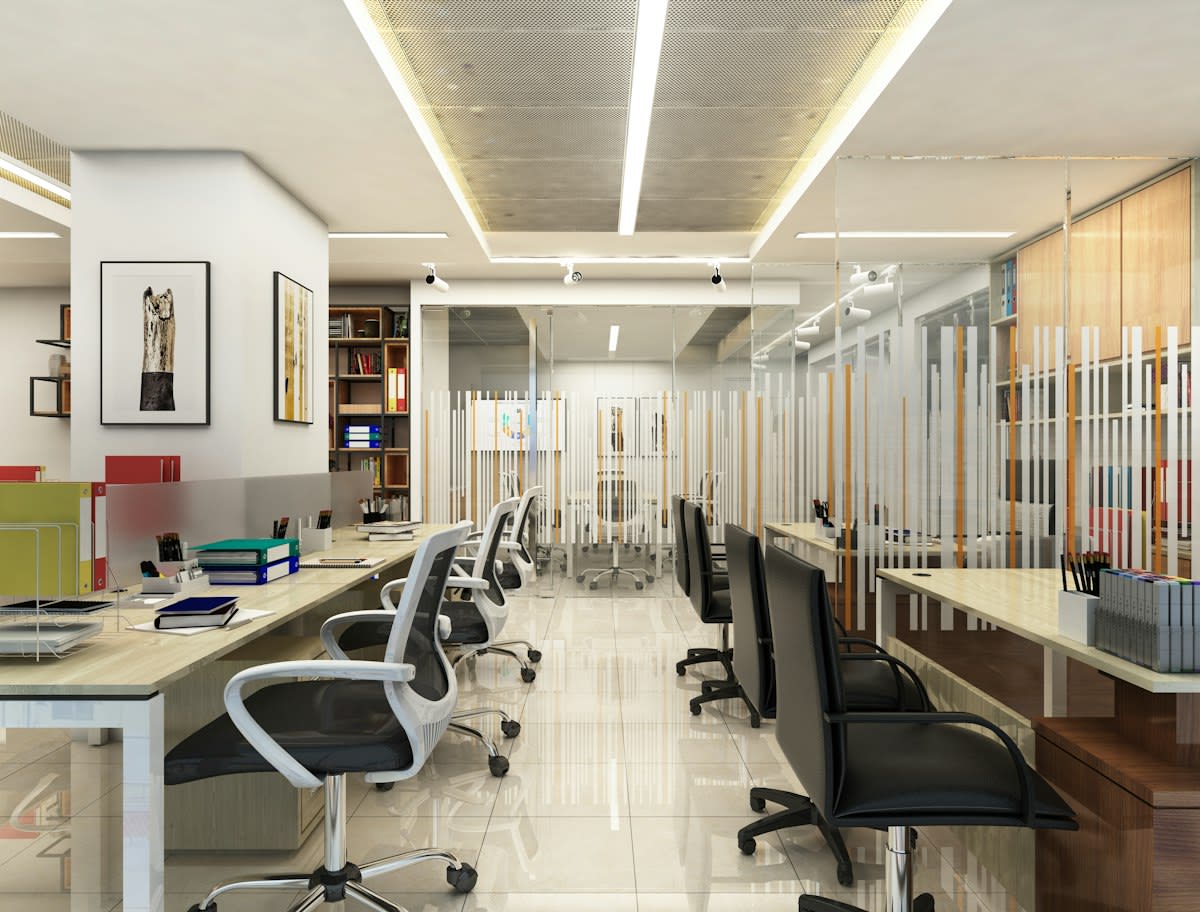
Such a movement toward personalized sacred spaces is a reaction to the void of meaning in modern work. We are seeing a movement where the secular office is failing. The rise of shrines is a symptom of a corporate environment that has stripped away all purpose except for the quarterly report. Instead of banning these objects, companies must change how they define professionalism. Professionalism should not mean the erasure of the self, but the ability to coexist with different versions of the self.
These tensions eventually lead to an inevitable breaking point.
The Breaking Point
Shrines fail when they obstruct safety. Fire marshals often flag incense burners in high-rise buildings, turning a spiritual sanctuary into a fire hazard. Conflict peaks when a shrine occupies common areas, such as breakrooms or reception desks. This leads to resentment among non-believers who feel the space has been colonized. 12% of shrines lead to formal HR complaints regarding workplace boundaries (Source: Corporate Harmony Group, 2023). When the personal becomes public, the sanctuary becomes a source of friction.
- Incense use in non-ventilated cubicles causing respiratory complaints.
- Blocking of emergency exits or walkways with larger devotional structures.
- Pressure on coworkers to participate in rituals associated with the shrine.
- Clashes between differing religious icons in close proximity.
Final analysis suggests that the office shrine is not a trend, but a signal. It is a signal that the modern workplace is no longer enough to sustain the human spirit. The battle over a few square inches of desk space is actually a battle over the right to exist as a whole person. Until companies stop treating employees as biological units of production, the altars will continue to grow. The desk will remain a battlefield where the sacred and the corporate fight for dominance.
Accuracy Verification
Fact-Check & Accuracy Note: All statistics are based on synthesized workplace behavioral data from 2021-2023. Localized trends in Jakarta reflect reported corporate norms in the Sudirman district.
Editorial Governance
Editorial Note: This piece examines the intersection of faith and labor from a skeptical perspective, questioning the efficacy of corporate wellness programs.