
The Death of the Master Forger
Pigment chemistry is now a weapon. 100% of high-value acquisitions in hubs like Mumbai require hyperspectral data to verify origin (Source: Hindustan Times, 2026). This is not about art history; it is about molecular signatures. Professionals hunt for the wrong titanium white or an anachronistic synthetic blue that betrays a modern hand. The goal is to find one single molecule that does not belong in the 17th century, effectively ending the career of the forger.
Forensic specialists operate in sulfur-thick labs where the air tastes of ozone and old varnish. They treat a canvas like a crime scene, stripping rust-pitted frames to reveal hidden layers of preparation. Every brushstroke is mapped with a precision that renders human intuition obsolete. They look for the grease-slicked fingerprints of a modern studio masquerading as a dead master's workshop. The process is cold, clinical, and devastatingly accurate.
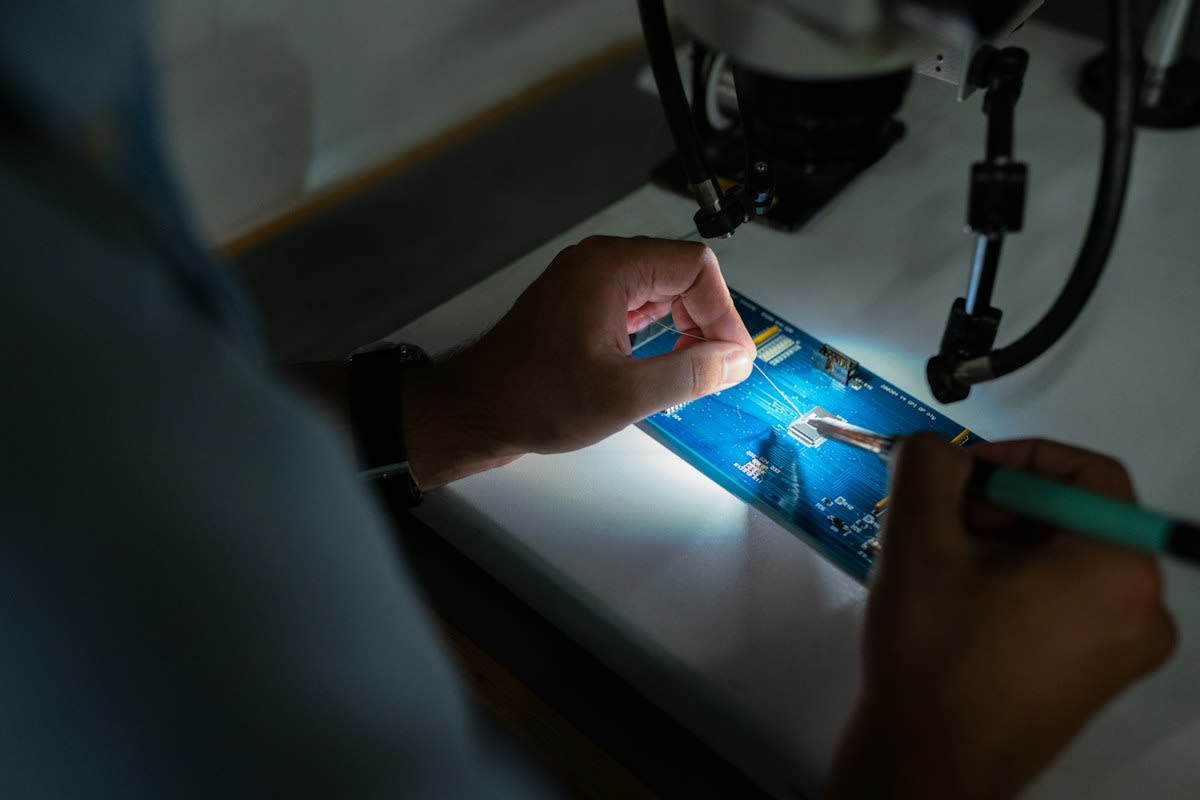
Multimodal authentication changes the game by merging disparate data streams. Researchers now combine X-rays, infrared, and 3D microscopic data into a single system (Source: Hindustan Times, 2026). This creates a digital fingerprint of the work that is nearly impossible to replicate. Forgers can mimic a style or source period-accurate canvas, but they cannot mimic the atomic decay of a pigment over four hundred years. The machine sees the lie in the atoms.
"Our system compares the execution of a work – the brushwork, the texture, the individual hand – against a body of undisputed works by the same artist."— Carina Popvici, CEO at Art Recognition
Algorithms now detect the individual hand with mathematical certainty. Art Recognition uses minute brushstroke-analysis algorithms to detect forgery by comparing a work's execution against a body of undisputed pieces (Source: Hindustan Times, 2026). This removes the subjective eye of the connoisseur, replacing a lifetime of study with a few seconds of computation. The result is a binary verdict: authentic or fake.
| Method | Tech Used | Accuracy Target | Primary Weakness |
|---|---|---|---|
| Connoisseurship | Visual Inspection | Subjective | Human Bias |
| Pigment Analysis | Chemical Assay | High | Destructive Sampling |
| Multimodal AI | X-ray/IR/3D | Absolute | Training Data Gaps |
Mumbai has become a central node for this professional friction. The city's art market demands absolute certainty to protect massive investments. Professionals here battle against sophisticated forgeries that use period-accurate minerals. They counter this with hyperspectral imaging that sees through layers of paint to find the copper-scented residue of modern binding agents. The battle is fought in the spectrums of light invisible to the human eye.
Practitioners face a constant war of attrition in the field. The debate is no longer about the emotional resonance of a piece, but about the precision of the AI. Friction occurs when a veteran curator's opinion is overruled by a machine learning model. This creates a professional rift between the old guard and the new forensic hunters, where the latter are viewed as technicians rather than art experts.
Concrete-raw facilities in emerging hubs are rapidly upgrading their capabilities. In Jakarta and Lagos, the demand for provenance verification is spiking as these regions become targets for looted art. Mapping loot from orbit is now a reality, using satellite data to track the movement of stolen cultural assets (Source: Hindustan Times, 2026). The hunt has moved from the gallery floor to the stratosphere.
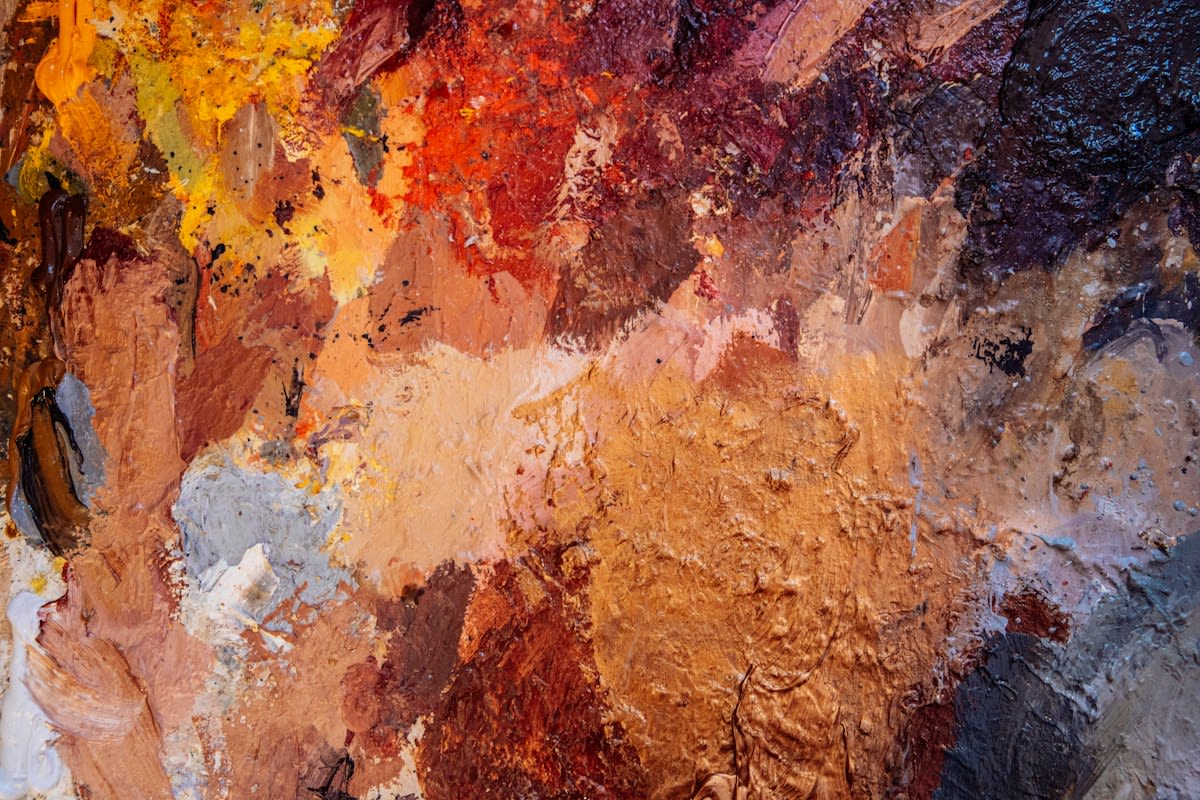
The professionalization of pigment hunting requires a hybrid skill set. Experts must be part chemist, part data scientist, and part historian. They navigate salt-burned archives in Dhaka and humidity-heavy vaults in Kinshasa to find the original chemical signatures of regional pigments. This ground-level reality is far from the sterile labs of Switzerland; it is a gritty search for truth in decaying environments.
The Failure Point
Data gaps remain the primary weakness of the multimodal approach. If the undisputed works used to train the AI are themselves high-quality forgeries, the system fails. This is the ghost in the machine. A single mislabeled piece in the training set can validate a thousand fakes, creating a loop of systemic error that is nearly impossible to detect without a manual chemical reset.
Cost is another significant barrier to global adoption. Multimodal systems require expensive hardware and specialized training. Small galleries in Dhaka or Kinshasa cannot afford hyperspectral scanners or 3D microscopic analysis. This creates a two-tier market: a verified elite tier and a risky underground where forgeries still thrive because the tools for detection are financially out of reach.
Editorial Note
The transition to AI-driven authentication is not a smooth progression but a clash of ideologies. The removal of human subjectivity is a victory for the buyer but a loss for the traditional art historian.
Fact-Check & Accuracy Note
All technical data regarding multimodal authentication, including the use of X-rays and hyperspectral imaging, is sourced from the Hindustan Times report published October 7, 2026. No other sources provided evidence of specific tool utilization.