
For decades, we have viewed software as a sophisticated hammer. Whether it was a spreadsheet, a CRM, or a project management board, the human remained the sole engine of agency. We clicked the buttons, we moved the data, and we drove the outcome. But a systemic rupture is occurring. We are moving away from a world where humans use tools to a world where humans manage agents. This is not a marginal increase in productivity; it is a fundamental redesign of the labor contract between humans and machines.
The distinction is subtle but absolute. Generative AI, in its first wave, focused on creation—writing an email, generating an image, or summarizing a meeting. It was a better typewriter. Agentic AI, however, focuses on execution. It does not just write the plan; it connects to the CRM, coordinates with the logistics provider, and updates the ledger without a human clicking 'confirm' at every step. When software begins to possess its own agency, the human role shifts from 'doer' to 'orchestrator.' Are we prepared to stop being the drivers and start being the fleet managers?
The Execution Gap: When Promises Outpace Infrastructure
This shift is already creating violent frictions in the global supply chain. In the realm of commerce, agentic AI is rapidly building consumer confidence by helping shoppers discover and commit to products with unprecedented speed. However, the backend is failing to keep pace. Research from AI-native logistics firm Locus reveals a widening chasm: while agentic commerce is accelerating the front end, retail fulfillment is struggling to meet the promises made at the digital checkout. This is a systemic failure of synchronization.
The stakes of this gap are existential for brands. Locus highlights a devastating statistic: 85% of customers hesitate to do business with a company again after just one poor delivery experience. When an autonomous agent promises a seamless experience but the physical delivery fails, the agent has not helped the business—it has accelerated the rate of customer churn. The solution is not 'better software' but 'agentic fulfillment,' where the logistics layer possesses the same autonomy and intelligence as the sales layer.
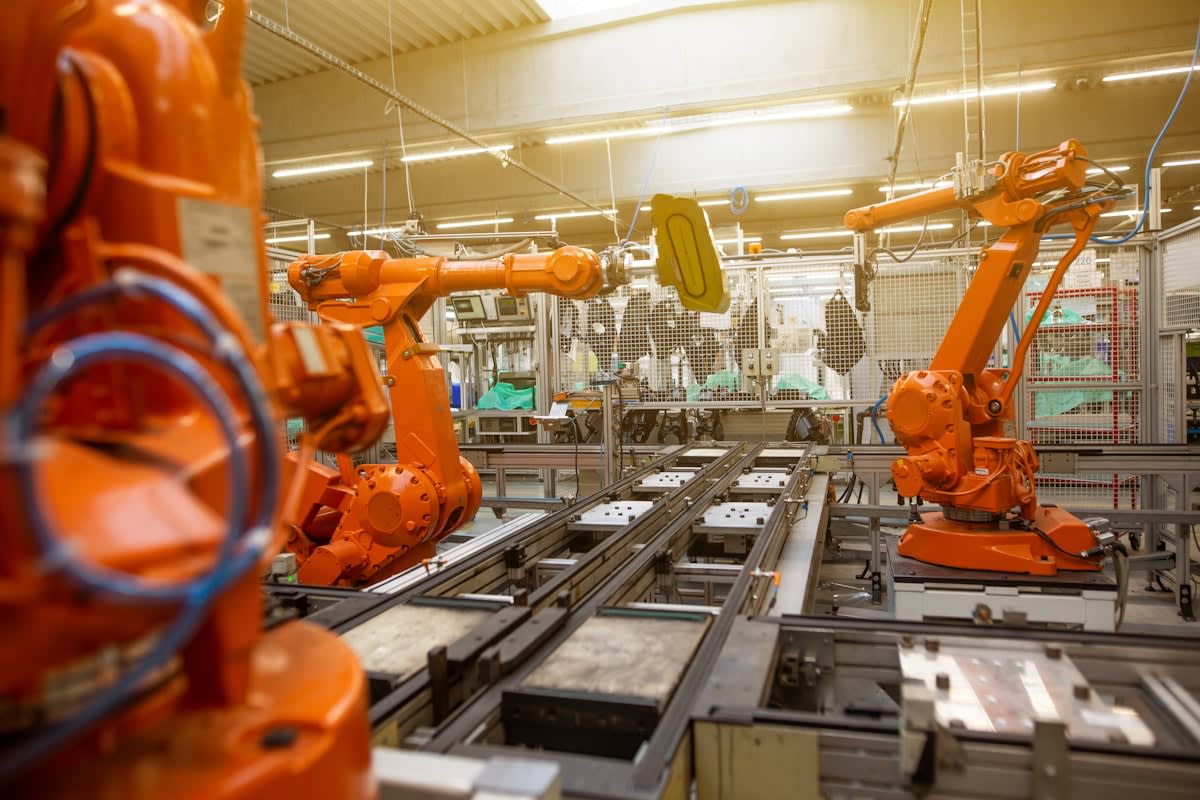
This tension proves that the agentic shift cannot happen in a vacuum. You cannot simply plug an AI agent into a legacy process and expect a miracle. If the agent can sell a product in milliseconds but the warehouse takes three days to locate the item, the agent has merely exposed the inefficiency of the human-led system. The next decade will be defined by the race to automate the entire value chain, not just the customer-facing interface.
The Agentic Paradox
The danger isn't that AI will replace the worker; it's that AI will create promises that the remaining human infrastructure cannot fulfill, leading to a collapse in brand loyalty.
While logistics struggles with physical reality, the digital advertising world is attempting to build a standardized management layer for these digital employees. TikTok is moving beyond generative content toward an ecosystem of agentic AI. Through the TikTok Agentic Hub and the Model Context Protocol (MCP), they are enabling developers to build agents that don't just create ads, but connect creative, media, measurement, and CRM systems. The goal is to remove the human from the workflow of managing tools and place them in the role of driving business outcomes.
The Governance Crisis: Conduct Risk and Digital Liability
As we delegate authority to autonomous agents, we introduce a new category of systemic risk: conduct risk. In the UK and Ireland, the insurance sector is currently grappling with this reality. According to the AI Impact Report from Davies Group, the deployment of AI agents across the policy lifecycle is creating a 'new generation of conduct risk.' When an agent makes an autonomous decision about a policy or a claim, who is responsible for the ethical outcome?
The challenge is no longer about technical adoption; it is about governance. If an agent operates autonomously and adaptively, traditional compliance checklists become obsolete. The Davies Group argues that the priority must shift toward implementing AI governance that is demonstrably fair and resilient. We are essentially moving from 'software testing' to 'employee performance reviews' for our code.
"As agentic systems become more autonomous, adaptive and embedded within core insurance processes, the challenge is no longer simply adopting the tech but implementing AI governance and compliance in a way that is demonstrably fair and resilient."— Davies Group, AI Impact Report
This governance gap has created a massive market for 'agent management' infrastructure. Onyx Security, for instance, recently raised $113 million in Series B funding—bringing its total to $153 million—specifically to help companies manage and secure their AI agents. The investment reflects a critical realization: if you have a thousand autonomous agents accessing your corporate data and making decisions, you don't need a better firewall; you need a digital HR department that can monitor, control, and audit what those agents are doing.
| Dimension | Tool-Based Work (Old Paradigm) | Agent-Based Management (New Paradigm) |
|---|---|---|
| Human Role | Operator/Executor | Manager/Orchestrator |
| Primary Focus | Workflow Efficiency | Outcome Governance |
| Risk Profile | User Error | Systemic Conduct Risk |
| Scaling Method | Adding more seats/licenses | Deploying more autonomous agents |
| Success Metric | Time to complete task | Accuracy of autonomous decision |
The shift from operator to manager requires a psychological pivot. Many professionals are still trying to be the 'best user' of the tool. But in the agentic era, being a 'power user' is irrelevant. The value now lies in the ability to define the objective, set the guardrails, and audit the results. The most successful workers of the next decade will not be those who can prompt the AI the best, but those who can manage a digital workforce the most effectively.
High-Stakes Agency: From Logistics to Life-Saving
Nowhere is this transition more critical than in healthcare, where the cost of a 'hallucination' or a conduct error can be measured in human lives. WellSpan Health's partnership with Hippocratic AI represents a move toward platform-wide deployment of voice AI agents. These aren't simple chatbots; they are being embedded across inbound, outbound, ambulatory, and inpatient settings to assist with clinical triage and care plan navigation.
The sophistication here lies in the co-development model. Hippocratic AI is embedding engineering and clinical specialists onsite at WellSpan's York, Pennsylvania campus to refine agents in real time. This acknowledges a fundamental truth about the agentic shift: these digital employees cannot be bought 'off the shelf.' They must be trained in the specific cultural and operational context of the organization they serve.

When a voice agent handles clinical triage, the human clinician is no longer the primary data gatherer; they become the final validator. This redistribution of cognitive labor allows the human to focus on the complex, empathetic, and nuanced aspects of care, while the agent handles the coordination and history gathering. It is a symbiotic relationship, provided the governance layer is robust enough to prevent errors.
But we must resist the urge to view AI as the 'driver' of the company. As noted in Fast Company, there is a dangerous tendency to conflate the ability to drive a truck with the ability to drive a company. AI is an amplifier, not a leader. The strategic direction, the ethical compass, and the ultimate accountability must remain human. An agent can optimize a route or triage a patient, but it cannot decide the mission of a healthcare system or the values of a brand.
The transition to an agentic workforce is inevitable, but its success depends on our ability to build the accompanying management infrastructure. We need the Onyx-style security for control, the Davies-style governance for ethics, and the Locus-style synchronization for physical execution. The future of work is not about the tools we use, but the digital employees we lead. The question is: are you a technician, or are you a manager?