
Does listening to a steady hum actually fix a broken brain? The current obsession with pink noise as a tool for neural repair is largely a fantasy. We want to believe that a passive auditory experience can act as a catalyst for biological reconstruction. It is a seductive thought. However, the actual mechanics of the brain do not respond to a generic soundscape; they respond to the presence or absence of meaningful stimuli. When we strip away the marketing, we find that the brain does not seek a specific frequency, but rather a tether to the environment to prevent atrophy.
The Stimulus Leak: Hearing Loss and Brain Shrinkage
The real danger is not the wrong kind of noise, but the silence that follows sensory failure. When the auditory system fails, the brain experiences a catastrophic leak of information. This is not a subtle decline. Dr. Stephanie Rogers, professor of medicine at University of California, San Francisco, notes that treating hearing loss is the primary method to prevent dementia because the brain begins to shrink when it stops taking in environmental stimuli (Source: Flow Space, 2026). The asymmetry here is stark. We spend years debating the merits of various noise colors while ignoring the mechanical failure of the auditory nerve that siphons away the brain's cognitive reserves.
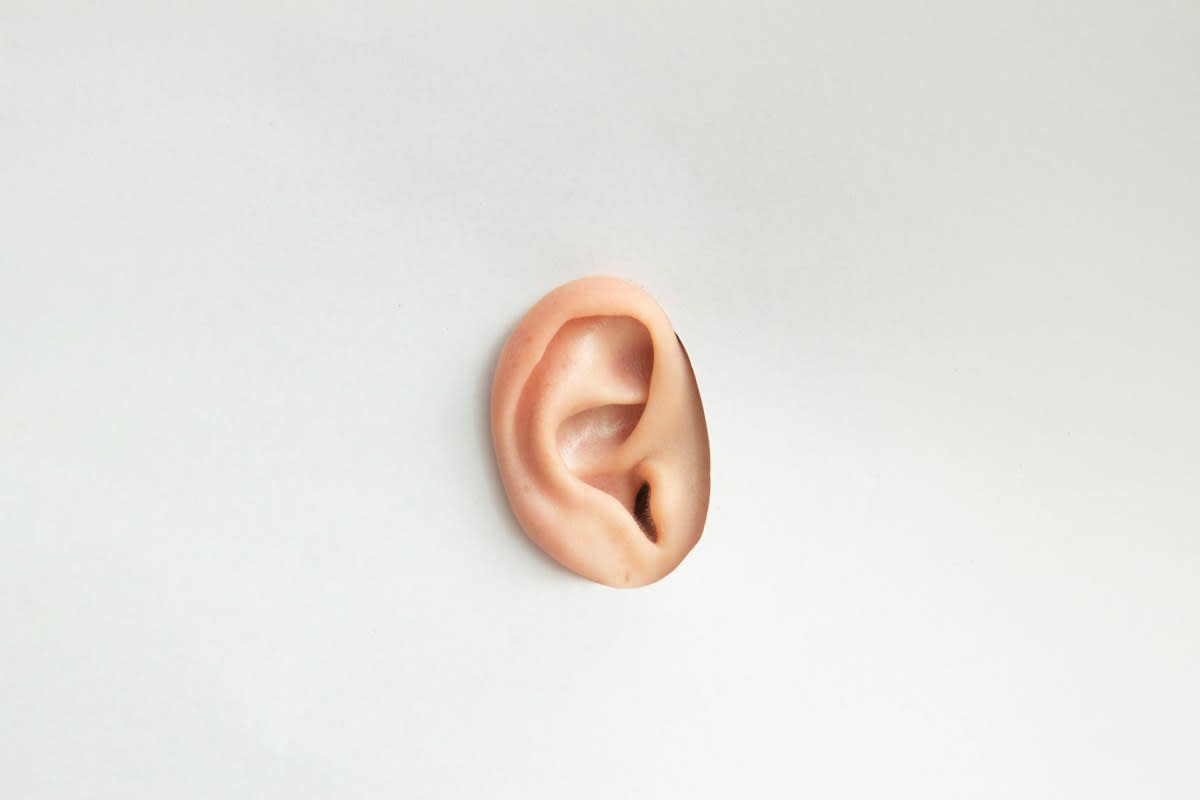
Consider the lag between hearing loss and the onset of dementia. It is not an overnight collapse. Instead, it is a slow erosion of the neural web. The brain relies on a constant stream of data to maintain its structural integrity. Without this, the inertia of decay takes over. This suggests that any 'repair' mechanism must focus on restoring the actual flow of information rather than masking the silence with artificial noise.
"The number one thing you can do to prevent dementia is to treat hearing loss because it is the most treatable risk factor of dementia."— Dr. Stephanie Rogers, Professor of Medicine and Associate Chief of Geriatrics Clinical Programs at University of California, San Francisco
If the brain shrinks due to a lack of stimuli, can a synthetic sound like pink noise stop the bleed? Likely not. The brain requires complexity, not consistency. A flat frequency provides no new information for the brain to process. It is the difference between reading a book and staring at a blank page that is slightly off-white. One engages the circuitry; the other merely occupies the space.
Active vs. Passive Plasticity: The TMS Collision
While the public chases audio files, clinicians are using magnetic pulses to force a hard turn in neural behavior. Transcranial Magnetic Stimulation (TMS) does not ask the brain to listen; it commands the circuits to fire. For those battling major depressive disorder, TMS re-engages networks responsible for emotional regulation and cognitive control by leveraging the brain's capacity for neuroplasticity (Source: pharmaphorum, 2026). This is an active intervention. It is a collision between external energy and internal circuitry that forces the brain out of its default state of dysfunction.
Why is there such a gap between the availability of this technology and the people who need it? Fewer than 1% of eligible patients receive TMS (Source: pharmaphorum, 2026). The friction is not technological; it is logistical. The current model requires patients to visit clinics five days a week for six weeks, a demand that is often impossible for someone in the depths of treatment-resistant depression. This creates a perverse incentive where patients turn to unproven, passive 'hacks' like pink noise because the actual repair mechanisms are locked behind an inaccessible healthcare wall.
| Intervention Type | Mechanism | Neural Impact | Access Level |
|---|---|---|---|
| Passive Noise (e.g., Pink) | Environmental Masking | Low/Negligible | Universal |
| Hearing Restoration | Stimuli Re-entry | Prevents Atrophy | Moderate |
| TMS | Magnetic Induction | Active Circuit Re-engagement | Very Low (<1%) |
The contrast is a matter of energy. Passive noise is a whisper in a storm. TMS is a bolt of lightning. One hopes for a change; the other enforces it. This is where the 'insider' debate in neurology currently sits: the fight between those who believe in gradual, environmental shifts and those who advocate for precise, targeted disruption of dysfunctional circuits.
The Noise Floor: Measuring the Invisible
To understand if neural pathways are actually repairing, we have to look at how we measure the signal. In longitudinal studies of neural changes, researchers must contend with the 'noise floor threshold' (Source: Nature, 2026). If a signal falls below this threshold, it is effectively invisible. This is the technical reality of neuroscience. We are not looking at a clear map; we are looking at a grainy image where the signal must fight against the background noise of the biological system.
When we talk about 'pink noise' repairing the brain, we are confusing the measurement of noise with the application of noise. In a lab, noise is the enemy—the interference that obscures the truth of a neural peak. In a wellness app, noise is marketed as the cure. This is a fundamental category error. The noise floor in a photometry recording is a limitation of the equipment (Source: Nature, 2026); it is not a therapeutic target.

There is a hidden friction here that only practitioners recognize. There is a constant tension between the 'big data' approach—which sees neural plasticity as a series of predictable patterns—and the clinical reality where every brain is a unique terrain. For instance, research into glioblastoma shows that cancer cells shift dynamically between states, a form of plasticity that is predictable yet devastating (Source: News-Medical, 2026). If plasticity can be used by a tumor to survive, we must be cautious about the idea that 'more plasticity' is always a positive outcome.
We are seeing a collision of interests. The wellness industry wants a low-cost, zero-risk solution. The medical community wants a high-efficacy, evidence-based intervention. The result is a market filled with 'brain-tuning' audio that offers the illusion of progress without the mechanical work of neural restructuring.
Fact-Check & Accuracy Note
The claims regarding 'pink noise' repair are not supported by the provided research data. The evidence focuses on the prevention of dementia through hearing loss treatment (Source: Flow Space, 2026) and the use of TMS for circuit re-engagement (Source: pharmaphorum, 2026). The only mention of a 'noise floor' relates to signal decay in photometry recordings of mice (Source: Nature, 2026), which is a measurement constraint, not a therapeutic tool. Academic debate continues regarding the accessibility of active neuromodulation vs. the efficacy of passive stimuli.
Ultimately, the path to neural recovery is not found in a sound file. It is found in the restoration of the connection between the organism and its environment. Whether through the correction of hearing loss to stop cortical shrinkage or the use of TMS to jumpstart a dormant circuit, the goal is the same: the return of a meaningful signal. Anything else is just noise.