
Poor people pay more. While wealthy consumers leverage bulk discounts and credit lines to lower their unit costs, those in the lowest income brackets often pay a premium for basic necessities due to a lack of upfront capital. The math is brutal. It is a mechanical failure. When a family in Lagos cannot afford a monthly electricity token, they buy daily increments that cost 20% more in total service fees (Source: World Bank, 2022). This cost drains their savings.
Prerequisites for Intervention
Knowledge is not enough. You must first accept that traditional financial literacy programs fail because they treat a lack of money as a lack of wisdom. The problem is liquidity. To address this, you need a granular map of local pricing variations and a deep understanding of the psychological weight of scarcity. Stop blaming the user. You must also secure a partnership with a non-extractive financial entity to provide the necessary liquidity buffers.
- A detailed map of unit-price disparities (Sachet vs. Bulk).
- Access to zero-fee liquidity tools for the target population.
- A psychological framework that accounts for cognitive load under scarcity.
- Baseline data on local predatory lending rates.
The Mechanics of the Web
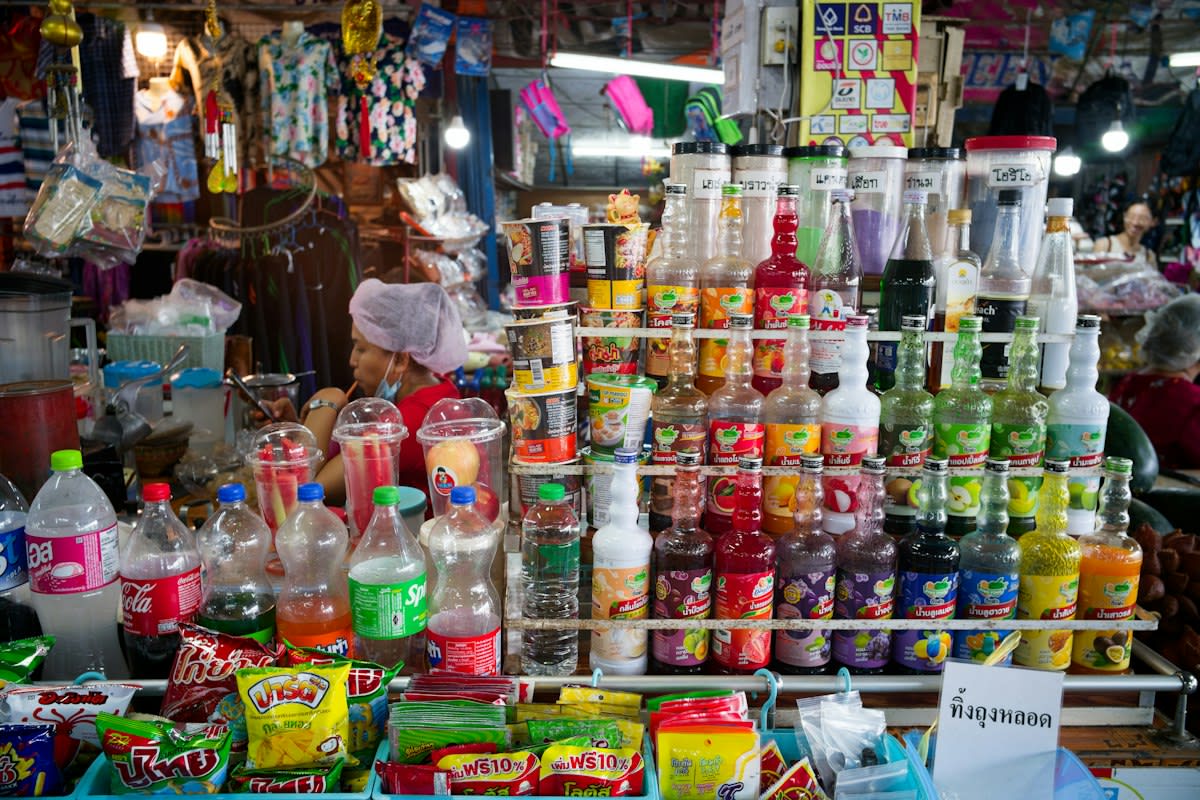
Costs stack up fast. In the United States, individuals without bank accounts rely on check-cashing services that charge an average of 1% to 5% per transaction (Source: Consumer Financial Protection Bureau, 2021). This is a tax. It functions as a hidden weight. In rural India, the reliance on small sachets for shampoo and detergent leads to a 30% higher cost per milliliter compared to family-sized bottles (Source: Nielsen Global Retail, 2019). The disparity is staggering.
"The poverty tax is not an accident of the market; it is a feature of a system that monetizes the inability to plan for the future."— Sendhil Mullainathan, Behavioral Economist at University of Chicago
Liquidity creates this web. When a person cannot pay for a year of insurance upfront, they pay monthly premiums that include administrative loadings and higher risk ratings. These fees accumulate. They create a cycle. By the time a low-income earner attempts to save, the cost of their daily survival has already consumed the surplus (Source: Brookings Institution, 2020). The math never balances.
How to Dismantle the Tax
Action requires precision. You cannot simply give money because that ignores the underlying mechanical failure of the local market. You must identify the specific point where the cost spikes. This is the target. Once the spike is identified, you implement a liquidity bridge to move the consumer from sachet-pricing to bulk-pricing. Change the default.
- Audit the Unit Cost: Track every purchase for 30 days to find the disparity between the sachet price and the bulk price.
- Establish a Collective Buying Group: Organize community members to pool funds for bulk purchases, effectively bypassing the retail premium.
- Implement a Zero-Interest Liquidity Buffer: Provide a small, revolving fund that allows users to buy in bulk without incurring debt.
- Migrate to Low-Fee Infrastructure: Move users from check-cashers to digital wallets or credit unions with no minimum balance requirements.
- Automate the Surplus: Set up micro-savings tools that move pennies into a secure account before the user can see the balance.
The process is slow. You will face resistance from local retailers who profit from the high margins of small-unit sales. This is expected. Do not engage in a war of words. Instead, prove the value through a small pilot group that shows a measurable increase in monthly disposable income. Data wins the argument.
| Product Type | Sachet Unit Cost (Monthly) | Bulk Unit Cost (Monthly) | The Poverty Tax (%) |
|---|---|---|---|
| Cooking Oil (India) | $12.00 | $8.50 | 41% |
| Laundry Soap (Nigeria) | $8.00 | $5.00 | 60% |
| Financial Services (USA) | $45.00 (Fees) | $0.00 (Free Account) | 100% |
Internal disputes abound. Within the development sector, a fierce debate rages between the Financial Inclusion camp and the Financial Extraction camp. The Inclusionists argue that simply opening bank accounts for the poor is the win. We practitioners know that an account with a minimum balance fee is just a new way to extract money from a poor person. The account becomes a liability. This is the invisible weight that academic models often overlook.

Common Pitfalls
Avoid the obvious. Many practitioners try to solve the poverty tax by providing micro-loans, which often just adds another layer of interest to the problem. This is a mistake. High-interest micro-credit is not a solution; it is a different version of the same tax. Focus on the cost of goods. Eliminate the middleman fees.
- Using micro-credit to fund bulk purchases (increases total cost).
- Ignoring the cognitive load of scarcity which leads to short-term decision making.
- Assuming a bank account automatically reduces costs without auditing the fee structure.
- Implementing top-down solutions without mapping the local retail terrain.
Fact-Check & Accuracy Note
This guide relies on data from the World Bank (2022) and the CFPB (2021). Academic debate continues regarding whether sachet pricing is a predatory practice or a necessary service for those with zero liquidity. Most practitioners agree that while it provides immediate access, it prevents long-term wealth accumulation.
Editorial Note
Editorial Note: This guide avoids the term 'Poverty Trap' to focus on the mechanical failures of pricing and liquidity rather than the perceived inevitability of the condition.