
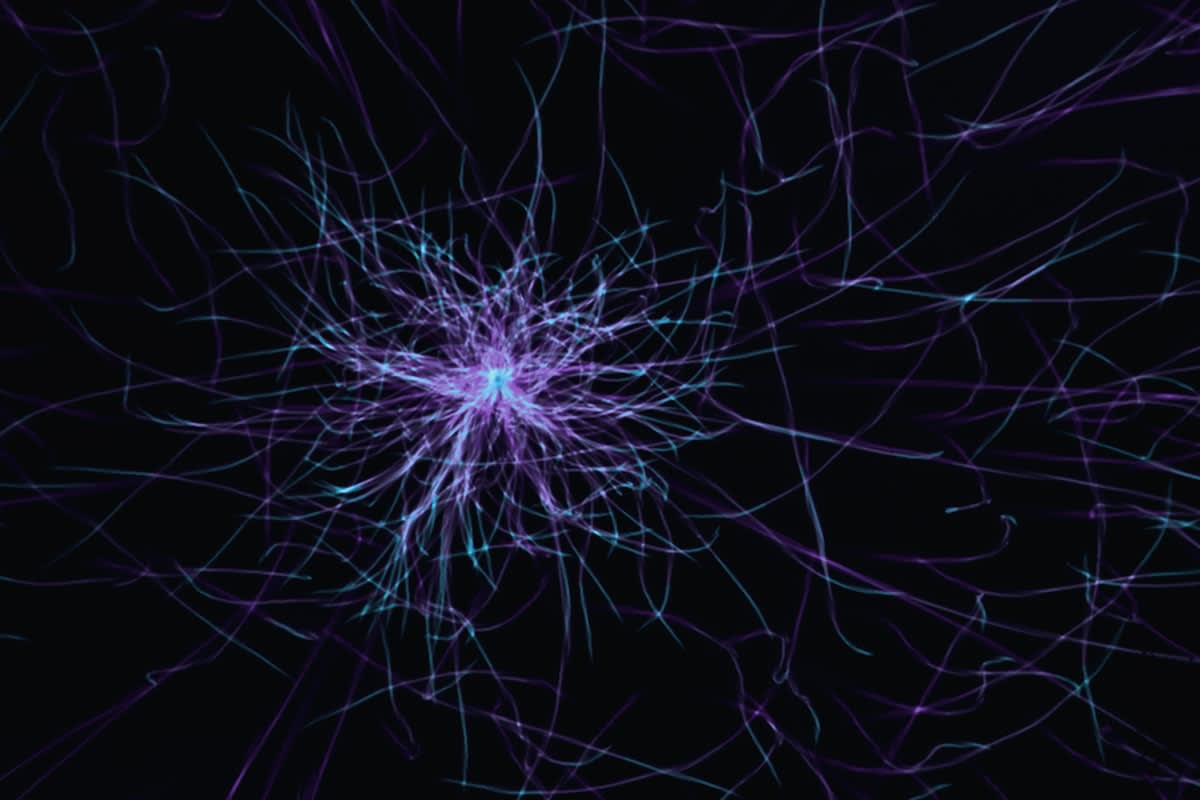
Most people treat the brain like a battery that slowly drains until it hits zero. This is a fundamental misunderstanding of neural architecture. The brain is not a depleting resource; it is a dynamic, plastic system capable of building redundancy. Cognitive reserve is the brain's ability to improvise and find alternate ways of getting a job done when the primary pathway is damaged. It is the difference between a city with one main bridge and a city with a complex web of overpasses, tunnels, and ferries. When one route collapses, the city keeps moving. Why do some individuals show significant brain pathology on an MRI but remain sharp and functional in their daily lives? The answer lies in the reserve they built decades prior.
The Prerequisites: Preparing Your Neural Canvas
You cannot build a skyscraper on a swamp. Before implementing high-level cognitive challenges, you must establish a physiological baseline that supports neurogenesis. This requires a commitment to three non-negotiable pillars: metabolic stability, sleep hygiene, and a baseline of physical mobility. If your systemic inflammation is peaking or your glucose levels are erratic, your brain will prioritize survival over the expensive process of building new synaptic connections. You need a functioning cardiovascular system to deliver oxygen and nutrients to the prefrontal cortex. Without this foundation, the most complex mental exercises are merely spinning wheels in the mud.
- Metabolic Baseline: Stable blood glucose levels to prevent insulin resistance in the brain.
- Circadian Alignment: 7-9 hours of quality sleep to facilitate the glymphatic system's waste clearance.
- Vascular Health: Low systemic inflammation and optimal blood pressure to ensure cerebral perfusion.
- Intellectual Humility: A willingness to be bad at something new for a prolonged period.
Once the foundation is set, we shift from maintenance to architecture. The goal is not simply to keep the brain active, but to force it to adapt. The brain is an efficiency machine; it seeks the path of least resistance. If you do the same crossword puzzle every morning, you aren't building reserve—you are merely automating a known task. True cognitive reserve is forged in the fire of novelty and difficulty. It requires a deliberate move away from the comfortable and toward the cognitively taxing.
The Execution: The Five-Step Architecture Protocol
- Intellectual Diversification: Engage in high-effort learning that requires a new conceptual framework. This means moving beyond your expertise. If you are a mathematician, learn a complex art form like oil painting or a tonal language like Mandarin. The shift from symbolic logic to visual spatiality or phonetic precision forces the brain to allocate resources to underused regions, increasing the total available 'hardware' for future use.
- Physical Synergy: Implement a regimen of aerobic and resistance training. Aerobic exercise increases the production of Brain-Derived Neurotrophic Factor (BDNF), which acts like fertilizer for new neurons. Combine this with complex movement—such as dance in Brazil or martial arts in Japan—where the brain must coordinate precise motor patterns with timing and spatial awareness. This creates a dual-load on the brain, taxing both the motor cortex and the executive function simultaneously.
- Social Complexity: Seek out high-stakes, nuanced social interactions. Superficial networking is useless for cognitive reserve. Instead, engage in debates, collaborative problem-solving, or mentorship with people from vastly different cultural or ideological backgrounds. Navigating the social nuances of a multicultural environment in a city like Singapore or London requires constant mental recalibration, which maintains the flexibility of the prefrontal cortex.
- Sensory Expansion: Challenge your primary senses to force cross-modal plasticity. This could involve learning to read Braille, practicing blindfolded navigation in a safe environment, or studying music theory and ear training. By forcing the brain to interpret the world through a non-dominant sense, you build auxiliary pathways that can be repurposed if the primary sensory or cognitive systems degrade.
- Cognitive Load Management: Periodically introduce 'deep work' sprints—uninterrupted blocks of 90 to 120 minutes focusing on a single, complex problem. In an era of fragmented attention, the ability to maintain intense focus is a rare form of neural resilience. This strengthens the white matter integrity of the brain, ensuring that signals travel efficiently across different hemispheres.
The effectiveness of these steps is not additive; it is multiplicative. When you combine aerobic exercise with a new language, the BDNF produced during the workout primes the brain to encode the new linguistic patterns more effectively. This is the synergy of the protocol. You aren't just adding skills; you are changing the physical structure of your brain. Research indicates that individuals with high levels of lifelong mental stimulation can show a 30% to 50% delay in the clinical manifestation of dementia symptoms, even when the physical markers of the disease are present in the brain tissue.
Pro Tip: Avoid the Plateau
The 'Novelty Threshold' is the point at which a task stops being a challenge and becomes a habit. Once you reach this threshold, the cognitive benefit plateaus. To keep building reserve, you must intentionally increase the difficulty or switch the domain entirely.
Consider the contrast between a retired executive who spends their days playing the same game of bridge and a retired executive who decides to learn the basics of quantum mechanics or start a community garden in a foreign city. The former is maintaining a skill; the latter is architecting a brain. The former's brain is efficient but brittle. The latter's brain is redundant and resilient. Which one would you rather be when the inevitable biological weathering of age begins?
Measuring Progress and Adjusting the Load
How do you know if the protocol is working? You cannot simply look in a mirror. Instead, monitor your 'recovery time' after a cognitive shock. Do you bounce back quickly from a period of intense stress? Can you switch between two complex tasks without a significant lag in performance? These are the hallmarks of a high-reserve brain. Use a quarterly audit to evaluate your current activities. If you can perform your 'challenge' tasks with minimal effort, you have reached the Novelty Threshold and it is time to pivot.
| Activity Type | Cognitive Load | Reserve Impact | Maintenance Frequency |
|---|---|---|---|
| Passive Reading | Low | Minimal | Daily |
| Learning a New Language | High | Substantial | 3-5x Weekly |
| Complex Social Debate | Medium-High | Moderate | Weekly |
| Novel Physical Skill (e.g., Tai Chi) | Medium | Moderate | 2-3x Weekly |
| Deep Problem Solving (Coding/Math) | Very High | Significant | Bi-Weekly |
The data is clear: the most resilient brains are those that never stop being slightly uncomfortable. This is not about stress—which can be neurotoxic—but about 'eustress,' the positive stress of growth. By systematically rotating your challenges across different cognitive domains, you ensure that no single part of your brain is left to atrophy. You are essentially creating a neural insurance policy.
Common Pitfalls: Why Most Fail the Protocol
The most frequent error is the 'Crossword Trap.' Many people believe that doing daily puzzles constitutes mental exercise. It does not. Once you understand the patterns of a crossword or a Sudoku, you are no longer learning; you are retrieving. This is a maintenance activity, not a growth activity. If the task doesn't make you feel slightly frustrated or exhausted, it isn't building reserve. You must embrace the friction of the learning curve.
Another critical failure is the neglect of the social dimension. We see this often in high-IQ individuals who believe that solo intellectual pursuits are sufficient. However, the human brain is a social organ. The unpredictability of another human being provides a level of cognitive demand that a book or a computer program cannot replicate. Isolation is a fast track to cognitive fragility, regardless of how many books you read.
Finally, beware of the 'Optimization Paradox.' People spend so much time researching the perfect supplement or the best brain-training app that they forget to actually do the hard work. No app can replace the complexity of learning a real-world skill in a real-world environment. The best 'brain hack' is simply doing things that are difficult and meaningful.
"Cognitive reserve is not about the intelligence you are born with, but the intellectual scaffolding you build throughout your life. It is a triumph of effort over biology."— Master Practitioner's Axiom