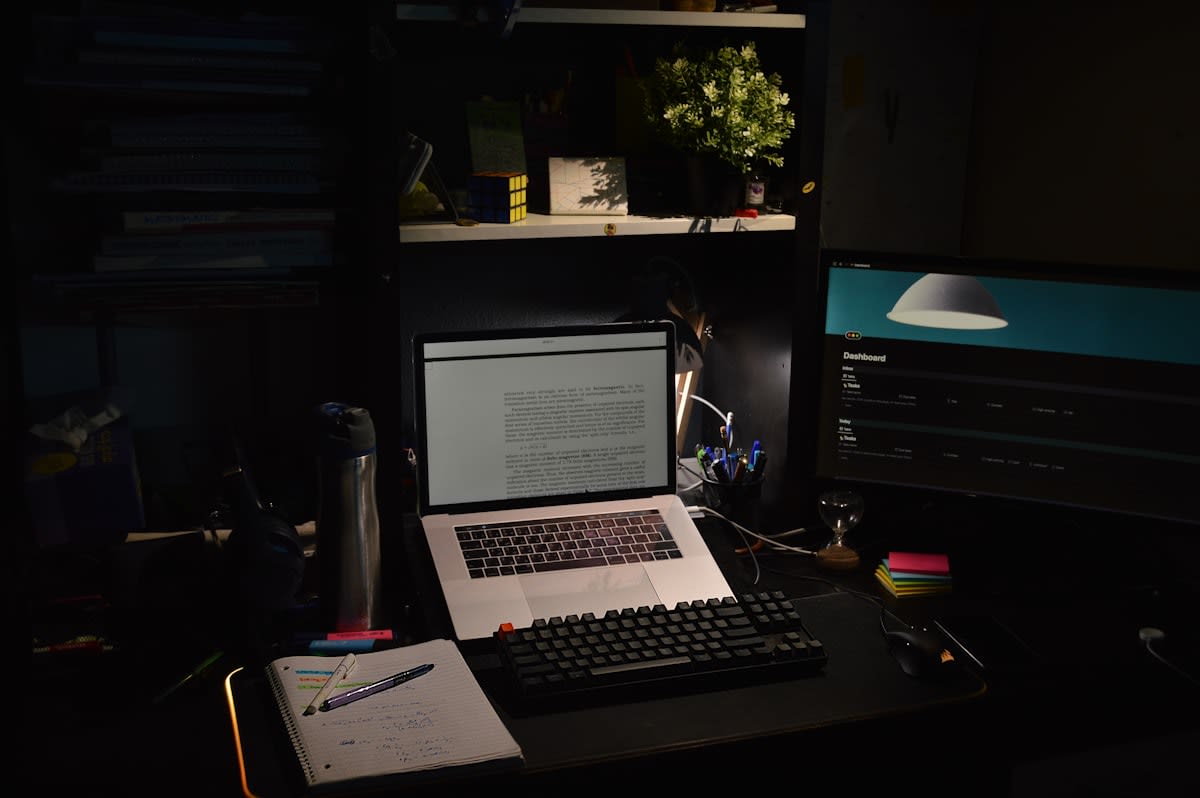
The Architecture of Attentional Theft
Your attention is the most valuable commodity in the modern economy. Algorithms are not designed to inform you; they are designed to keep you scrolling. This is a deliberate engineering feat, utilizing variable reward schedules that mirror the psychology of slot machines. When you feel that compulsive itch to check a notification, you are not experiencing a lack of willpower. You are reacting to a sophisticated system designed to bypass your prefrontal cortex and trigger a dopamine loop. The result is a fragmented consciousness that struggles to maintain a single thread of thought for more than a few minutes.
Why does this matter for the high-performer? Because the ability to concentrate is becoming an increasingly rare and valuable skill. While the majority of the global workforce operates in a state of constant semi-distraction, those who can isolate their focus gain a massive competitive advantage. We see this tension playing out globally, from the high-pressure corporate hubs of Singapore to the creative studios of Berlin. The struggle is universal: the battle between the biological need for deep focus and the digital incentive for shallow engagement. Resilience is not about avoiding technology, but about building a cognitive firewall around your most productive hours.

Prerequisites for Cognitive Sovereignty
Before implementing the protocol, you must accept that focus is a muscle, not a fixed trait. If you have spent the last five years in a state of digital fragmentation, your 'focus muscle' has likely atrophied. You cannot expect to jump from eight hours of fragmented scrolling to four hours of deep work overnight. This process requires a period of cognitive re-adaptation. You will feel bored, anxious, and perhaps even irritable as your brain recalibrates its expectation for constant stimulation. This discomfort is the signal that the protocol is working.
- A physical analog notebook for capturing 'open loops' and distractions.
- A dedicated 'phone jail' or a separate room for device storage during deep work.
- A screen-time tracking tool to establish a baseline of current cognitive leakage.
- A defined 'Analog Window' (at least 90 minutes daily) where no digital devices are permitted.
The most critical prerequisite is the shift from a reactive to a proactive mindset. Most people begin their day by reacting to the world: emails, news alerts, and social media feeds. This puts the brain in a state of high-beta wave activity, which is conducive to stress but detrimental to complex problem-solving. To reclaim your focus, you must establish a perimeter. This means deciding exactly when and how the world is allowed to access your attention, rather than leaving the gates open for any algorithm to enter.
The Five-Step Cognitive Resilience Protocol
- The Attentional Audit: Quantifying the Leakage
- Signal-to-Noise Calibration: Curating the Input
- Environmental Hardening: Eliminating Visual Cues
- The Deep Work Sprint: Executing the Focus Block
- Cognitive Recovery: The Strategic Reset
Step one begins with the Attentional Audit. You cannot manage what you do not measure. For three days, track every time your focus is interrupted. Do not judge the behavior; simply record it. Note whether the interruption was internal (a sudden thought about a task) or external (a notification). Most professionals are shocked to find they experience a 'context switch' every 6 to 11 minutes. Research suggests that the cost of this switching can reduce productivity by as much as 40%, as the brain requires significant time to fully re-engage with a complex task after a distraction.
Once the leakage is quantified, move to Signal-to-Noise Calibration. Not all information is created equal. The algorithm treats a breaking news alert with the same urgency as a message from your child or a critical client update. You must manually re-categorize your inputs. This involves a ruthless audit of your notifications. If a notification does not require an immediate action within 15 minutes, it should be silenced. Shift from a 'Push' model, where information is forced upon you, to a 'Pull' model, where you intentionally seek out information at scheduled intervals.
| Input Type | Algorithmic Noise (Reactive) | Cognitive Signal (Proactive) |
|---|---|---|
| News | Infinite scroll/Breaking alerts | Curated weekly digests/Long-form essays |
| Communication | Instant messaging pings | Scheduled email batches/Deep calls |
| Learning | Short-form video clips | Books/Deep-dive courses/Practicum |
| Social | Feed-based discovery | Direct, intentional outreach |
Environmental Hardening is where the protocol becomes physical. Your brain associates specific locations with specific behaviors. If you work in the same spot where you scroll through social media, your brain is primed for distraction the moment you sit down. You must create a 'Sacred Space' for deep work. This might be a specific desk, a particular room, or even a specific pair of headphones. The goal is to eliminate all visual cues that trigger a distraction loop. A phone placed face-down on a desk still exerts a 'brain drain'—the mere presence of the device reduces available cognitive capacity.

The fourth step is the execution of the Deep Work Sprint. Set a timer for 90 minutes. This duration aligns with the body's ultradian rhythms, which are the natural cycles of energy and focus. During this sprint, the only allowed activity is the primary task. When an intrusive thought occurs—such as 'I need to check that email'—do not act on it. Instead, write it down in your analog notebook. This 'closes the loop' in your mind, allowing you to offload the thought without breaking your flow state. By capturing the distraction, you acknowledge it without surrendering your attention to it.
Finally, you must implement Cognitive Recovery. Focus is a finite resource; you cannot sprint for eight hours a day. The most common mistake is spending 'breaks' on a smartphone. Scrolling through a feed is not rest; it is a different form of cognitive load. True recovery requires 'low-stimulation' activity. This could be a twenty-minute walk without a podcast, staring out a window, or a brief meditation. In France, the 'Right to Disconnect' laws recognize this necessity, legally protecting employees from the expectation of being reachable after hours. Your brain needs the silence to synthesize the information processed during the deep work sprint.
"The ability to concentrate is the new IQ. In an age of distraction, the person who can focus for four hours straight possesses a superpower that is practically unmatched in the modern marketplace."— Industrial Psychologist, Focus Research Group
Common Pitfalls and Failure Modes
One of the most insidious traps is the 'Productivity App' paradox. Many people attempt to solve their distraction problem by downloading more apps to track their focus. This often results in 'productivity procrastination,' where the user spends more time optimizing their system than actually doing the work. A complex system is a fragile system. The most resilient protocols are the simplest. If your focus system requires a 30-minute setup every morning, it is not a tool; it is another distraction.
Another common failure is the 'All-or-Nothing' fallacy. Users often attempt a total digital detox, deleting every account and throwing away their smartphone. This is rarely sustainable in a global economy that demands a degree of connectivity. The goal is not asceticism, but intentionality. It is far more effective to have a 'strict' morning and a 'flexible' evening than to attempt a rigid purity that eventually leads to a massive relapse into compulsive scrolling.
The Practitioner's Reminder
Remember that cognitive resilience is a long-game strategy. You are not fighting a battle against an app; you are redesigning your relationship with your own attention. The goal is sovereignty, not perfection.
Ultimately, the Cognitive Resilience Protocol is about reclaiming the agency over your own mind. We live in an era where the most sophisticated AI in history is fighting for your gaze. To win this fight, you do not need more willpower; you need a better system. By auditing your leakage, hardening your environment, and respecting your biological rhythms, you transform your focus from a liability into your greatest asset. The world will always be noisy. The question is whether you are the noise or the signal.