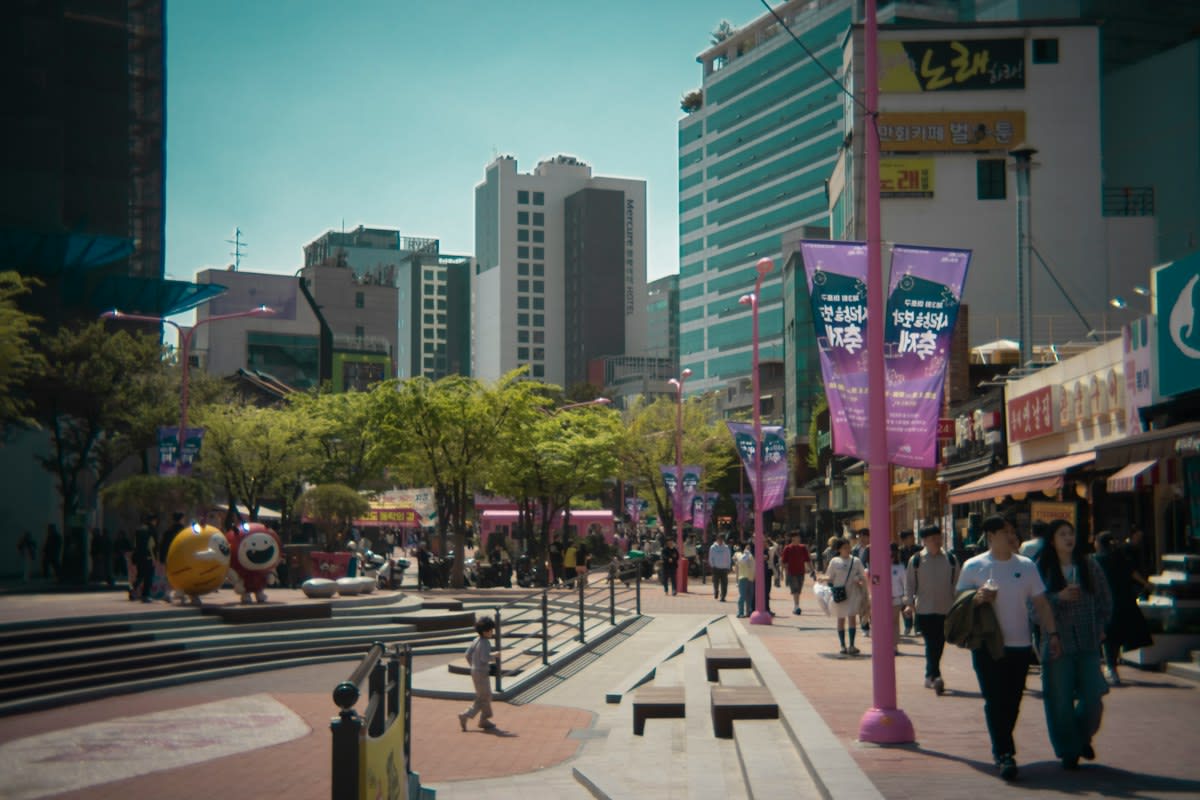
Why do we treat loneliness as a clinical pathology? We isolate the individual in a therapist's chair and ask why they feel hollow, ignoring the fact that the city around them is designed for isolation. It is a mistake. The grip of urban loneliness is not a lack of social skills, but a fraying of the local terrain. In Colombia, community-level, place-based interventions have shown that change happens not through individual willpower, but through the mobilization of a critical mass (Source: Respect Victoria, 2026). When a specific threshold of people adopts new behaviors, the surrounding circle follows. We must stop treating the patient and start suturing the neighborhood.
Prerequisites for Community Suture
You cannot simply announce a 'community day' and expect the void to vanish. The environment must first be primed. To implement a place-based approach, you need a map of the existing social frictions and a commitment to a multisectoral framework. This means integrating health, housing, and local governance into a single operational web. In Colombia, successful scaling of community interventions—such as those targeting dengue—relied on a multisectoral approach that bridged the gap between government mandates and street-level reality (Source: Quintero Espinosa, 2023). Without this alignment, your efforts will remain brittle and isolated.
- A multisectoral coalition (Local government, healthcare providers, and grassroots leaders).
- Identification of 'Critical Mass' candidates: 10-15% of the population willing to lead behavior change.
- Physical 'Third Spaces' that are not commercialized (parks, plazas, or shared courtyards).
- A baseline metric for collective efficacy to track the shift from isolation to interdependence (Source: Delea, 2019).
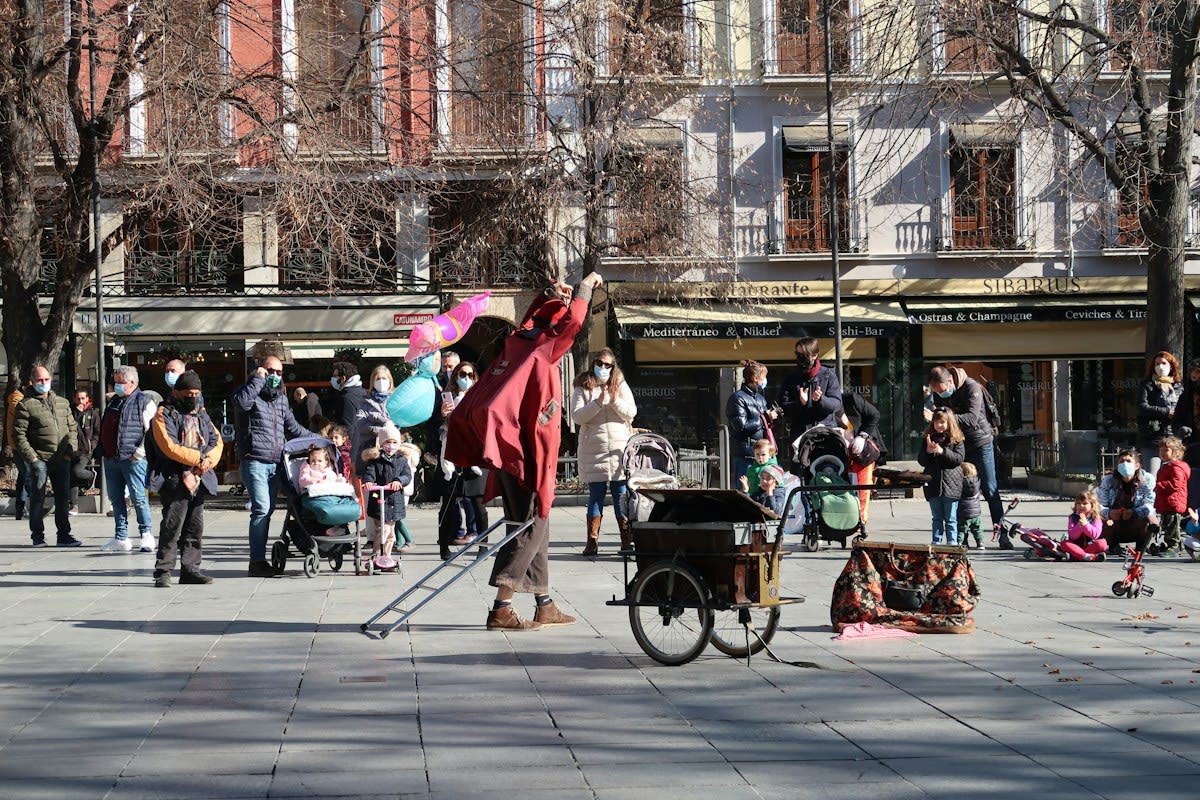
The Execution Playbook: Four Steps to Collective Grip
The goal is to move from 'networking'—which is transactional—to 'kinship,' which is foundational. We look to the way fictive kin networks operate in other non-Western contexts, such as among African American and Black Caribbean communities, where informal support networks act as a buffer against economic and social stress (Source: Taylor et al., 2021). These networks extend the family unit to include non-blood relations, ensuring that obligations are shared. This is the mechanism we must replicate in the city.
- Map the Social Terrain: Identify the 'invisible' boundaries in your neighborhood. Who speaks to whom? Where are the dead zones? Use the collective efficacy metrics proposed by Delea (2019) to identify where the social web has completely snapped.
- Deploy Arts-Based Catalysts: Don't start with 'support groups.' Start with creation. Arts-based interventions are proven to reduce depression by 1.06 SMD and anxiety by 0.75 SMD, while increasing overall wellbeing by 0.53 SMD (Source: ScienceDirect, 2026). Use murals, community theater, or shared gardens to create a low-pressure reason for collision.
- Institutionalize Fictive Kinship: Create formal structures for informal support. This involves shifting the default from 'professional service' to 'mutual aid.' Encourage the sharing of obligations across generations, mimicking the collectivist cultures where safety is a shared responsibility (Source: Bailey & Clark, 2024).
- Scale via Policy Suture: Move from the neighborhood to the city. As seen in Colombia and Peru, the most sustainable changes are those driven through nationwide welfare policy that supports place-based mobilization (Source: Respect Victoria, 2026).
This process is not linear. It is messy. You will encounter resistance from people who have spent decades building walls around their privacy. The friction occurs when the 'individualist' default of the city collides with the 'collectivist' requirement of the cure. You are not just fighting loneliness; you are fighting a century of urban planning that prioritized the car and the private lot over the porch and the plaza.
"Once a certain ‘critical mass’ of people adopts new attitudes and behaviours, others in their circles follow. This is the engine of community-level, place-based focus."— Respect Victoria, Research on Community Mobilization

As a practitioner, I have seen the internal disputes that plague these projects. Clinical psychologists often clash with community organizers. The clinicians want to measure success through individual symptom reduction. The organizers want to measure it through the number of people who know their neighbor's name. This is a mechanical failure of measurement. If you only track the individual, you miss the moment the community begins to hold itself together. The real win is not when one person feels less lonely, but when the neighborhood becomes a safety net that prevents loneliness from occurring in the first place.
Comparative Impact of Intervention Types
| Approach | Primary Mechanism | Mental Health Impact (SMD) | Sustainability |
|---|---|---|---|
| Individual Therapy | Cognitive Restructuring | Variable | Low (Environmental stress remains) |
| Arts-Based Interventions | Shared Expression | Depression: -1.06 / Anxiety: -0.75 | Moderate (Requires ongoing activity) |
| Place-Based Mobilization | Critical Mass / Social Norms | Wellbeing: +0.53 | High (Changes the social terrain) |
The data suggests that while individual therapy has its place, the most significant gains in wellbeing come from interventions that alter the social environment. The 0.53 SMD increase in wellbeing associated with arts-based interventions (Source: ScienceDirect, 2026) is a signal. It tells us that the act of doing something together is more potent than the act of talking about being alone. We must stop the obsession with 'talking cures' and start the practice of 'doing cures.'
Common Pitfalls in Urban Suture
Many attempt to digitize this process. They build an app to 'connect neighbors.' This is a mistake. Digital connectivity is a thin substitute for the physical grip of a community. It adds a layer of abstraction that actually increases the feeling of hollowness. Real connection requires the risk of physical presence and the friction of unplanned interaction.
- The Digital Trap: Replacing face-to-face collision with app-based coordination.
- The Professionalization Gap: Hiring 'community managers' instead of empowering natural local leaders.
- The Scale Fallacy: Trying to implement a city-wide plan before securing a critical mass in a single block.
- Ignoring the Fray: Failing to account for existing historical tensions between different ethnic or social groups in the neighborhood.
Fact-Check & Accuracy Note
This guide draws upon data from Respect Victoria (2026) regarding place-based mobilization, ScienceDirect (2026) regarding arts-based mental health outcomes, and Taylor et al. (2021) regarding fictive kin networks. There is ongoing academic debate regarding the exact 'critical mass' percentage required for social norm diffusion, with some studies suggesting 10% and others requiring up to 25% depending on the strength of the existing social web.
Editorial Note
Editorial Note: The 'Colombian Key' referenced here is the application of multisectoral, place-based mobilization strategies used in public health and welfare, adapted specifically for the psychological challenge of urban loneliness.