
The sensors in the Clarion-Clipperton Zone (CCZ) didn't make sense. For years, the assumption was simple: oxygen levels in the deep ocean only increase when cold, oxygen-rich surface water sinks. But the data coming out of the abyss started showing something impossible. Oxygen levels were climbing in complete darkness, thousands of meters below the reach of any sunlight. This isn't a sensor glitch or a sampling error. It is a fundamental rewrite of biological prerequisites. We are looking at the first documented case of oxygen production that doesn't rely on photosynthesis (Source: Nature Geoscience, 2024).
The Geobattery Mechanism
The culprit is the polymetallic nodule. These potato-sized rocks, rich in manganese, nickel, and cobalt, act as natural batteries. Through a process called seawater electrolysis, these nodules generate an electrical charge. When the voltage hits a critical threshold, it splits H2O molecules into hydrogen and oxygen. Researchers measured voltages of up to 0.95 volts on the surface of these nodules (Source: Nature Geoscience, 2024). It is a geochemical powerhouse operating in a vacuum of light, providing a breathable atmosphere for aerobic organisms in a zone previously thought to be entirely dependent on surface currents.
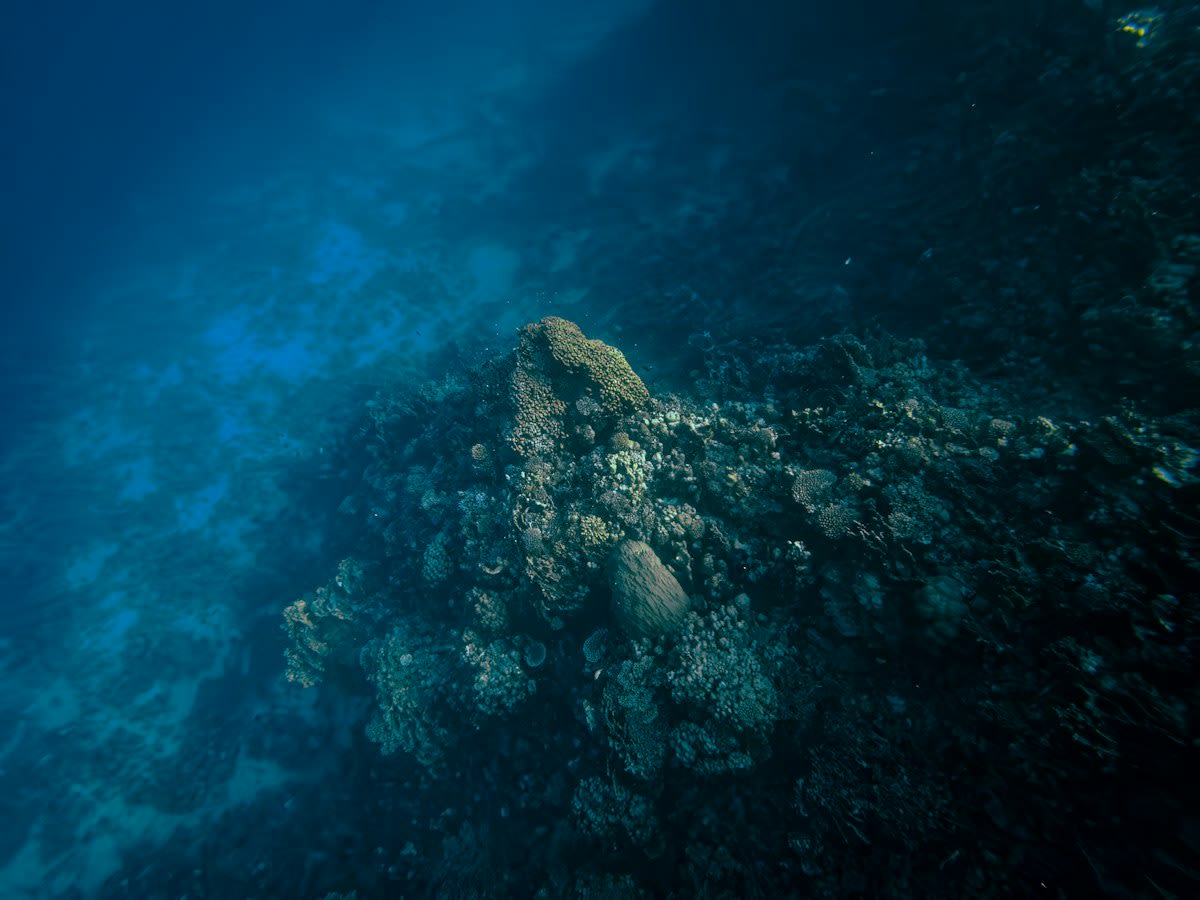
"We have always been taught that oxygen is produced by photosynthesis. But here, in the deep ocean, we found that oxygen is being produced without sunlight. This challenges the very foundation of how we think life began on Earth."— Professor Andrew Sweetman, Dalhousie University / Scottish Association for Marine Studies (SAMS)
The delta between the 2023 consensus and the current 2024 data is staggering. Twelve months ago, the deep sea was viewed as a passive sink—a place where oxygen goes to be consumed. Now, it is a source. This shift turns the Clarion-Clipperton Zone from a mineral warehouse into a biological engine. If these nodules are the primary oxygen source for the benthic ecosystem, the act of removing them isn't just habitat destruction. It is the equivalent of removing the lungs from the ocean floor.
Second-Order Consequences: The Regulatory Deadlock
This discovery lands directly in the lap of the International Seabed Authority (ISA) in Kingston, Jamaica. The ISA is currently under immense pressure to finalize the 'Mining Code,' the set of rules that would allow commercial extraction of these nodules. For years, mining companies have argued that the deep sea is a desert with low biological activity. The dark oxygen discovery nukes that narrative. If the nodules are actively producing the oxygen that supports the ecosystem, the environmental impact assessments (EIAs) currently on the table are obsolete. We are seeing a sudden, sharp increase in friction between member states pushing for a moratorium and those eyeing the cobalt reserves (Source: Nature Geoscience, 2024).
| Feature | Photosynthetic Oxygen | Dark Oxygen |
|---|---|---|
| Energy Source | Solar Radiation | Electrochemical Potential |
| Location | Euphotic Zone (Surface) | Abyssal Plain (4,000m+) |
| Catalyst | Chlorophyll | Polymetallic Nodules |
| Mechanism | Water Splitting via Light | Seawater Electrolysis |
The third-order effect is the collapse of the 'Green Transition' justification. The industry pitch has always been that we must strip-mine the ocean to get the minerals needed for EV batteries to save the planet. But if the process of extraction destroys a previously unknown oxygen-production system, the carbon-offset math fails. You cannot claim to save the biosphere by suffocating the deep ocean. This creates a massive liability for investors who have baked deep-sea mining into their 2030 supply chain projections.
Ground-Level Friction
The reality on the ground—or rather, 4,000 meters down—is a mess of political infighting and technical desperation. Researchers at SAMS and other institutions are fighting for funding to map these 'oxygen hotspots' while facing pushback from industry-funded labs that want to narrow the scope of the research. There is a palpable tension in the peer-review process. We are seeing a battle over the definition of 'baseline' data. Mining companies want a snapshot of the current state to justify extraction; scientists are arguing that the baseline is a dynamic, living system that we barely understand. The friction isn't just scientific; it's a legal war over who owns the data and who gets to define 'irreparable harm' in the eyes of the ISA.
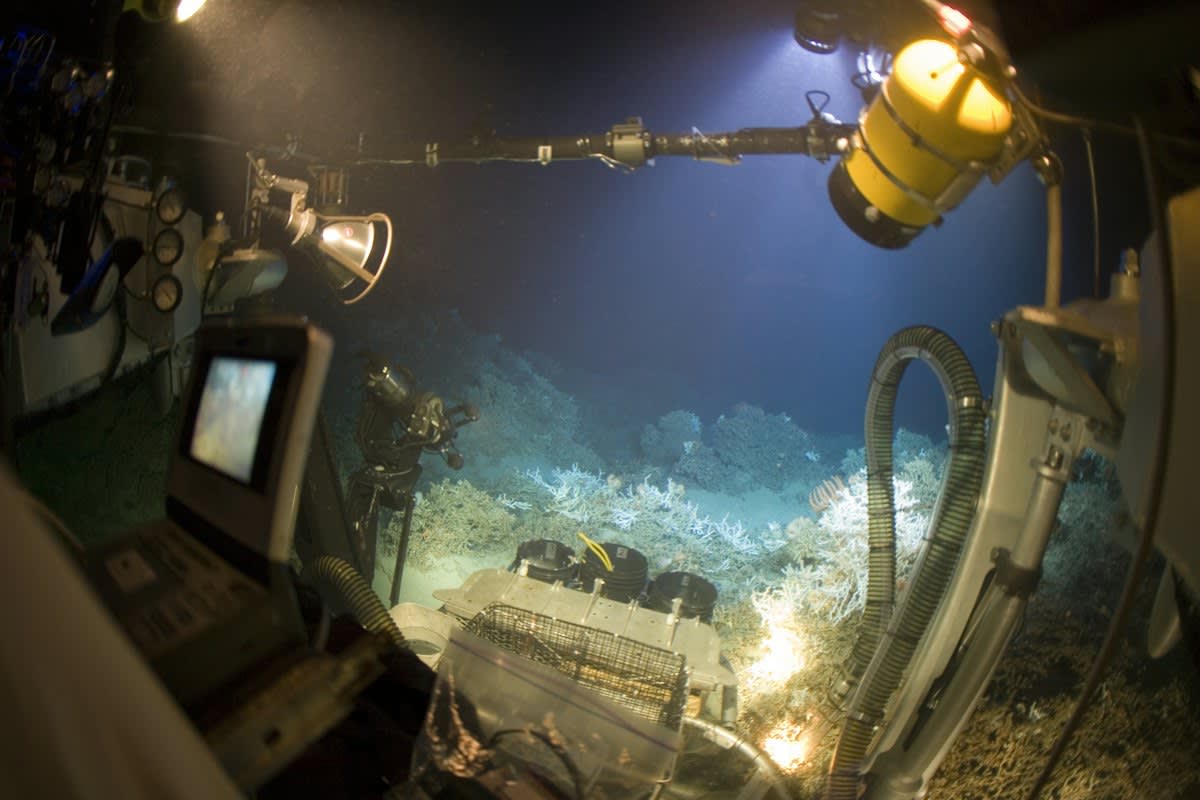
From a practitioner's perspective, the hardware is the bottleneck. Measuring oxygen at these pressures requires extreme precision. Many early readings were dismissed as errors because the scientific community couldn't conceive of a non-biological oxygen source. The 'ugly' reality is that we spent decades ignoring the possibility of geochemical oxygen because it didn't fit the textbook model. Now, we are playing catch-up with a handful of landers and a ticking clock as commercial contracts loom.
The Systemic Shift
If we accept that dark oxygen is a global phenomenon, we have to rethink the origin of life. The traditional theory posits that photosynthetic cyanobacteria oxygenated the Earth, allowing complex life to evolve. But if geobatteries were producing oxygen in the deep ocean billions of years ago, the 'spark' of life might not have come from the surface. This shifts the search for extraterrestrial life as well. We no longer need to look for 'Earth-like' sunlight conditions on icy moons like Europa or Enceladus. If the rocks themselves can breathe, the habitable zone in the universe just expanded by orders of magnitude (Source: Nature Geoscience, 2024).
Fact-Check & Accuracy Note
Settled: Polymetallic nodules can produce oxygen via electrolysis. Debated: The total volume of dark oxygen produced globally and its exact contribution to the overall deep-sea oxygen budget. The claim that this completely replaces the need for surface-delivered oxygen is not yet proven, but the mechanism is verified.