
Most leaders treat strategic decision-making as a form of high-stakes divination. They gather data, consult experts, and then make a binary bet on a single outcome. This approach is a liability. In an environment where the half-life of digital infrastructure is shrinking, betting on a single future is a recipe for structural failure. True strategic architecture does not seek to predict the exact shape of tomorrow; instead, it builds systems capable of thriving regardless of which version of tomorrow arrives.
The shift from guessing to architecting requires a fundamental psychological pivot. We must stop asking 'What will happen?' and start asking 'What is the probability of this happening, and what is the cost of being wrong?' This is the difference between a gambler and an architect. By applying probabilistic frameworks and modular design, you can transform extreme uncertainty from a threat into a competitive advantage. Why settle for a fragile plan when you can build a resilient system?
Prerequisites: The Architect's Mindset
Before implementing the toolkit, you must strip away the illusion of certainty. The human brain craves a narrative, but narratives are often distractions from the underlying probabilities. You need a commitment to intellectual humility and a willingness to embrace a world of 'maybe.' This isn't about being indecisive; it is about being precisely undecided until the data dictates a move.
- A rejection of binary thinking (Yes/No) in favor of probabilistic ranges (0-100%).
- An understanding of Utility Functions: knowing that the cost of a missed opportunity differs from the cost of a catastrophic failure.
- A commitment to modularity: the belief that no single vendor or system should be a single point of failure.
- The ability to decouple a factual assessment from a strategic action.
The Core Axiom
The goal is not to be right every time. The goal is to ensure that when you are wrong, the cost is manageable, and when you are right, the gain is exponential.
Once these mental prerequisites are in place, the process shifts from intuition to engineering. We move from the 'what' to the 'how,' utilizing a sequence of rigorous steps to filter noise and isolate signal.
The Step-by-Step Execution Framework
- Adopt Probabilistic Thinking: Stop forecasting single dates or numbers. Instead, utilize forecasting tournaments and probabilistic beliefs to create a range of outcomes. As demonstrated in research on students' decision-making, thinking in probabilities allows for better calibration and reduces the ego-driven need to be 'correct' about a single point.
- Define Your Utility Function: Determine the relative cost of different types of errors. In high-stakes settings, such as emergency triage, the cost of a missed emergency (a false negative) is far higher than the cost of an unnecessary treatment (a false positive). Your strategic decisions must be weighted by these utilities, not just by the raw probability of an event occurring.
- Audit for Structural Risk: Identify every single-vendor dependency in your operation. As noted by KPMG Canada in July 2026, relying on a single-vendor environment creates concentrated exposure. A single supply-chain disruption or pricing shift can paralyze the entire system. Map your dependencies and identify where a 'sovereign, multi-vendor' approach is required to ensure continuity.
- Architect for Modularity: Build your systems so they can be upgraded or replaced without a total redesign. This is critical for anticipating 'quantum risk' and evolving cyber threats. Modular, programmable designs allow you to adapt to regulatory changes or technological shifts on the fly, effectively extending the lifespan of your infrastructure.
- Deploy a Procurement Playbook: Create a formalized strategy for acquiring resources during disruption. Following the model of Warehouse on Wheels, a strategic procurement playbook gives leaders an edge by pre-defining how to secure essential assets when the standard supply chain collapses.

Implementing these steps requires a disciplined approach to data. You cannot rely on a single source of truth because, in extreme uncertainty, the 'truth' is moving. Instead, you must treat every piece of intelligence as a probabilistic belief. This is the same method used to steer and evaluate language models in high-stakes triage settings: the probability reflects a factual assessment, while the decision is shaped by the utility function.
Consider the implications for a global organization. If you are managing a data center network, the choice isn't just about hardware; it is a strategic choice about how digital government or corporate operations will function in a volatile global environment. Moving from a sovereign infrastructure to a strategic platform means you are no longer a victim of your vendor's roadmap.
"The half-life of digital infrastructure is shrinking. Networks must anticipate change."— KPMG Canada, July 2026
This shrinking half-life means that the time between a strategic decision and its obsolescence is narrowing. If your decision-making process takes six months, but your infrastructure's relevance lasts only twelve, you are operating with a dangerously low margin of error. Speed is not about rushing; it is about reducing the friction of adaptation.
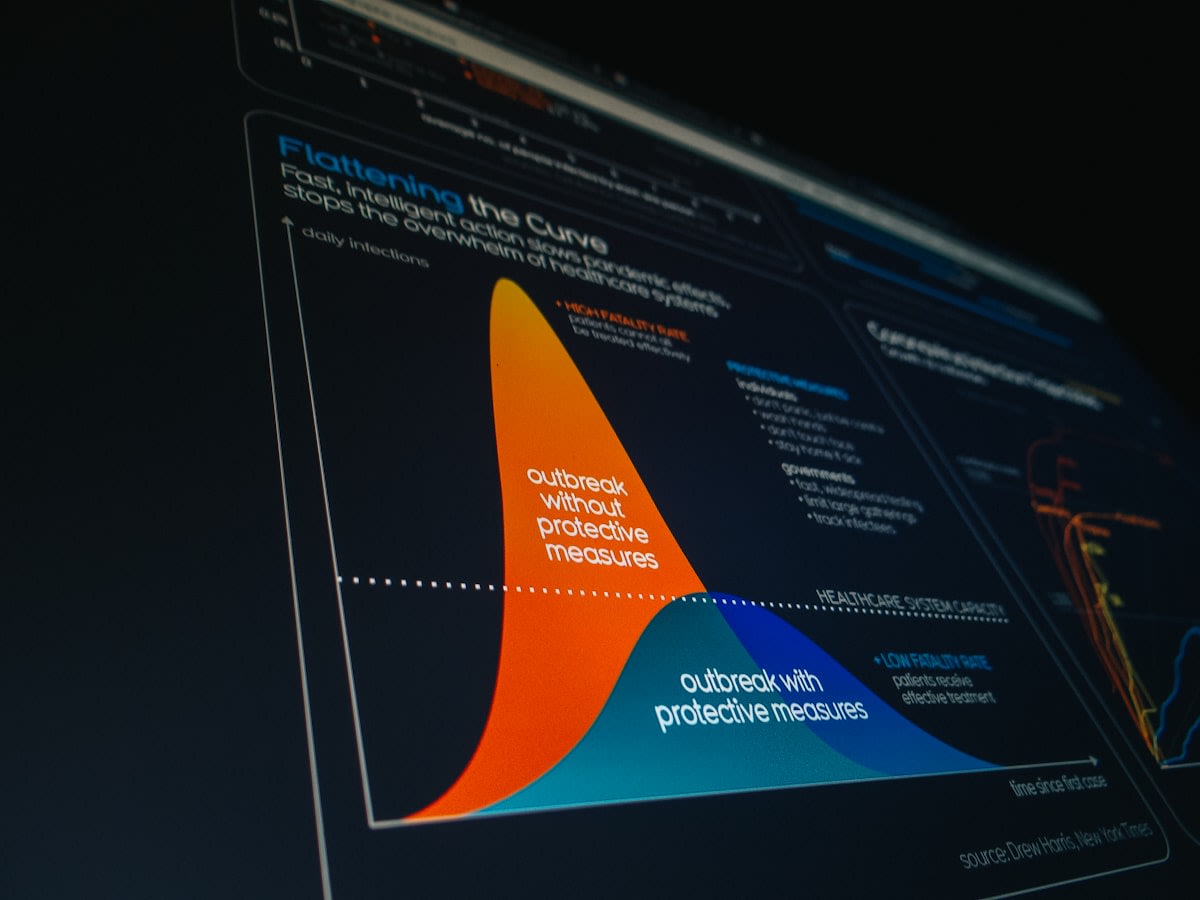
The final layer of the toolkit is the feedback loop. Every decision made under uncertainty must be tracked not by whether the outcome was 'good' or 'bad,' but by whether the process was sound. Did you account for the utility? Did you diversify the vendor risk? If you made a probabilistic bet and the 10% outlier occurred, you didn't make a bad decision—you experienced a statistical reality. The failure occurs when you bet 100% of your resources on a 90% probability.
Common Pitfalls in Strategic Architecture
Even the most intelligent practitioners fall into predictable traps. The most dangerous is the 'Simplicity Trap,' where a single-vendor environment is chosen because it is the most cost-effective option in the short term. This ignores the structural risk of concentrated exposure. When a single vulnerability or pricing shift occurs, the 'cost-effective' choice becomes the most expensive mistake in the company's history.
Another common error is the 'Probability-Action Contamination.' This happens when a leader's factual assessment of a situation is skewed by the action they want to take. To avoid this, elicit probability estimates in a separate context from the decision queries. Ensure the assessment of 'What is likely to happen?' is decoupled from 'What should we do?'
- Confusing a high-probability event with a certainty.
- Ignoring the 'relative cost' of missed emergencies in favor of average outcomes.
- Building rigid architectures that require a complete redesign to adapt to new threats like quantum risk.
- Over-reliance on intuition in high-stakes triage without a common yardstick of utility.
By avoiding these pitfalls and adhering to a modular, probabilistic framework, you stop fighting the volatility of the global market and start using it as a propellant. The architect doesn't fear the storm; they build a house that breathes with the wind.