
The End of the Monologue
We have spent centuries shouting into the void of the ocean, treating the vocalizations of marine mammals as primitive beacons or haunting melodies. That era ended this month. Project CETI has unveiled evidence that sperm whale clicks are not just repetitive pulses but contain vowel-like patterns, suggesting a level of linguistic sophistication we previously reserved for primates and humans (Source: Intelligent Living, 2026). This is not merely a discovery of new sounds; it is the discovery of a system. For the first time, we are seeing the building blocks of a non-human grammar emerging from the deep.
What does it actually mean for a whale to use vowel-like patterns? In human linguistics, vowels provide the shaping and nuance that allow consonants to form distinct words. By identifying these patterns in sperm whale clicks, researchers are uncovering a combinatorial structure. This means whales may be combining a limited set of sounds into an almost infinite variety of meanings. Why did it take us this long to see it? The answer lies in the tools. We are finally moving past simple audio recording and into the realm of real-time, AI-driven decoding that can spot patterns the human ear simply cannot process.
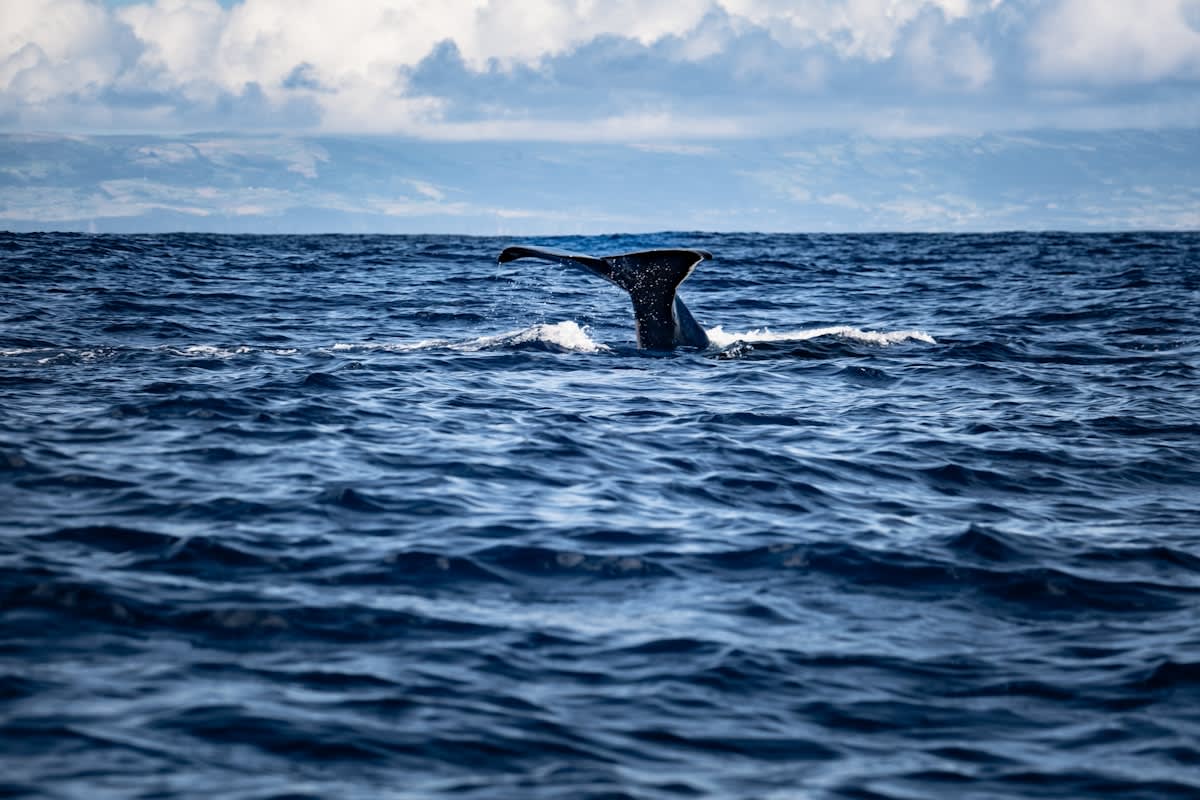
The delta between our understanding a year ago and today is staggering. Previously, the scientific consensus focused on codas—short bursts of clicks used for identification or basic social bonding. Now, the narrative has shifted toward a full-fledged communication system. We are no longer asking if whales have a language, but rather how that language is structured and what the specific markers of their vowel-like patterns signify (Source: Intelligent Living, 2026). This transition from 'signal' to 'syntax' changes everything about how we perceive non-human intelligence.
"The revelation of vowel-like patterns in sperm whale clicks marks a major breakthrough in decoding the combinatorial structure of whale communication, revealing a new layer of complexity in how these creatures interact."— Project CETI, Institutional Finding (Source: Intelligent Living, 2026)
This linguistic leap doesn't happen in a vacuum. It is the result of a broader trend in bio-logging and remote sensing. While Project CETI focuses on the 'what' of communication, other initiatives are mastering the 'where' and 'how' of movement. For instance, recent efforts in the Arctic have seen researchers attach satellite transmitters to narwhals to track their movements through the labyrinthine fjords of East Greenland (Source: CNN, 2026). While the narwhal study focused on ocean heat and glacier melt, the infrastructure—the ability to maintain high-fidelity data links with deep-diving mammals—is the same foundation that allows CETI to capture the clicks necessary for decoding.
The synergy between movement tracking and acoustic analysis is where the real magic happens. If you know where a whale is, who it is with, and what the environmental stressors are, the 'vowel' patterns suddenly gain context. Is a specific click sequence a warning about a predator, or a coordination effort for a hunt? By layering satellite telemetry with AI linguistic analysis, we are effectively building a Rosetta Stone for the ocean.

From a practitioner's perspective, this work is an absolute grind. People think it's all clean data and elegant AI, but the reality is an endless battle against noise. In the field, you are dealing with the cacophony of shipping lanes, seismic surveys, and the sheer chaos of the ocean. The real debate among bio-acousticians right now isn't about whether the patterns exist, but how to isolate a single individual's 'voice' from the background noise of a pod. We are fighting for every decibel of clarity, trying to ensure that the 'vowels' we are detecting aren't just artifacts of the recording equipment or echoes bouncing off a canyon wall.
This friction is where the most important discoveries are made. When you realize that a certain pattern persists across different pods in different oceans, you stop looking at individual behavior and start looking at a species-wide language. This is the shift from ethology to linguistics. We are no longer just observing animals; we are attempting to parse a foreign intelligence.
Does the ability to decode this language imply we can eventually speak back? That is the question currently dividing the community. Some argue that the combinatorial structure is too complex for human-mimicry, while others believe that generative AI will soon allow us to synthesize 'whale-speak' that is indistinguishable from the real thing. If we can replicate the vowel-like patterns identified by Project CETI, we move from being eavesdroppers to participants in a global, multi-species conversation.
The implications extend far beyond academic curiosity. Understanding the communication of sperm whales allows us to better protect them. If we can identify 'distress' patterns or 'migration' commands in real-time, we can coordinate shipping lanes to avoid collisions or protect critical feeding grounds with surgical precision. This is the ultimate application of resilience: using technology not to dominate nature, but to listen to it.
We are witnessing a convergence of disciplines. Marine biology, computational linguistics, and satellite engineering are merging into a single effort to bridge the gap between humans and the deep. The discovery of these vowel-like patterns (Source: Intelligent Living, 2026) is the first crack in the wall. Once that wall falls, our definition of 'intelligence' will have to expand to include those who speak in clicks and echoes.
Fact-Check & Accuracy Note
The claims regarding vowel-like patterns and combinatorial structure in sperm whales are sourced from Project CETI as reported by Intelligent Living (2026). Data regarding narwhal satellite tracking is sourced from CNN (2026). The debate regarding the ability to 'speak back' to whales remains an area of ongoing theoretical discussion among marine biologists and AI researchers and has not been empirically proven.