
The Paradox of Ease
Most learners mistake a lack of friction for progress. We have been conditioned to believe that the smoother the process, the faster the acquisition. This is a fundamental error. True mastery of high-complexity skills—whether it is quantitative finance, neural network architecture, or a new language—requires a specific type of mental resistance. When we remove all obstacles using generative AI or streamlined shortcuts, we aren't accelerating learning; we are bypassing the very cognitive work that produces deep understanding. This phenomenon, known as cognitive offloading, creates a dangerous illusion of competence while leaving the learner fragile and dependent.
Consider the current climate at institutions like Singapore Management University (SMU). As reported by The Straits Times on July 31, 2026, educators are seeing a troubling trend: students are losing confidence not because they are failing, but because they believe AI can perform every task better than they can. By using tools to quietly bypass the struggle, they avoid the 'friction' where actual learning occurs. When the cognitive load is entirely offloaded to a machine, the brain stops engaging, leading to a decline in critical thinking and a measurable drop in exam performance.
The Friction Rule
Learning is fundamentally an uncomfortable process. If you feel total ease while studying a complex topic, you are likely not learning; you are merely recognizing information.
Prerequisites for High-Complexity Mastery
Before applying the framework to eliminate cognitive drag, you must establish a specific mental baseline. High-complexity learning is not a passive activity; it is a high-energy state that requires an intentional shift in how you perceive difficulty. You cannot optimize your cognitive flow if you are still operating under the assumption that struggle is a sign of failure.
- Intellectual Humility: The acceptance that your current mental models are insufficient for the task at hand.
- Tolerance for Discomfort: A commitment to remaining in the 'struggle zone' without immediate recourse to external answers.
- Metacognitive Awareness: The ability to monitor your own thinking processes in real-time.
- A Defined High-Complexity Target: A skill that cannot be mastered through rote memorization but requires the construction of complex mental schemas.
Once these prerequisites are in place, the goal is not to remove all friction, but to eliminate 'cognitive drag'—the useless, frustrating noise—while preserving 'productive struggle'—the essential friction that drives growth.
The Framework: Steps to Eliminating Cognitive Drag
- Audit Your Offloading Habits: Identify every instance where you use a tool (AI, calculators, templates) to skip a mental step. Refer to Sweller's Cognitive Load Theory (1988) to distinguish between intrinsic load (the inherent difficulty of the material) and germane load (the effort used to create a permanent schema). If you are eliminating the germane load, you are killing your progress.
- Implement Productive Failure: Instead of seeking the correct answer immediately, engage with a complex problem until you hit a wall. As demonstrated by Kapur (2014, 2016), engaging with problems without immediate assistance leads to superior conceptual understanding. Force yourself to fail several times before looking at the solution.
- Establish a Metacognitive Log: Track your behavioral shifts. Research published in Frontiers in Psychology (Aug 1, 2026) suggests that improvements in metacognitive behaviors often precede jumps in actual performance. Document not just what you learned, but how you struggled to learn it. This bridges the 'temporal lag' between behavioral optimization and skill acquisition.
- Regulate the Emotional Engine: Acknowledge that emotion underlies all cognition. According to Schumann's Neurobiology Theory, success in complex tasks like foreign language acquisition is emotionally driven. Use emotional intelligence to pivot from frustration to curiosity, treating the 'block' as a data point rather than a deficit.
- Inject Social Friction: Break your cognitive routines by exposing yourself to dissenting viewpoints. As noted by therapist Boone in Newsweek (July 26, 2026), new friendships and cultural exposures interrupt automatic habits and introduce healthy friction, forcing the brain to develop new ways of understanding the world.
The transition from a novice to an expert is rarely a linear climb. It is often a series of plateaus followed by sudden leaps. This is because of the temporal lag effect. You might optimize your study habits and metacognitive strategies for weeks without seeing a change in your test scores or output quality. This is the danger zone where most learners quit. However, the behavioral shift—the act of struggling productively—is the necessary precursor to the quantum leap in performance.
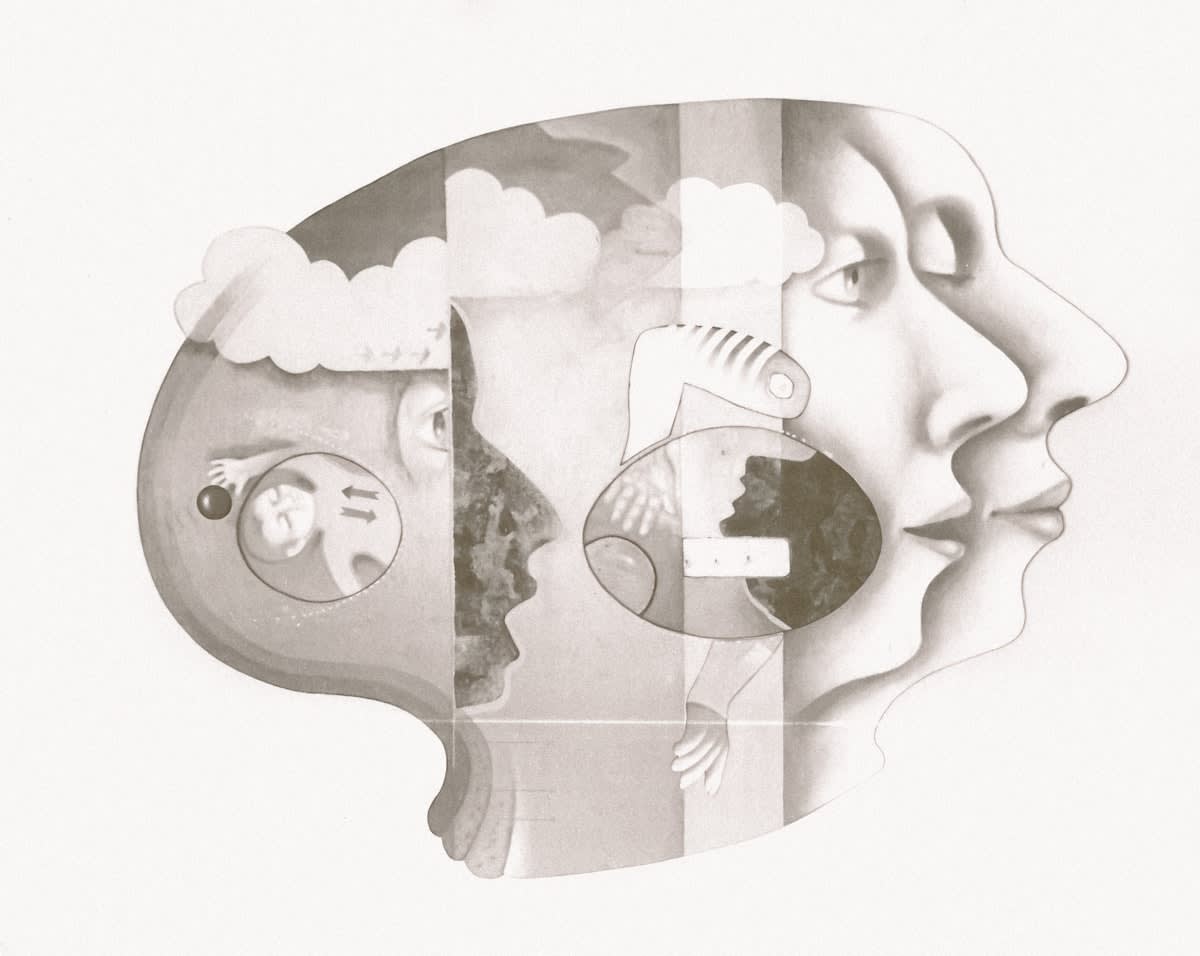
To truly master the balance of load, you must understand the mechanics of your own brain's energy expenditure. The brain naturally prefers familiar routines because they require less energy. When you rely on AI to draft a complex argument or solve a coding problem, you are utilizing a low-energy path. While this is efficient for production, it is catastrophic for learning. To eliminate drag, you must consciously choose the high-energy path of schema construction.
| Feature | Cognitive Offloading | Productive Struggle |
|---|---|---|
| Immediate Goal | Task Completion | Conceptual Mastery |
| Mental Effort | Low (Bypasses friction) | High (Embraces friction) |
| Long-term Outcome | Skill Atrophy / Dependency | Deep Schema Construction |
| Emotional State | Comfort / False Confidence | Discomfort / Growth |
This balance is particularly critical in blended learning environments. Whether you are learning in a physical classroom or a digital interface, the modality is less important than the self-regulation skills you employ. Self-efficacy—the belief in your ability to succeed—acts as the fuel for motivational persistence. Without it, the friction of learning becomes an unbearable burden rather than a tool for growth.
"Learning, from my perspective, is never comfortable. You have to go outside of your comfort zone to learn."— Sumbul Khan, Senior Lecturer at SUTD
Finally, we must address the intersection of emotion and intellect. Learning a high-complexity skill is not a sterile, logical process. It is an emotional rollercoaster. If you are struggling with a foreign language, for example, your success is not just a matter of vocabulary and grammar, but of your emotional intelligence and your ability to handle the vulnerability of being incorrect. The friction here is not just cognitive, but social and emotional.

Common Pitfalls in the Pursuit of Mastery
Even with a framework, many high-performers fall into specific traps that reintroduce cognitive drag or, conversely, eliminate too much essential friction. Recognizing these patterns early is the only way to maintain a trajectory of growth.
- The AI Crutch: Using generative tools to 'get a head start' on a problem, which effectively removes the initial struggle required to frame the problem correctly.
- Confusing Frustration with Friction: Productive struggle should feel challenging but possible. If you are completely overwhelmed (excessive intrinsic load), you are experiencing drag, not growth. Break the problem into smaller, manageable pieces.
- The Immediate Result Trap: Expecting a quantum leap in scores or performance immediately after adopting metacognitive strategies. Remember the temporal lag; the behavioral shift comes first.
- Isolationism: Avoiding new social circles or dissenting views to stay in a 'flow state.' This creates a cognitive echo chamber that prevents the healthy friction necessary for self-development.
Mastery is not the absence of struggle, but the ability to navigate it with precision. By auditing your offloading, embracing productive failure, and managing your emotional response, you transform cognitive drag into a propellant. The mind that can tolerate the most friction is the mind that can acquire the most complex skills.