The map of where we can grow food just changed. For decades, the global agricultural playbook relied on a binary: land was either arable or it was waste. That boundary has finally collapsed. We are witnessing a rapid shift in how nations perceive soil viability, moving away from the desperate attempt to keep salt out and toward a sophisticated embrace of plants that thrive in it. This isn't a slow evolution; it is a hard pivot triggered by the brutal reality of the 2026 harvest cycles.
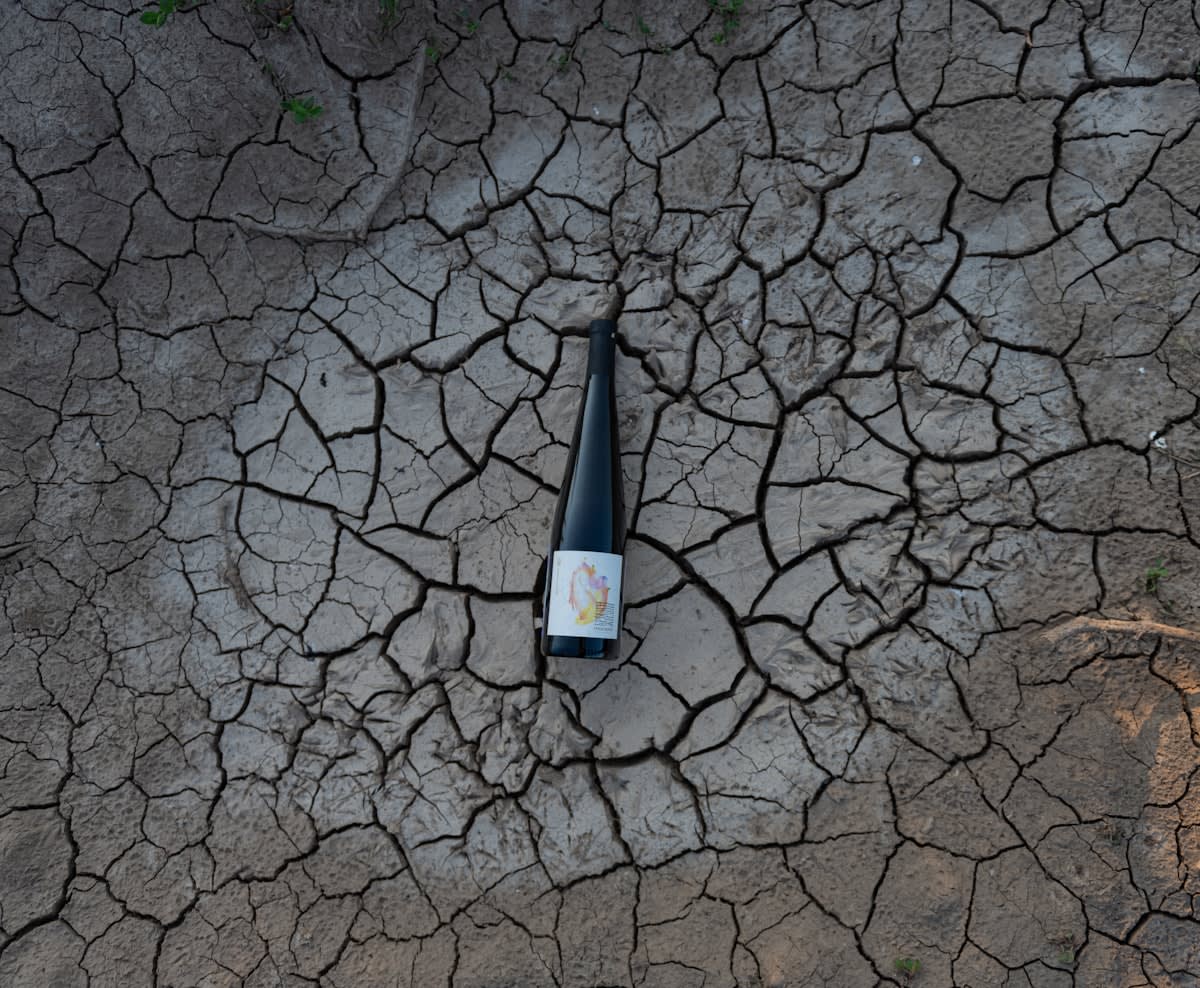
Why now? Look at the numbers coming out of Europe. French wine production is currently facing its most paltry harvest in nearly seven decades, with output expected to fall below 3.4 billion liters (Source: France 24, 2026). This isn't just a bad year; it is a systemic failure of traditional crop resilience in the face of unprecedented heatwaves and drought. When the Champagne region sees its production halved, the industry stops talking about weather patterns and starts talking about genetic survival (Source: Politico, 2026).
The Collapse of the Traditional Baseline
The data from the last few months reveals a terrifying delta between previous expectations and ground-level reality. In southern France's Languedoc-Roussillon region, there is a slight rebound of 5 percent, but that is a small mercy compared to the national 6 percent drop in output (Source: France 24, 2026). The damage is physical and visceral: sunscald, burns, and grape shriveling have become the new norms for the Agriculture Ministry's statistics service, Agreste (Source: Politico, 2026).
This volatility extends far beyond the luxury of wine. The staple crops that feed populations are buckling. Recent reports from the farmer group Copa-Cogeca highlight a catastrophic failure in maize production across the continent. In Slovenia, losses have reached between 50 and 70 percent, while France has seen a 40 percent drop and Italy a 20 to 25 percent decline (Source: Copa-Cogeca, 2026). In some unirrigated areas, the loss is a total 70 percent (Source: Politico, 2026).
| Country | Crop | Estimated Loss (2026) |
|---|---|---|
| Slovenia | Maize | 50-70% |
| France | Maize | 40% |
| Italy | Maize | 20-25% |
| France | Wine | 6% (National) |
Does this mean the end of farming in these regions? No. It means the end of farming as we knew it. The friction is now shifting toward the labs. The goal is no longer just 'drought resistance'—which is a defensive posture—but 'salinity resilience,' an offensive strategy that allows crops to utilize brackish water and salt-laden soils that were previously discarded as unusable.
The Strategic Pivot: The Cairo-Beijing Axis
While Europe reels from harvest losses, a new geopolitical agricultural alliance is forming. In September 2026, Egypt and China announced an expanded research cooperation to develop strategic crop varieties specifically resilient to drought and salinity (Source: Egypt Today, 2026). This is not a boutique gardening project. This is a state-level security imperative. By engineering crops that can handle high salt concentrations, these nations are effectively expanding their arable land without needing a single new acre of freshwater-irrigated soil.
"The agricultural partnership between Egypt and China is expanding its research cooperation to develop strategic crop varieties resilient to drought and salinity."— Official Statement, Egypt Today (September 2026)
This shift represents a fundamental change in the 'When' of agricultural innovation. Twelve months ago, the conversation was about irrigation efficiency. Today, the conversation is about biological compatibility with salt. We are seeing the rise of halophytes—plants that can complete their life cycle in high-salinity environments—moving from the margins of coastal botany into the center of strategic food planning.
The biological blueprint already exists in nature. From the Eastern red cedar (Juniperus virginiana) to beach roses (Rosa rugosa) and daylilies, salt tolerance is a proven trait in coastal landscapes (Source: Almanac, 2026). The challenge for the Egypt-China partnership is translating these wild traits into high-yield caloric crops. If they succeed, the definition of a 'wasteland' disappears.
The Ground-Level Friction
On the ground, this transition is messy. There is a fierce internal debate among agronomists regarding soil remediation versus halophyte adoption. The 'old guard' argues for expensive desalination and soil flushing to save traditional varieties. The 'new guard' views this as a sunk-cost fallacy. Why spend billions trying to make salty land behave like a river valley when you can simply plant a crop that loves the salt? This argument is playing out in real-time across the Nile Delta and the Yangtze basin.
Practitioners are also grappling with the 'ugly' side of salinity: the accumulation of minerals in the food chain. Growing a salt-tolerant crop is one thing; ensuring that the resulting grain or fruit is palatable and nutritionally sound is another. The friction isn't just in the soil; it's in the chemistry of the harvest.
Economic Divergence: The US Outlook
Interestingly, the economic response varies by region. In the United States, the USDA provides a mixed picture for 2026. While overall farm income is expected to improve due to stronger revenues in several areas, there is a hidden decay (Source: USDA, 2026). When adjusted for inflation, farm income is actually expected to decline compared to 2025 (Source: USDA, 2026).
This creates a dangerous incentive gap. If revenues are nominally higher, producers may be less inclined to invest in the radical shifts—like halophyte transition—required for long-term resilience. They are surviving the current volatility through market conditions, but they are not necessarily adapting to the biological shift occurring in the soil.
Can a market-driven recovery mask a biological crisis? The US experience suggests that financial optimism can delay necessary adaptation. While crop producers find reasons for optimism in stronger cash receipts, the underlying pressure of rising production expenses and debt continues to challenge profitability (Source: USDA, 2026).
Beyond the Arable Limit
We are entering an era where the most valuable land will not be the most fertile, but the most adaptable. The 2026 harvest lows in France and the maize failures in Slovenia are the catalysts for a new agricultural geometry. The frontier is no longer about expanding the borders of the farm, but about changing the DNA of the crop to fit the environment we actually have.
The transition to salinity-resilient agriculture is an opportunity to decouple food security from freshwater availability. By leveraging the strategic research coming out of the Egypt-China partnership and the natural resilience found in coastal species, the global food system can move from a state of fragility to one of active adaptation.
Fact-Check & Accuracy Note
The data regarding French wine production (6% drop, sub-3.4 billion liters) and maize losses (Slovenia 50-70%) are sourced from France 24, Politico, and Copa-Cogeca (2026). The Egypt-China partnership is documented by Egypt Today (2026). The US farm income outlook is attributed to the USDA (2026). The primary area of ongoing debate is the scalability of halophyte crops for mass caloric production versus their current use in coastal landscaping.
Editorial Note
This report prioritizes the shift toward resilience and adaptation over the traditional narrative of agricultural collapse. The focus is on the emerging trend of salinity-resilient crop engineering as a strategic response to environmental volatility.