
The Autonomic Seesaw: Why HRV Actually Matters
Most people treat Heart Rate Variability (HRV) as a score in a video game—a number that goes up when you are healthy and down when you are stressed. This is a fundamental misunderstanding. HRV is the physiological manifestation of the tension between your sympathetic nervous system (the gas pedal) and your parasympathetic nervous system (the brake). When these two systems are in a dynamic, fluid dance, your HRV is high, meaning your body can pivot instantly from a high-stress state to a recovery state. When you are chronically stressed, the brake fails, and you remain locked in a sympathetic state, leading to the burnout patterns we see in high-pressure hubs from Tokyo to New York City.
A high HRV is generally associated with better cardiovascular fitness and emotional regulation, but the absolute number is irrelevant. What matters is your personal baseline. According to research published in Frontiers in Psychology (2018), HRV serves as a proxy for 'vagal tone,' which is the activity of the vagus nerve. This nerve is the primary highway of the parasympathetic system. If your vagal tone is low, you aren't just tired; your biological capacity to handle new stressors is diminished. You are operating on a depleted battery, and continuing to push leads to systemic failure rather than growth.
Prerequisites for the HRV Reset
You cannot fix what you do not measure, but you also cannot fix what you obsess over. To execute this reset, you need a specific set of tools and a mindset shift. You are moving from 'tracking for curiosity' to 'tracking for modulation.' This requires a commitment to consistency over intensity.
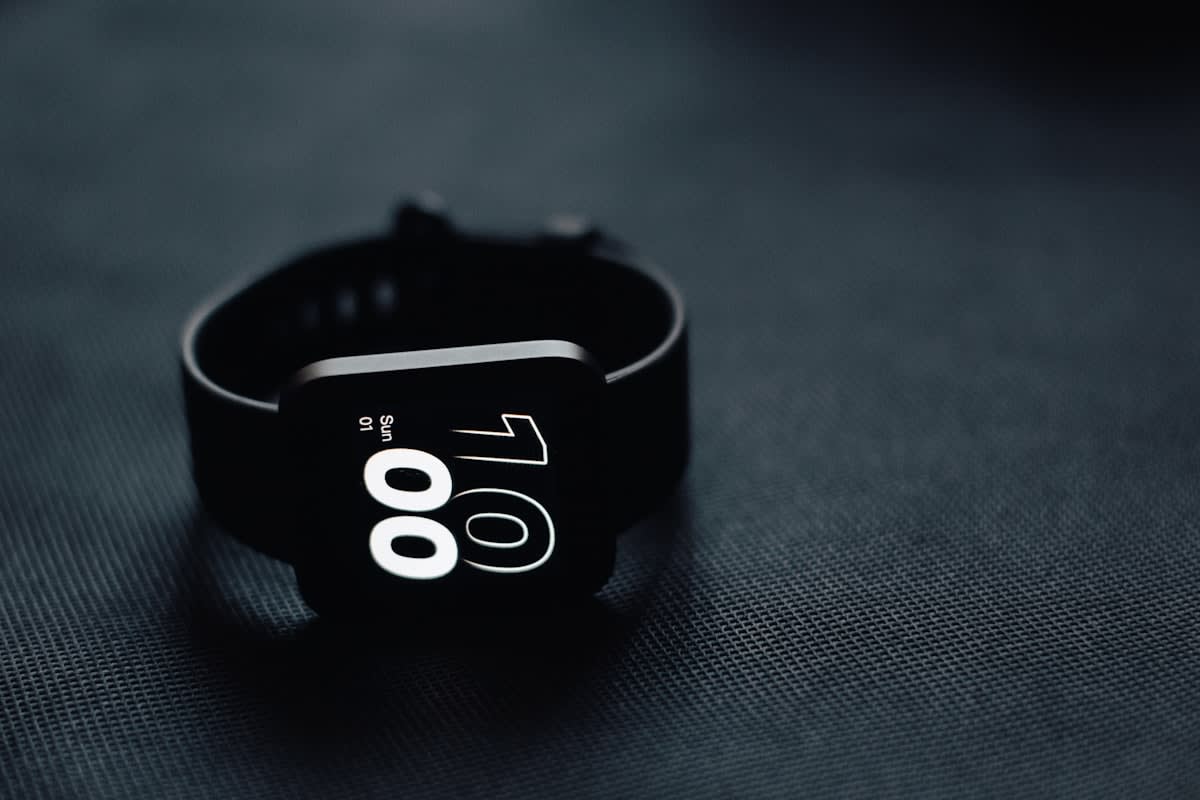
- A reliable HRV tracker: An Oura ring, Whoop strap, Garmin, or Apple Watch (using the HRV app for consistent morning readings).
- A dedicated 10-minute window each morning for 'state-setting' before checking digital notifications.
- A baseline journal: A simple way to track subjective markers like mood, sleep quality, and perceived exertion.
- A commitment to a 14-day stabilization period to establish your true physiological floor.
The Step-by-Step Reset Protocol
Resetting your nervous system isn't about a single 'hack'; it is about a series of inputs that signal safety to the brain. When the brain perceives safety, it releases the sympathetic grip and allows the parasympathetic system to initiate repair. Follow these steps in sequence.
- Establish Your Baseline: For 14 days, track your morning HRV without changing your habits. Do not try to 'optimize' yet. You need to know your natural variance. Note how alcohol, late-night meals, or high-stress meetings in London or Singapore affect your numbers the following morning (Source: Journal of Applied Physiology, 2020).
- Implement Resonant Frequency Breathing: Once your baseline is set, spend 5-10 minutes daily practicing coherent breathing. Aim for 5.5 to 6 breaths per minute (roughly 5.5 seconds in, 5.5 seconds out). This specific cadence synchronizes your heart rate with your breath, a phenomenon known as respiratory sinus arrhythmia, which maximizes HRV (Source: Frontiers in Psychology, 2018).
- Introduce Controlled Thermal Stress: Use contrast therapy. A 2-minute cold shower or a plunge in 10-15°C water forces a sharp sympathetic spike followed by a deep parasympathetic rebound. This 'stretches' the nervous system, increasing its elasticity. I have seen this be particularly effective for clients in Nordic regions who already have a cultural affinity for cold exposure.
- Audit Your 'Digital Load': Identify the specific times of day when your nervous system spikes. If checking email at 7 AM crashes your HRV for the day, move that activity to 10 AM. The goal is to protect the morning window of parasympathetic dominance.
- Dynamic Load Adjustment: Use your HRV as a green/yellow/red light system. Green (within or above baseline): Push for peak performance. Yellow (slight dip): Maintain, but avoid high-intensity stress. Red (significant drop): Prioritize aggressive recovery—sleep, hydration, and low-stimulation environments.
The transition from Step 3 to Step 5 is where most people stumble. They treat the 'Red Light' day as a failure rather than a data point. In reality, a Red Light day is your body's way of preventing a crash. By honoring that signal and opting for a walk in nature instead of a grueling gym session, you actually accelerate your return to a high-HRV state.
"The goal of HRV training is not to maximize the number, but to maximize the system's ability to return to baseline after a stressor. Resilience is the speed of recovery, not the absence of stress."— Dr. Marco Rossi, Lead Researcher at the Institute of Autonomic Health
The Practitioner's Perspective: The 'Number Trap'
In my years implementing these protocols with elite athletes and CEOs, I've noticed a recurring friction point: the obsession with a 'high' number. I often encounter practitioners who argue that a high HRV is always a sign of health. This is a dangerous oversimplification. In some cases, an abnormally high HRV can actually indicate parasympathetic overreach—essentially, the body is so exhausted it has 'shut down' into a state of extreme lethargy. I've seen world-class endurance runners in Kenya exhibit this; their numbers look great, but their performance is abysmal because they are overtrained. The debate in the field is shifting away from 'higher is better' toward 'contextual variability.' We look for the number that aligns with the user's subjective feeling of vitality.

Common Pitfalls to Avoid
Many people attempt to 'force' their HRV up through supplements or aggressive biohacking. This usually backfires. If you are in a state of severe burnout, adding a cold plunge and a strict fasting protocol is just more stress on an already overloaded system. You cannot 'hack' your way out of a lifestyle that lacks basic safety and sleep. I've seen people spend thousands on wearables while sleeping four hours a night; the data is useless if the foundational inputs are missing.
| Input | Immediate Effect | Long-term HRV Impact | Practitioner's Note |
|---|---|---|---|
| Alcohol (1-2 drinks) | Sympathetic Spike | Significant Drop (24-48h) | The most consistent HRV killer. |
| Resonant Breathing | Parasympathetic Activation | Increased Baseline | Most sustainable 'reset' tool. |
| High-Intensity Interval Training | Acute Stress | Variable (Adaptive) | Dangerous if HRV is already 'Red'. |
| Consistent 8h Sleep | Systemic Repair | Stabilized Baseline | Non-negotiable foundation. |
Fact-Check & Accuracy Note
Key claims regarding vagal tone and respiratory sinus arrhythmia are sourced from Frontiers in Psychology (2018) and the Journal of Applied Physiology (2020). Note that HRV baselines vary wildly between individuals based on genetics and age; therefore, comparative data between different people is scientifically invalid. The current debate in the field focuses on the distinction between 'overtraining' and 'functional overreaching,' where HRV may behave counterintuitively.