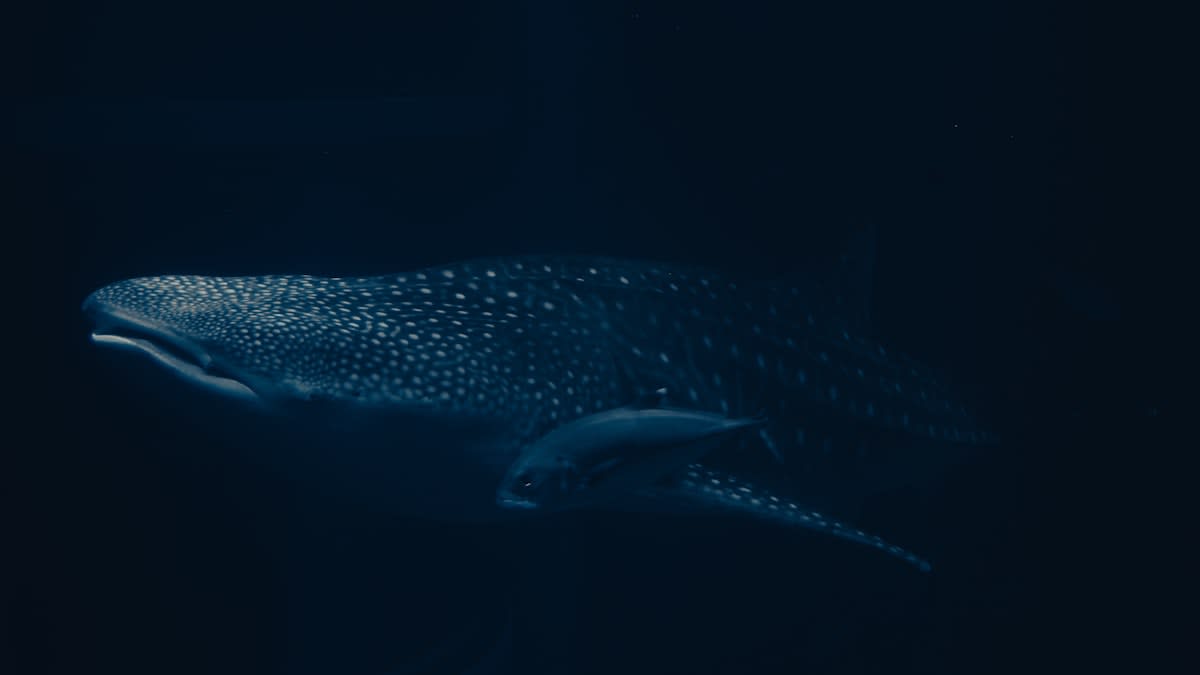
The Myth of the Simple Click
For six decades, the scientific establishment viewed sperm whale communication through a narrow, reductive lens. We treated their sonic bursts as primitive signals—essentially a biological version of Morse code—designed for basic coordination or simple warnings. This assumption wasn't just a scientific oversight; it was a convenient boundary. By categorizing whale song as non-linguistic, we maintained a comfortable distance between human intelligence and the animal kingdom, ensuring that the legal and ethical burdens of 'personhood' remained exclusively ours. Why bother with the complexities of interspecies ethics if the other party is merely clicking?
That boundary is currently evaporating. Project CETI, the Cetacean Translation Initiative founded in 2020 by marine biologist and National Geographic Explorer David Gruber, is leveraging advanced artificial intelligence to dismantle this narrative. By applying Grok AI-inspired language models to vast datasets of whale acoustics, researchers have stumbled upon something that defies the old guard's assumptions. They haven't just found patterns; they have uncovered real, measurable, language-like structure. We are talking about complex acoustic patterns and vowel-like sounds that suggest a level of linguistic sophistication previously reserved for primates and humans.
"Structure. Real, measurable language-like structure buried inside a sound that scientists had spent 60 years treating as barely more sophisticated than Morse code."— Project CETI Research Findings
This is not a mere academic curiosity. When a species demonstrates the ability to use structured language, the conversation shifts from biology to jurisprudence. If a sperm whale can communicate complex, structured thoughts, does it possess a subjective experience that demands legal protection? The discovery of 'vowel-like sounds' isn't just a win for acoustics; it is a systemic shock to the way we define intelligence. We are no longer asking if whales are smart—we are asking if they are linguistic subjects with their own sovereign interests.
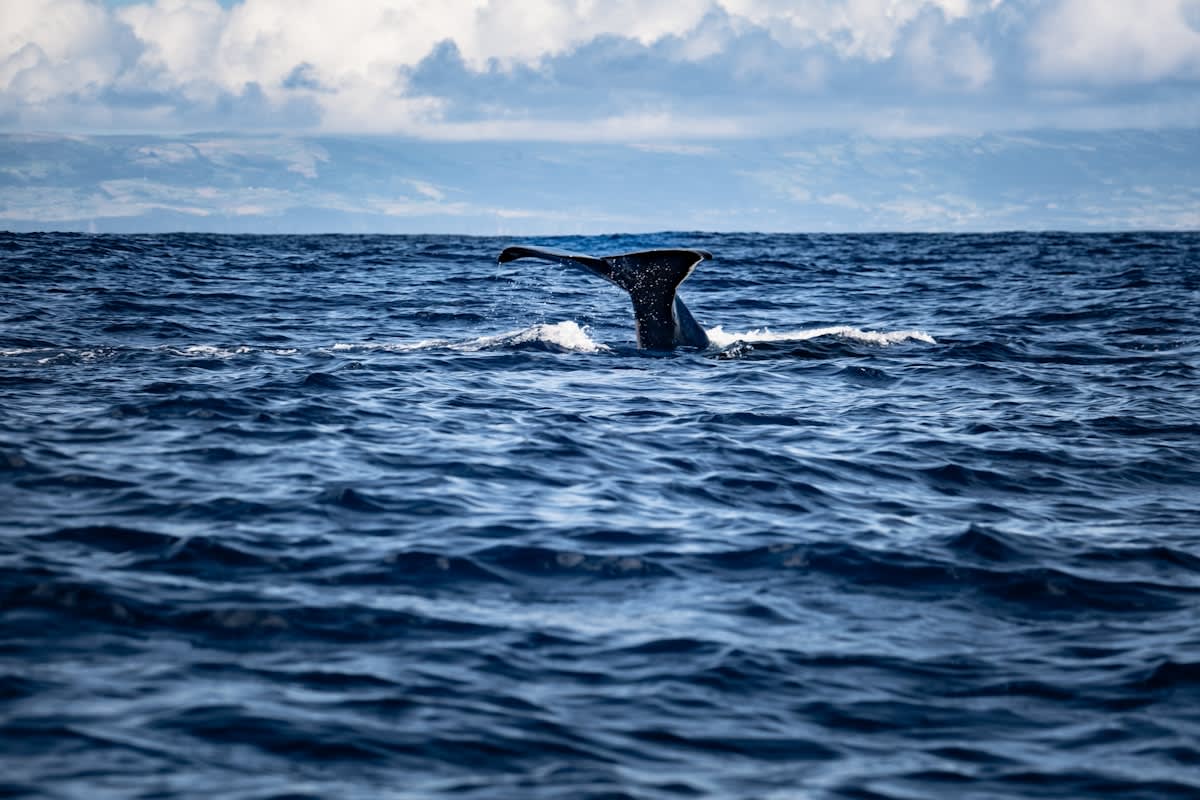
The Legal Rubicon: From Biology to Personhood
The bridge between acoustic data and legal rights is being built at the intersection of AI and law. Project CETI has partnered with the New York University School of Law's More Than Human Life Program (MoHL) to navigate this exact transition. The partnership recognizes that the moment scientific standards for 'structured language' are met, the legal definition of a 'non-human animal' becomes untenable. If we can decode a sentence, we can no longer treat the speaker as mere property or a biological resource. This is the 'Translation Gap'—the space between discovering a language and granting the rights that naturally accompany it.
| Dimension | The Anthropocentric Model (Pre-2020) | The Interspecies Model (Post-CETI) |
|---|---|---|
| Communication View | Primitive signals/Morse code | Structured, language-like syntax |
| Intelligence Metric | Tool use and human-like logic | Linguistic complexity and acoustic structure |
| Legal Status | Property or Protected Resource | Potential Legal Personhood |
| Ethical Framework | Welfare and Conservation | Sovereignty and Rights |
This shift is echoing across the globe, mirroring a broader trend of granting legal personhood to the natural world. We have already seen this trajectory in New Zealand, where the Te Urewera rainforest was granted legal personhood, complete with its own rights, powers, and liabilities. Similar legal experiments have surfaced in Bolivia, India, Mexico, Pakistan, Turkey, Nepal, and the United States. These aren't isolated incidents of environmentalism; they are a systemic re-evaluation of who—or what—counts as a 'person' in the eyes of the law. The decoding of whale song provides the empirical catalyst needed to push these arguments from the fringe into the mainstream judiciary.
The Personhood Pivot
The core legal tension is this: If a species possesses a structured language, does that constitute a 'will' or 'intent' that a court must recognize? The MoHL program is exploring whether linguistic capacity is the ultimate threshold for legal agency.
Critics often dismiss these moves as sentimentalism, but the strategic reality is far more pragmatic. Granting legal personhood to highly intelligent species like whales, elephants, or great apes creates a new mechanism for protection that transcends fluctuating political will. It moves conservation from the realm of 'charity' to the realm of 'rights.' When a rainforest or a cetacean pod has legal standing, they can be represented in court, allowing for a level of systemic protection that traditional environmental laws—which often treat nature as a backdrop for human activity—simply cannot provide.

The AI Toolkit: Beyond Translation
While Project CETI focuses on the 'Why' of communication, other AI initiatives are tackling the 'How' of survival. Google AI, collaborating with Griffith University, is currently implementing tools to search through thousands of hours of audio data. This allows researchers to bypass the manual slog of spectrogram analysis and focus on the critical patterns that lead to better protection strategies. It is a shift in efficiency that mirrors the legal shift in status; we are moving from passive observation to active, data-driven engagement with ocean intelligence.
Furthermore, the application of AI in marine biology is extending into the fight against wildlife trafficking. Recent research by Pirotta V, Meagher P, and colleagues in 2026 has demonstrated the efficacy of AI algorithms in the autodetection of shark fins, seahorses, and sea cucumbers. This creates a dual-track progression: while one set of AI tools is arguing for the 'soul' and 'language' of the whale in court, another set is acting as the digital police force protecting the physical bodies of marine life from illegal trade. The technology is effectively surrounding the animal—protecting its body while advocating for its mind.
Does this mean we are on the verge of a 'Dr. Dolittle' moment? Hardly. The goal isn't a whimsical chat with a whale; it's the recognition of a non-human intelligence that operates on a scale and logic entirely different from our own. The 'Arrogant Ape' narrative—the belief in human exceptionalism—is finally meeting a data set it cannot ignore. When we see vowel-like sounds and structured syntax, the Bible-thumping trope of human superiority withers. We are forced to realize that intelligence is not a peak that only humans climbed, but a plateau shared by multiple species.
The Strategic Horizon: A New Interspecies Diplomacy
The long-term systemic shift here is the transition from 'management' to 'diplomacy.' For centuries, humans have managed the ocean as a resource. We set quotas, we designate reserves, and we treat whales as assets to be conserved or pests to be managed. But the moment you acknowledge a structured language, you are no longer managing a resource; you are interacting with a culture. The legal redefinition of intelligence forces us to consider the ocean not as a void to be exploited, but as a populated space with its own internal political and social structures.
This evolution requires a radical adaptation of our legal systems. If we accept that sperm whales have a language, we must eventually ask: do they have a right to the silence of the oceans? Does the noise pollution from shipping and sonar constitute a violation of their linguistic rights? These are not abstract philosophical questions; they are the upcoming battlegrounds of international maritime law. The translation gap is closing, and as it does, the legal immunity humans have enjoyed while dominating the seas is beginning to crack.
We stand at a crossroads where AI is not just automating tasks, but expanding the circle of empathy and legal protection. By decoding the sonic architecture of the deep, we are essentially auditing our own arrogance. The discovery of structure in whale song is a mirror, reflecting a world where intelligence is diverse, distributed, and no longer the sole province of the land-dwelling ape. The legal systems of the future will not be defined by who can speak English, but by who can demonstrate the capacity for structured thought and social connection.