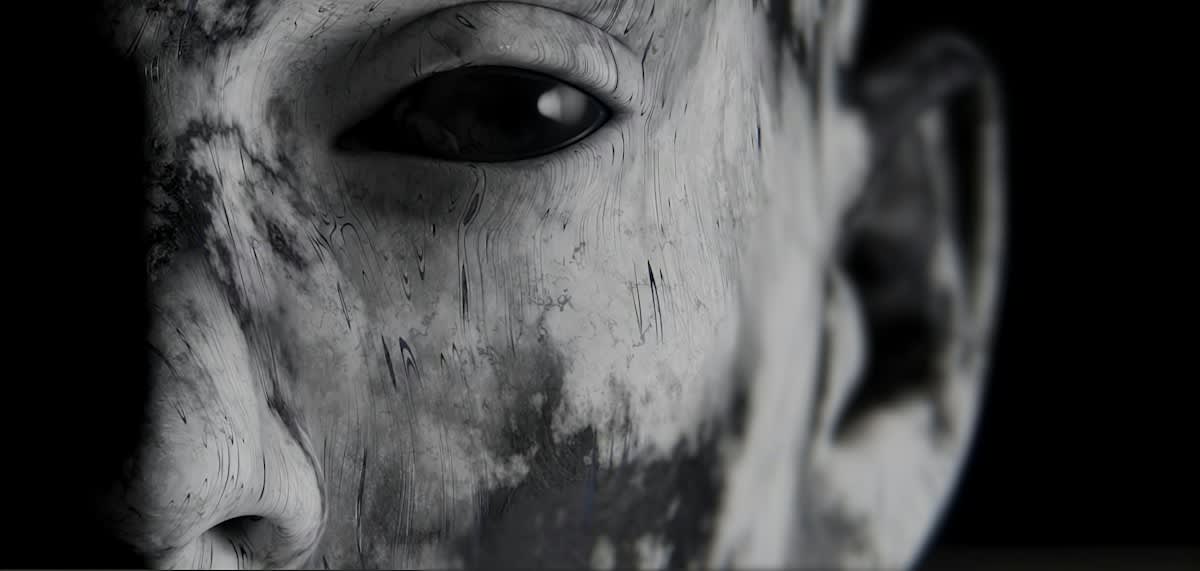
Grit-toothed tension. Coles et al. (2019) identified small and variable effects in facial feedback literature. In the neon-burnt corridors of Tainan, a forced smile is often a tool of survival rather than a reflection of joy. The belief that moving a muscle can manufacture an emotion is a persistent ghost in psychology. We are told that the face is a mirror that can also be a motor, driving the brain toward a specific state of being. However, the raw data suggests a far more carbon-scored reality where the link between expression and emotion is fragile and inconsistent.
Prerequisites for Analysis
- Knowledge of the Facial Feedback Hypothesis (FFH) mechanisms.
- Understanding of the distinction between emotional expression and emotional experience.
- Familiarity with the Many Smiles Collaboration data sets (2022).
- Awareness of the three dimensions of camouflaging: compensation, masking, and assimilation (Source: Hull et al., 2019).
The Facial Feedback Hypothesis
The Facial Feedback Hypothesis suggests that facial expressions do not merely report an internal state but actually help reinforce those emotions (Source: HarbourGlow MedSpa, Undated). This theory posits a bidirectional loop where the muscles of the face send signals back into the biological systems that generate feeling (Source: Instagram, Undated). In a grit-toothed attempt to alter mood, a person might force a smile to trigger happiness. While laughing is noted to be more effective than a forced smile in this regard, the underlying premise remains that somatic signals can influence reportable content.
"The face does not only report how you feel, it sends signals back into the systems that generate feeling."— Facial Feedback Hypothesis (via Instagram)
From a practitioner's perspective, this creates a constant friction in clinical settings. Some therapists push the 'smile to feel better' narrative, while others see it as a superficial mask that ignores the underlying pathology. The debate isn't just academic; it is about whether we can hack our neurobiology through simple muscular contractions. In ash-streaked urban centers like Mushin, this manifests as a social requirement to appear content regardless of the internal state, creating a disconnect between the somatic signal and the actual emotional valence.

The Many Smiles Reality Check
The strong claim that facial configuration alone determines emotion has been dismantled by large-scale replication efforts. A meta-analysis conducted by Coles, Larsen, and Lench (2019) found that the effects of facial feedback on emotional experience are small and variable. This suggests that while a smile might nudge the brain, it does not dictate the emotion. The results indicate that the impact of a fake smile is highly dependent on the procedure used to induce it, rather than a universal biological law (Source: Coles et al., 2019).
Further evidence emerged from the Many Smiles Collaboration in 2022. This multi-lab test demonstrated that facial-expression manipulations produced only small changes in self-reported happiness (Source: Coles et al., 2022). The Global Neuronal Workspace Theory (GNWT) interprets this as a somatic signal influencing reportable content without providing a detailed model of valence. Essentially, the brain notes the muscle movement, but that note is often drowned out by the louder, rust-pitted noise of actual lived experience.
| Study/Source | Year | Key Finding | Effect Size |
|---|---|---|---|
| Coles, Larsen, & Lench | 2019 | Meta-analysis of FFH effects | Small and Variable |
| Many Smiles Collaboration | 2022 | Multi-lab test of happiness | Small/Procedure-dependent |
The Modified Emotional Model (MEM) offers a different angle, predicting that the proprioceptive-interoceptive trace of an action can alter the valuation of an active representation. This means the 'fake smile' isn't creating happiness from nothing, but is instead one of many contextual inputs that the brain weighs. When the environment is carbon-scored and stressful, a small somatic signal from a smile is unlikely to override the dominant negative state.
Tactical Analysis of Camouflaging
Beyond simple mood hacking lies the more complex phenomenon of camouflaging, or masking. This is particularly prominent in autism research, where individuals modify their behavior to conceal traits or imitate expected social behaviors to reduce the likelihood of rejection. This is not about changing one's mood, but about managing the impression others receive. The process is often described as an exhausting exercise in assimilation, where the fake smile becomes a shield rather than a tool for self-improvement.
Research by Hull et al. (2019) identifies three distinct dimensions of this behavior. Compensation involves strategies to work around social-communication difficulties. Masking is the active concealment of behaviors perceived as socially unacceptable. Assimilation is the attempt to appear similar to others. These behaviors create a calcified social persona that allows the individual to navigate environments that would otherwise be hostile.
- Identify the intent: Is the expression intended for internal mood regulation (FFH) or external impression management (Masking)?
- Analyze the dimension: Determine if the behavior is compensation (overcoming a gap), masking (hiding a trait), or assimilation (mimicking a peer) as per Hull et al. (2019).
- Assess the cost: Evaluate the level of exhaustion or burnout associated with the expression.
- Evaluate the outcome: Determine if the fake smile resulted in a 'small, variable' mood shift (Coles et al., 2019) or successful social integration.
There is an ongoing debate regarding the mental health impact of this behavior. While many link masking to anxiety and depression, Khudiakova, Alexandrovsky, Ai, and Lai (2025) argue that the research does not yet establish a straightforward causal relationship between camouflaging and poorer wellbeing. Instead, they suggest viewing it through the lens of impression management, a process that all humans engage in to some degree depending on the social circumstances (Source: ACAMH, 2025).

The Failure Point
The failure point of the forced smile occurs when the cognitive load of maintaining the mask exceeds the psychological benefit of the social reward. In cases of autistic burnout, the effort to assimilate becomes unsustainable. When the 'small and variable' mood effects identified by Coles et al. (2019) fail to materialize, the individual is left with the physical exhaustion of the expression and none of the emotional payoff. The system collapses because the somatic signal is too weak to override the interoceptive reality of stress.
Common Pitfalls
- Overestimating the power of FFH: Assuming a forced smile will reliably cure a negative mood.
- Pathologizing all masking: Ignoring Khudiakova et al.'s (2025) point that impression management is a universal human behavior.
- Ignoring procedural variance: Failing to recognize that the effectiveness of facial feedback depends on the specific method of induction (Source: Coles et al., 2022).
- Confusing assimilation with genuine social connection.
Editorial Note
This guide is based on a synthesis of the Many Smiles Collaboration and contemporary autism research. It rejects the simplistic 'smile and be happy' trope in favor of a data-driven understanding of small effect sizes and social impression management.
Fact-Check & Accuracy Note
All statistics regarding the small and variable effects of facial feedback are attributed to Coles et al. (2019) and Coles et al. (2022). The dimensions of camouflaging are sourced from Hull et al. (2019). The nuanced view of impression management is sourced from Khudiakova et al. (2025).