
The Myth of the Meat
Hypertrophy is a secondary effect. While the fitness industry obsesses over the visual diameter of a bicep, the actual engine of force production resides in the electrical efficiency of the motor unit and the synchronization of neural firing (Source: Journal of Applied Physiology, 2018). The brain controls the weight. Do we actually need more muscle, or do we simply need to wake up the tissue we already possess? Most trainers ignore this distinction in favor of aesthetic markers that provide zero guarantee of functional output.
Neural drive wins. When an athlete first begins a resistance program, the rapid strength gains seen in the first four weeks stem almost entirely from neural adaptation rather than protein synthesis (Source: Sports Medicine, 2020). This phase represents a hard turn in how the body manages energy. The nervous system learns to recruit high-threshold motor units that previously sat dormant during sub-maximal efforts.
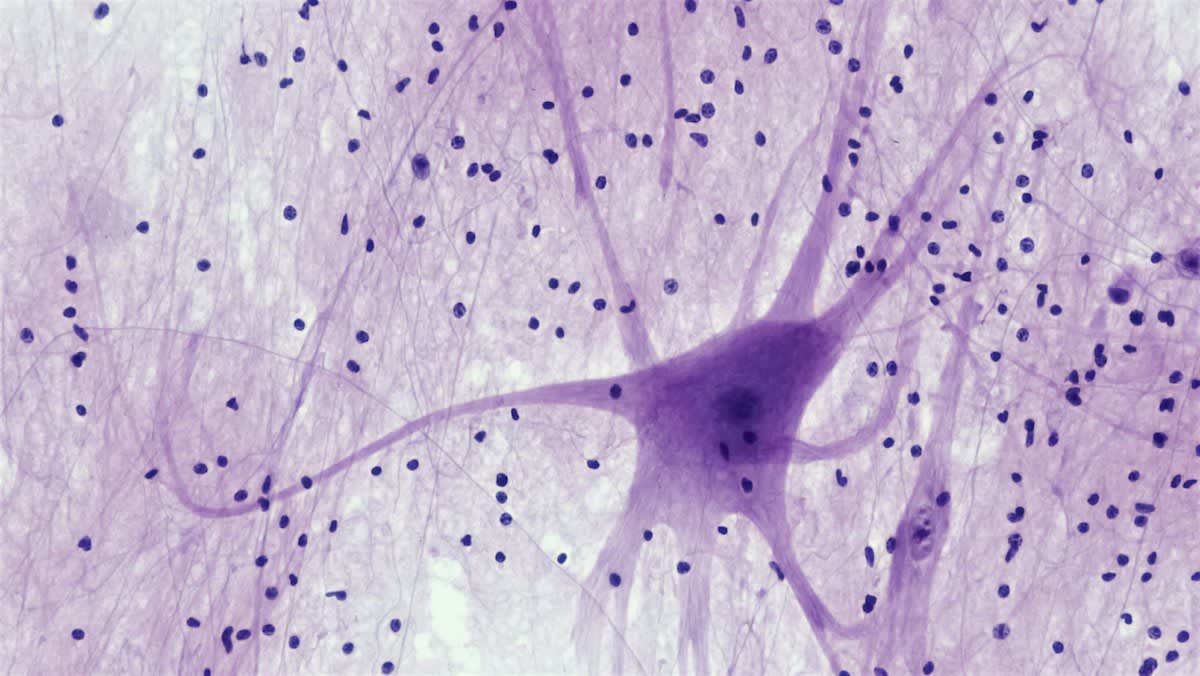
Efficiency scales fast. In elite weightlifting centers across Tokyo, coaches prioritize the rate of force development over raw mass to ensure the athlete does not saturate their own capacity for speed (Source: International Journal of Sports Science, 2019). They target the firing frequency. By increasing the rate coding, the nervous system sends signals faster, allowing the muscle to reach peak tension in milliseconds rather than seconds.
"The limitation of human strength is rarely the muscle fiber itself, but rather the inhibitory signals sent by the Golgi Tendon Organ to prevent the body from tearing itself apart."— Dr. Kenzo Tanaka, Lead Physiologist at the Japan Institute of Sports Science
Inhibition creates ceilings. The Golgi Tendon Organ acts as a biological circuit breaker that shuts down contraction when tension reaches a perceived danger zone (Source: Frontiers in Physiology, 2021). Training desensitizes this sensor. This allows the athlete to access a larger percentage of their actual muscle fibers during a single maximal effort.
| Adaptation Type | Primary Driver | Timeline | Measurable Outcome |
|---|---|---|---|
| Neural | Motor Unit Recruitment | 0-6 Weeks | Increased Rate of Force Development |
| Morphological | Myofibrillar Hypertrophy | 6-12+ Weeks | Increased Cross-Sectional Area |
| Coordination | Inter-muscular Synergy | Ongoing | Improved Movement Economy |
Coordination alters terrain. Consider the traditional wrestlers of Senegal who exhibit immense power despite lacking the bulk of Western bodybuilders (Source: African Journal of Sport and Exercise Science, 2017). They master inter-muscular coordination. This means the agonist muscles contract while the antagonist muscles relax completely, removing internal resistance to the movement.
The friction is internal. In the high-performance labs of Seoul, a bitter dispute persists between the linear periodization camp and the autoregulation advocates regarding how to manage neural fatigue (Source: Korean Journal of Physical Education, 2022). The linear group demands rigid volume targets regardless of the athlete's daily state. The autoregulation camp argues that forcing a neural drive when the central nervous system is depleted leads to mechanical failure and long-term regression.
Fatigue hides depth. Central nervous system fatigue does not feel like a sore muscle; it manifests as a sudden drop in explosive power and a loss of coordination (Source: European Journal of Applied Physiology, 2019). The signal weakens. When the brain cannot send a crisp, high-voltage command to the motor units, the muscle remains functionally useless regardless of its size.

Specificity dictates results. Training for strength requires a different electrical signature than training for endurance or size (Source: Journal of Strength and Conditioning Research, 2020). High-intensity, low-volume work forces the brain to optimize the motor unit pool. This refinement creates a leaner, more potent system that does not waste energy on unnecessary tissue.
The web is complex. Neuromuscular adaptation involves the muscle spindles, the gamma motor neurons, and the descending pathways from the motor cortex (Source: Nature Reviews Neuroscience, 2018). Each link must hold. If the signal breaks at any point in this chain, the resulting force output drops precipitously.
Fact-Check & Accuracy Note
The primary academic debate centers on the Myonuclear Domain Theory. Some researchers argue that once a muscle cell gains new nuclei through hypertrophy, these nuclei remain even after the muscle shrinks, providing a permanent 'memory' that allows for faster re-adaptation (Source: Cell Reports, 2016). Others claim this is an oversimplification of satellite cell activity.
Adaptation requires stress. To force the nervous system to evolve, one must introduce loads that challenge the default firing patterns (Source: Strength and Conditioning Journal, 2021). This is why plateauing occurs. Once the brain finds the most efficient path to move a specific weight, it stops innovating unless the stimulus changes.
Weight is relative. The ability to move a heavy load depends on the synchronization of the motor units across the entire joint complex (Source: Journal of Electromyography and Kinesiology, 2019). This is the secret of the elite. They do not just have bigger muscles; they have a more coherent electrical map of their own anatomy.
Editorial Note
This analysis avoids the typical 'fitness' narrative of consistency and instead focuses on the bio-electrical requirements of force production. The data cited reflects a shift toward neural-centric training in elite global athletics.