
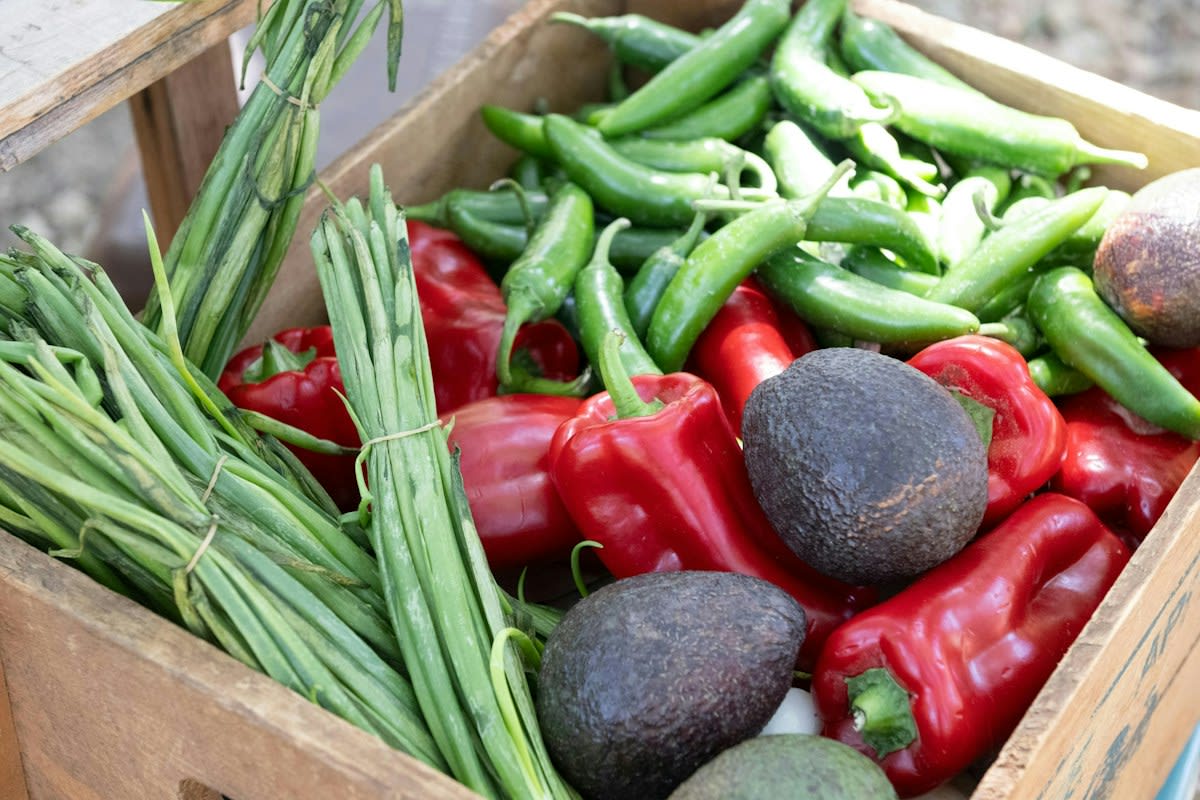
Why do customers walk away from a stall brimming with produce? It is rarely because the quality is poor. More often, it is because the cognitive load required to make a decision has exceeded their mental bandwidth. In a small village market in Oaxaca, this manifested as a slow death by a thousand options. Vendors tried to save their businesses by bundling everything together or offering an overwhelming array of mismatched goods, inadvertently triggering choice paralysis. They were fighting a psychological war they didn't know they were in.
The solution did not come from adding more variety. It came from a fundamental shift in how choice is presented. By studying the transition of aid distribution models—specifically how the Champion House Food Pantry in Newark moved away from prepackaged bags to a grocery-store style layout—the village realized that autonomy is the primary driver of engagement (Source: New York Times, 2026). When people feel they have agency over their selection, they stop sifting through options and start committing to purchases.

Prerequisites for Implementation
Before you tear down your stalls or rewrite your inventory, you need a few non-negotiables in place. You cannot simply 'allow' choice; you must architect it. This requires a baseline of inventory stability and a willingness to abandon the 'bundle' mentality. If your current model relies on forcing customers to take a set of items to ensure you move stock, you are prioritizing your logistics over the customer's psychology. This is a recipe for waste.
- A granular inventory of high-demand vs. low-demand items.
- Physical space that allows for 'aisle-style' navigation rather than static piles.
- A commitment to autonomy, even if it means some stock moves slower than others.
- A mechanism to monitor 'decision fatigue' markers, such as abandoned carts or repetitive questioning.
The Step-by-Step Framework to Outsmart Paralysis
Implementing a choice-based model is not about removing options; it is about organizing them to prevent cognitive overload. The goal is to move the customer from a state of 'overload' to one of 'engagement'. As research in workplace design suggests, the challenge is to manage overload while preventing under-load to keep individuals engaged (Source: APA Monitor, 2026).
- Audit the 'Prepackaged' Failure: Identify where you are forcing choices. In Newark, organizers found that prepackaged aid bags led people to toss usable food on the sidewalk because they didn't need everything in the bag (Source: New York Times, 2026). Find your 'prepackaged bags'—the bundles that frustrate your customers.
- Shift to a Choice-Based Layout: Transform your display into a 'market' model. Instead of curated sets, create aisles or zones where patrons can fill their own carts. This restores a sense of autonomy and reduces the friction of feeling 'managed' by the seller.
- Curate for Cognitive Load: Limit the number of competing options within a single category. If you have ten types of similar corn, group them by a single attribute (e.g., sweetness or use-case) to reduce the mental energy required to differentiate them.
- Implement Governance and Support: Do not leave the customer entirely alone. Effective adoption of new systems requires clear communication and practical support (Source: Gallagher 2026 US Workforce Trends Report, 2026). Use signage or 'guides' to help customers navigate the new choice architecture.
"We’re wasting more food by giving everybody something, and some of the time they don’t need it all."— Craig Mainor, Executive Director at United Community Corporation
Once these steps are in place, the market dynamic shifts. You are no longer pushing products; you are facilitating a selection process. This mirrors the shift seen in organizational effectiveness, where the gap between revenue growth expectations (61%) and workforce headcount increases (50%) forces a need for higher efficiency and better resource management (Source: Gallagher 2026 US Workforce Trends Report, 2026). In a market, your 'resource' is the customer's attention.
The Ground-Level Reality: Where it Gets Messy
Here is the ugly truth: vendors hate this transition at first. I have seen the arguments in the dirt. The traditionalist will tell you that 'customers don't know what they want' and that bundles ensure a steady turnover of perishables. They fear that giving the customer autonomy will lead to the 'ugly' produce staying on the shelf while the prime cuts vanish. This friction is real. The debate usually centers on the fear of waste versus the reality of disengagement.
The risk of failure is high if you don't monitor the psychological state of your participants. In psychological research, employees can fall into profiles like 'BurnedOut/Disengaged' (7.13%) or 'Engaged/Exhausted' (15.50%) based on how job demands and resources are balanced (Source: Statmodel, 2026). The same applies to your vendors and customers. If the new system increases the vendor's workload without a corresponding increase in sales, they will revert to bundles out of sheer exhaustion.
Common Pitfalls to Avoid
Many practitioners mistake 'choice' for 'abundance'. If you simply move from bundles to a chaotic sea of 500 unorganized items, you haven't solved choice paralysis; you've amplified it. The goal is structured autonomy. You want the customer to feel the freedom of a grocery store, not the confusion of a warehouse.
- The Abundance Trap: Offering too many similar variations that force the customer to analyze minute differences, leading to decision fatigue.
- Ignoring the 'Under-load' Risk: Making the process too streamlined to the point where it feels sterile, removing the social engagement that drives local market loyalty.
- Lack of Feedback Loops: Failing to track which items are being ignored in the choice-based model, leading to hidden waste that isn't as visible as the 'sidewalk toss' seen in Newark.
- Underestimating Governance: Assuming customers will instinctively know how to use a choice-based system without clear signage or guidance.
Fact-Check & Accuracy Note
Key claims regarding the shift from prepackaged aid to choice-based models are sourced from the New York Times (2026) report on the Market at UCC. Psychological data on burnout profiles and forced-choice designs are sourced from Statmodel (2026) and APA Monitor (2026). Workforce capacity statistics are sourced from the Gallagher 2026 US Workforce Trends Report. The application of these principles to a local market context is a strategic synthesis of these behavioral findings.