The End of Systemic Saturation
For decades, the fundamental flaw of pharmacology has been its lack of geography. You swallow a pill or receive an infusion, and the drug floods your system, hitting target cells and healthy tissue with equal indifference. We have called this 'side effects,' but in reality, it is a failure of precision. This week, that paradigm is shifting. We are seeing the emergence of the 'light-switch pharmacy,' where drugs remain dormant and harmless until a specific wavelength of light flips a molecular switch, activating the medicine exactly where and when it is needed.
The most immediate evidence of this shift is appearing in ophthalmology. Recent reports indicate that photopharmacology is moving rapidly from experimental research toward clinical application, highlighted by the first-ever clinical trial of a photopharmacological drug designed for vision restoration (Source: ScienceDaily, 2026). This isn't just a marginal improvement; it is a fundamental change in how we treat blindness. By incorporating light-sensitive molecular switches into the chemical structure of a drug, researchers can reversibly control drug activity using light beams, effectively turning the eye's biological responses on and off.
"The milestone of the first clinical trial for vision restoration suggests that photopharmacology is beginning to move from experimental research toward potential clinical use."— ScienceDaily, reporting on recent clinical milestones in vision restoration
Why does this matter now? Because we have finally cracked the code of the 'molecular switch.' These aren't mechanical switches, but chemical structures that change shape when exposed to specific photons. When the light hits, the drug's geometry shifts, allowing it to bind to a receptor that it previously ignored. This allows for a level of temporal control that was previously science fiction. Imagine a drug that only works for ten minutes a day, specifically in the retina, without affecting a single other organ in the body.
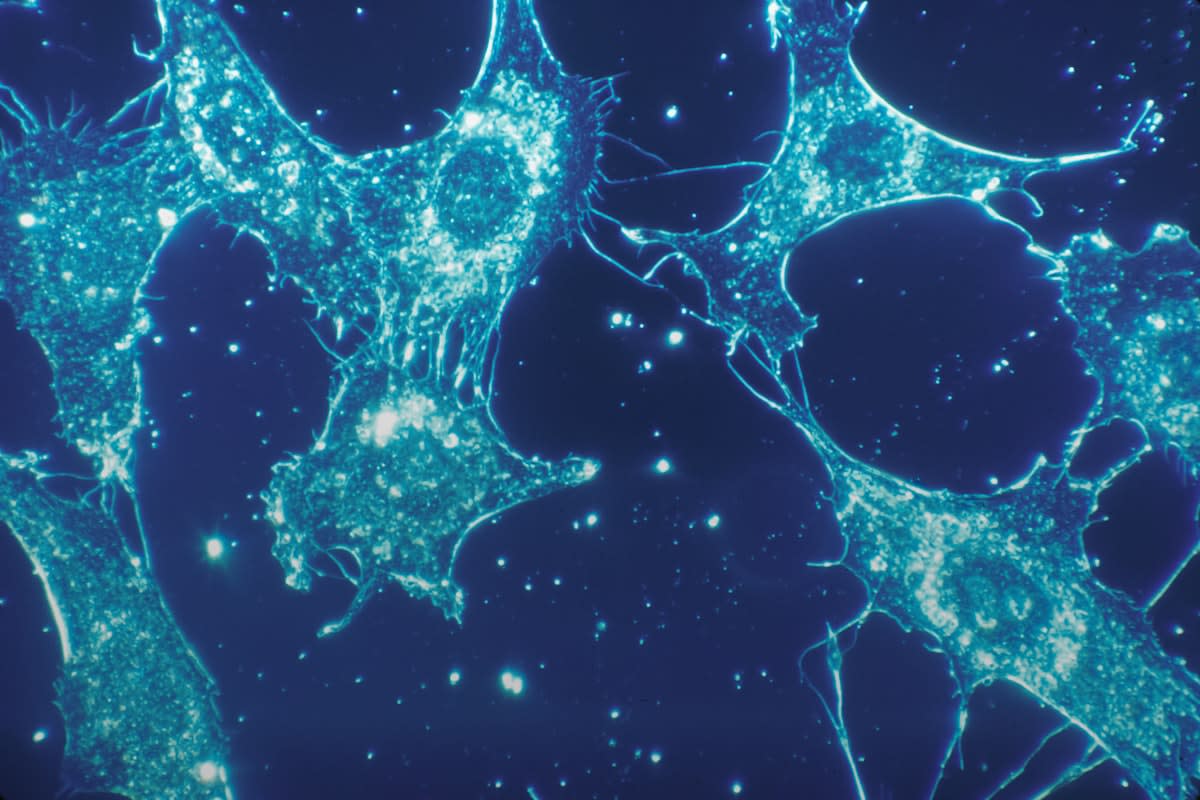
This precision is not limited to the eye. The frontier has moved into the most aggressive forms of oncology, specifically Triple-Negative Breast Cancer (TNBC). In this arena, the goal is to bypass the toxicity of systemic chemotherapy. New research into photoresponsive drug delivery systems utilizes smart polymeric nanovehicles to deliver anticancer drugs with high efficiency (Source: ACS Biomater. Sci. Eng., 2024). These nanocarriers are engineered to be responsive to the tumor microenvironment, ensuring the payload is released only upon light activation, thereby sparing healthy breast tissue from the ravages of the drug.
The technical friction here is significant. In the labs, the debate isn't about whether this works, but about 'penetration depth.' Visible light cannot travel deep into human tissue. This is why the industry is pivoting toward the Second Near-Infrared (NIR) window. New molecular probes are being developed that use NIR-activatable optical signals for both diagnosis and therapy (Source: Chem. Soc. Rev., 2025). By shifting the 'switch' to the NIR spectrum, practitioners can trigger drug release in deeper tissues, moving the technology from surface-level treatments to internal organ therapy.
From a practitioner's perspective, the real-world application of this is a logistical puzzle. We are no longer just talking about prescribing a dosage; we are talking about the hardware of delivery. Surgeons and oncologists are now debating the integration of fiber-optic delivery systems with drug administration. The friction lies in the calibration: how do you ensure the light intensity is uniform across a three-dimensional tumor mass? If the beam is too weak, the drug stays dormant; too strong, and you risk phototoxicity. It is a transition from being a chemist to being a physicist of the human body.
| Feature | Traditional Pharmacology | Photopharmacology |
|---|---|---|
| Activation | Immediate upon absorption | Triggered by specific light wavelength |
| Localization | Systemic distribution | Spatiotemporal precision |
| Side Effects | High (off-target binding) | Low (targeted activation) |
| Control | Half-life dependent | Reversibly controlled by light |
The broader pharmaceutical ecosystem is reacting to this need for precision. We are seeing a massive influx of capital into delivery technologies. For instance, Novartis recently inked a deal worth up to $3.2 billion with Alteogen to advance subcutaneous drug delivery (Source: Fierce Biotech, 2026). While subcutaneous delivery is a different modality than photopharmacology, the underlying driver is the same: a desperate industry move away from 'one size fits all' administration toward precision delivery platforms.
This trend converges with the rise of genetic medicines. Companies like Aera Therapeutics are leveraging targeted lipid nanoparticles (LNPs) and antibody-oligonucleotide conjugates (AOCs) to unlock genetic payloads in specific tissues (Source: BioSpace, 2026). When you combine the targeting capabilities of an AOC with the 'on-off' switch of photopharmacology, you get a weapon of absolute precision. You can guide a genetic medicine to a specific cell type using an antibody, and then activate that medicine using a beam of light.
But the road to mass adoption is blocked by a predictive gap. Designing these molecular switches requires an immense amount of trial and error. This is why the industry is now leaning heavily into predictive modeling for small molecule drug discovery (Source: ChemRxiv, 2026). We are moving toward a future where the 'switch' is designed in a digital twin environment, simulating exactly how a molecule will fold and unfold under a specific photon flux before it ever touches a petri dish.
The delta between where we were twelve months ago and today is stark. A year ago, photopharmacology was a curiosity of the chemistry lab—elegant, but impractical. Today, with the first clinical trials in vision restoration and the development of NIR-activatable probes for deep-tissue theranostics (Source: Chem. Soc. Rev., 2025), it has become a viable clinical strategy. We are witnessing the birth of a new class of 'smart drugs' that don't just treat a disease, but obey a command.
Fact-Check & Accuracy Note
Key claims regarding vision restoration clinical trials are sourced from ScienceDaily (2026). Data on photoresponsive nanocarriers for TNBC are attributed to ACS Biomater. Sci. Eng. (2024) and MDPI (2026). The $3.2 billion Novartis/Alteogen deal is sourced from Fierce Biotech (2026). Ongoing debates in the field center on the penetration depth of light and the scalability of NIR-activatable probes.