
For decades, drug discovery has been a high-stakes lottery. Scientists spent years synthesizing thousands of compounds, hoping one might stick to a protein target without killing the patient. This trial-and-error cycle created a bottleneck that stunted medical progress and bloated R&D costs. But this month, the tide has shifted. We are seeing a convergence of high-performance computing and fundamental physics that transforms the lab from a place of discovery into a place of verification.
The September Surge: Physical Superintelligence Enters the Fray
The industry felt a jolt on September 1, 2026, with the launch of Physical Superintelligence (PSI). This is not just another AI startup; it is a dedicated physics research lab designed to build computational models that optimize physical systems at a granular level. By securing $58 million in seed funding led by Breakthrough Energy Ventures, PSI is signaling that the next frontier of medicine isn't just biological data—it is the physics of how molecules actually move and interact (Source: HPCwire, 2026). When you see players like Dragon Global and SV Angel piling into a seed round of this magnitude, you know the market is betting on a fundamental shift in how we approach the physical world.
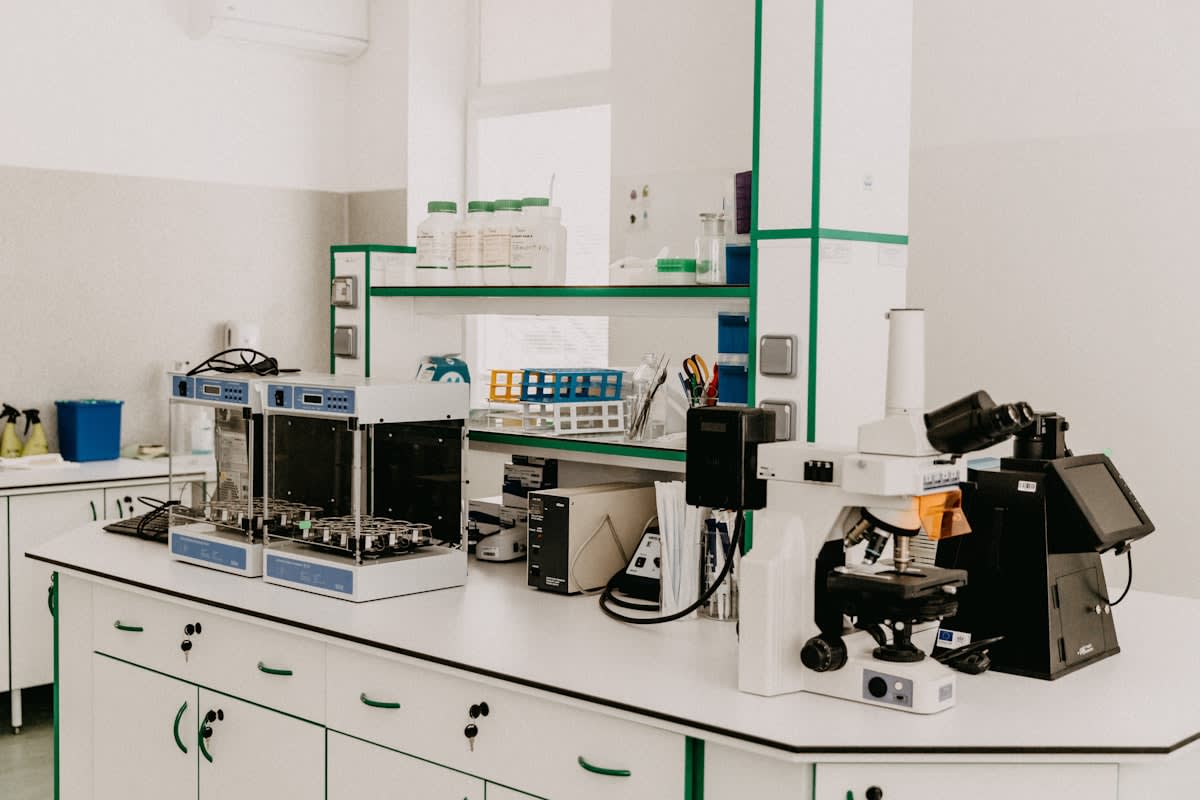
Why does this matter now? Because we have finally reached the intersection of sufficient compute power and algorithmic sophistication. The launch of PSI represents a move toward 'physical superintelligence,' where the AI doesn't just guess based on previous patterns in a database but understands the underlying laws of physics to design new systems from scratch. This removes the reliance on historical data, which is often biased or incomplete, and allows researchers to explore chemical spaces that have never been touched by human hands.
The API-fication of Molecular Design
While PSI builds the foundation, other players are deploying the tools. In May 2026, Iktos released the Iktos Engine, a suite of production-oriented APIs designed specifically for computational drug discovery (Source: Industry Today, 2026). This is a critical architectural shift. By turning molecular design into a series of API calls, Iktos has enabled scientists to rank, refine, and prioritize compounds with a speed that was unthinkable a year ago. We are no longer talking about months of synthesis; we are talking about milliseconds of computation.
"Generative AI is adding another dimension to the discovery process by enabling researchers to generate and optimize molecular structures based on desired biological, chemical, or pharmacological properties."— Iktos, regarding the launch of the Iktos Engine (Source: Industry Today, 2026)
The Iktos Engine targets the most painful parts of the pipeline: target identification, hit-to-lead development, and ADMET (Absorption, Distribution, Metabolism, Excretion, and Toxicity) prediction (Source: Industry Today, 2026). In the old world, ADMET failures were the primary reason drugs failed in clinical trials, often after hundreds of millions of dollars had been spent. By predicting these failures computationally, the industry is slashing the waste associated with dead-end compounds.
This transition is not without friction. On the ground, there is a simmering debate between the 'dry-lab' computationalists and the 'wet-lab' biologists. The biologists argue that a simulation is only as good as its parameters and that biological systems are too chaotic for pure physics to capture. The computationalists counter that the biologists are simply iterating too slowly. The real win is happening where these two worlds collide—using AI to propose a candidate and the wet-lab to validate it in a tight, iterative loop.
The Economic Gravity of Predictive Medicine
The financial trajectory of this sector is staggering. The drug discovery platforms market is projected to hit $16.5 billion by 2036 (Source: Industry Today, 2026). This isn't just growth; it is a reallocation of capital. Pharmaceutical giants and biotech firms are shifting budgets away from massive, sprawling screening libraries and toward high-performance computing (HPC) and GPU-accelerated infrastructure. The investment is flowing into the tools that allow for precision protein design and molecular simulation.
| Discovery Phase | Traditional Method | Physics-Based AI Method |
|---|---|---|
| Target Identification | Manual literature review & screening | Neural network interaction simulation |
| Hit-to-Lead | Iterative synthesis of thousands of analogs | Generative molecular optimization |
| ADMET Prediction | Animal testing & early clinical trials | Computational toxicity modeling |
| Timeline | Years of trial-and-error | Rapid, API-driven prioritization |
This shift is further accelerated by the AI protein design market, which is leveraging deep learning to boost the precision of protein structure predictions (Source: OpenPR, 2026). By employing neural networks to simulate molecular interactions with high accuracy, researchers can now design customized biological molecules that were previously impossible to conceive. This expands the horizon of precision medicine, moving us toward a world where drugs are designed for specific genetic profiles rather than the average patient.

The Hardware Backbone: Beyond the CPU
You cannot run a physics-based revolution on a standard server. The requirements for these new platforms are immense, necessitating a complete overhaul of the pharmaceutical tech stack. According to recent market analysis, the essential hardware for this shift includes high-performance computing (HPC) systems, massive GPU clusters for neural network training, and an increasing reliance on quantum computing systems (Source: OpenPR, 2026). Quantum computing, in particular, holds the promise of simulating molecular quantum states that are mathematically impossible for classical computers to handle.
- GPU Clusters: Accelerating the training of deep learning molecular models.
- HPC Systems: Handling the massive data throughput of molecular simulations.
- Quantum Computing: Solving the Schrödinger equation for larger molecular systems.
- Data Storage: Managing the petabytes of interaction data generated by generative AI.
The end users of this technology are no longer just the big pharma companies in the US or Europe. We are seeing a global distribution of these tools across academic research institutes and Contract Research Organizations (CROs) worldwide (Source: OpenPR, 2026). This democratization of drug discovery means that a small lab in Singapore or a biotech hub in Brazil can access the same predictive power as a global giant, provided they have the API keys and the compute credits.
Are we truly at the end of trial-and-error? Not quite. Biology remains the final arbiter. However, the 'error' part of the equation is being pushed further down the timeline. Instead of failing in Year 5 of a clinical trial, companies are now failing in Week 2 of a simulation. That delta is where the billions of dollars are saved and where the timelines are slashed.
Fact-Check & Accuracy Note
This article relies on data from HPCwire (September 2026), Industry Today (September 2026), and OpenPR (August 2026). Key market valuations, such as the $16.5 billion projection for drug discovery platforms, are sourced directly from Industry Today. The $58 million funding for Physical Superintelligence is verified via HPCwire. Ongoing debates regarding the accuracy of in-silico vs. in-vivo results remain a central point of contention among practitioners in the field.
Editorial Note
Editorial Note: This report focuses on the 'trend' delta of 2026. The rapid transition from generic AI to physics-informed AI marks a distinct shift in the industry's approach to molecular design.