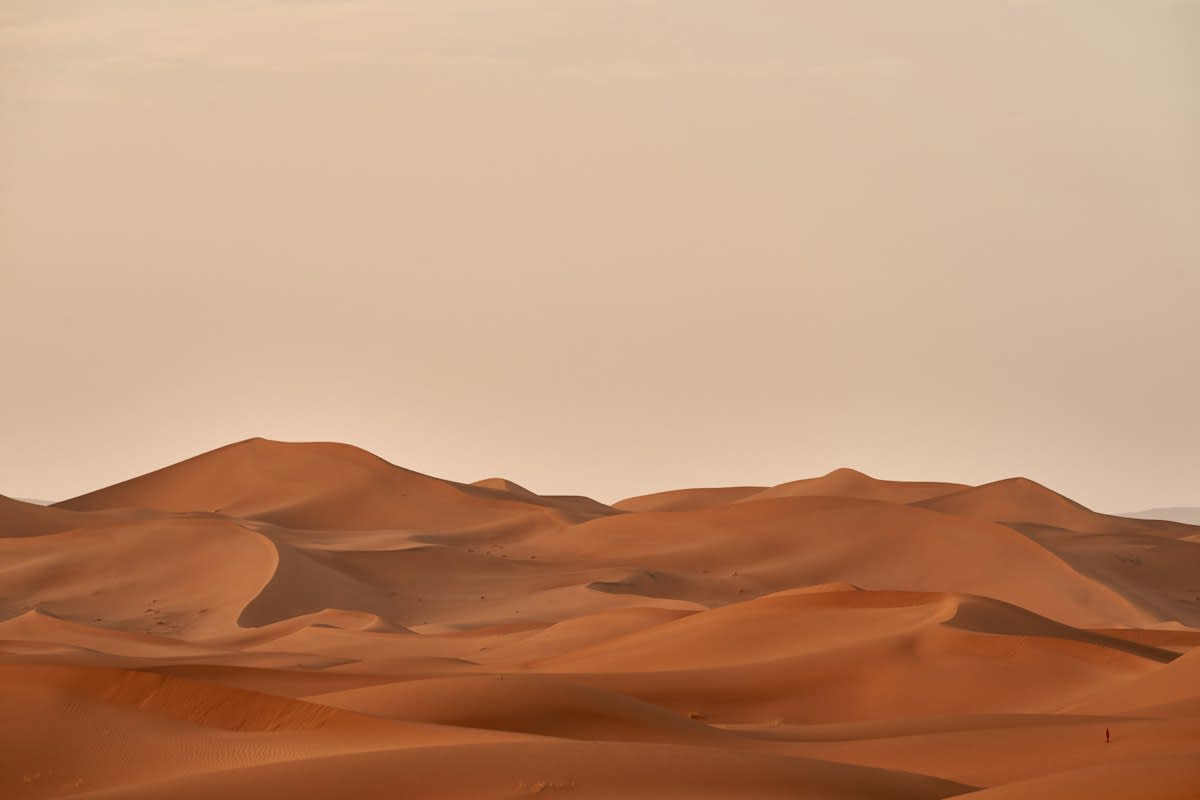
The logic is seductive in its simplicity. Paint the Sahara white, reflect more sunlight, and the planet cools. It is the ultimate engineering shortcut. But this approach assumes the Sahara is an empty void, a wasteland of nothingness waiting for a utility upgrade. It is not. The desert is a cosmic archive. To coat it in reflective polymers is to burn a library to keep the room cool.
The Mechanical Failure of Albedo Logic
Geoengineering often suffers from a bottleneck of imagination. We see a thermal problem and propose a chemical solution. The idea of whitening the Sahara to increase albedo ignores the collision between atmospheric goals and ground-level reality. Why do we assume the surface is inert? We have seen this before with other weather modification attempts. Puerto Rico recently spent $400,000 to seed clouds over drying reservoirs (Source: Justin Michaels, 2026). The result? Atmospheric scientists warned that you cannot create water where nature offers none (Source: Justin Michaels, 2026). It was a calculated gamble that failed to account for the actual terrain.
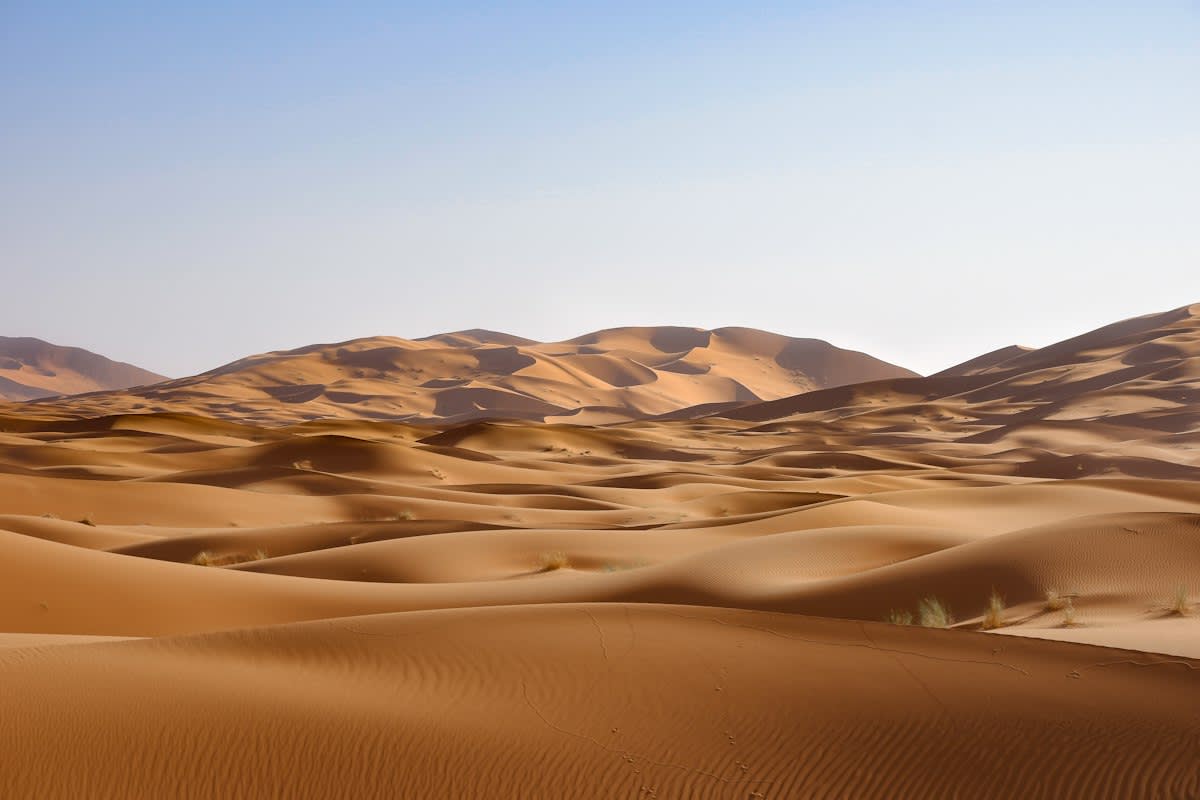
The friction here is not just political; it is scientific. If we treat the desert surface as a mere reflector, we override the delicate processes that allow us to find the remnants of other worlds. The Sahara is the world's premier hunting ground for meteorites. In 2022, an 800-gram pink rock was discovered in the salt plains of Mali (Source: Times of India, 2026). This was not just a stone. It was Teghaza 001, a piece of Mars (Source: Times of India, 2026).
"This is really our first piece of Martian crust from a part of Mars we've never had a sample of before."— Lee, Scientist at NASA's Ames Research Center
Imagine the loss. Teghaza 001 is 4.1 billion years old (Source: Mashable, 2026). It dates back to the foundational era of the solar system, offering a snapshot of Mars less than 500 million years after the planet formed (Source: Mashable, 2026). It preserves evidence of ancient volcanic activity and the interaction between water and rock (Source: Times of India, 2026). If the Sahara were painted white, the visibility and accessibility of such remnants would vanish. We would be trading a window into the origin of the solar system for a marginal dip in global temperature.
Surface Chemistry and the Coating Conflict
The technical execution of 'painting' a desert is a nightmare of material science. You cannot simply spray a surface of this scale. The accessibility of the surface is governed by complex chemistry. Research into imogolite-type nanotubes highlights a critical distinction between geometrically estimated specific surface area and experimentally accessible surface area (Source: MDPI, 2026). The accessibility of a surface depends on probe-molecule dimensions and aggregation states (Source: MDPI, 2026). Applying a uniform reflective coating to a porous, shifting desert terrain is not a matter of logistics; it is a mechanical impossibility.
| Intervention | Proposed Goal | Actual Friction | Risk Factor |
|---|---|---|---|
| Sahara Whitening | Increase Albedo | Surface Contamination | Loss of Cosmic Records |
| Cloud Seeding (PR) | Water Recovery | Atmospheric Limits | Financial Waste |
| Albedo Modification | Cooling | Pore Accessibility | Material Failure |
The industry debate is fierce and largely unspoken. On one side, the climate engineers view the Earth as a series of levers to be pulled. On the other, planetary geologists view the Sahara as a museum. The friction occurs when these two worlds collide. The geologists know that the desert's value lies in its purity and its ability to preserve objects like the 435 known Martian meteorites (Source: CBS News, 2026). The engineers see a thermal bottleneck. This is where the real danger lies: in the arrogance of the lever.
Is the risk worth the reward? Consider the human toll of heat without the intervention. In 2023, extreme heat was linked to 645 deaths in Maricopa County, Arizona, alone (Source: Justin Michaels, 2026). The pressure to act is immense. But the answer is not to paint over our history. The answer is adaptation. We must move away from the default of 'modification' and toward a strategy of coexistence with the terrain.
The discovery of Teghaza 001 proves that the Sahara is a bridge to the stars. It is a Rosetta Stone for Mars (Source: Mashable, 2026). To cover it in white paint is to blind ourselves to the history of our own solar system. We are talking about a rock that preserves signs of ancient water on a planet that is now cold and dry (Source: Times of India, 2026). The irony is thick: we would destroy the record of a dying planet to save our own through a clumsy, superficial fix.
Fact-Check & Accuracy Note
The debate over the Sahara's albedo revolves around the 'Albedo Modification' theory. While theoretically sound in a physics vacuum, it is professionally contested by geologists who cite the risk of altering regional precipitation patterns and the destruction of surface-level scientific archives. The dating of Teghaza 001 to 4.1 billion years is verified via NASA-funded research published in the journal Science (Source: Times of India, 2026).
We must stop treating the Earth's surface as a series of engineering problems. The Sahara is not a problem to be solved; it is a record to be read. When we prioritize the quick fix of albedo over the deep value of geological history, we commit a structural error. The real edge of innovation is not in how we can change the desert, but in how we can learn from it.