
We are currently paying a hidden premium on every purchase we make, though it doesn't appear on the receipt. This is the Dopamine Tax. It is the cognitive cost of operating a biological brain—evolved for scarcity—within a digital ecosystem designed for infinite abundance and instant gratification. Why do we buy things we do not need the moment a video tells us they are going viral? The answer lies not in a lack of willpower, but in a systemic misalignment between our neural reward circuitry and the architecture of modern commerce.
For decades, the shopping journey was linear: a need arose, a search was conducted, and a transaction occurred. That model is dead. In its place, we have the era of discovery-based consumption. Platforms are no longer waiting for you to want something; they are using deep analytics to anticipate demand patterns before the consumer even perceives a void. This shift transforms the act of buying from a rational decision into a theatrical experience, where the thrill of the find outweighs the utility of the object.
The Architecture of Irresistibility
Consider the mechanics of social commerce. Recent research from Savvy reveals that social platforms are rewriting the digital shopping experience, moving away from the sterile interface of traditional ecommerce toward something more visceral. In the UK, nearly 47% of Gen Z and Gen Y shoppers have used TikTok Shop to browse or buy products within a three-month window, a figure that dwarfs the 21% seen among the general UK population. This is not merely a demographic preference; it is a response to a highly engineered psychological trigger.
The 'theatrical' nature of this commerce is the key. When 57% of Gen Y/Z shoppers report enjoying live shopping events, they aren't just looking for a discount. They are engaging with a high-stakes environment where 66% of participants admit that seeing products sell out or go viral increases their likelihood of purchase. This is the scarcity heuristic weaponized in real-time. The brain perceives a closing window of opportunity, triggering a dopamine spike that bypasses the prefrontal cortex's capacity for financial deliberation.

This isn't limited to short-form video. Marketplaces like Voghion are now integrating deep analytics of consumer behavior and search patterns to connect global shoppers with high-relevance products proactively. By synthesizing search intent and purchasing trends, these platforms shift the goal from reacting to established trends to anticipating them. When the environment anticipates your desire, the friction of decision-making vanishes, and with it, the critical pause that usually prevents a bad financial decision.
The Predictive Pivot
The shift is systemic. We have moved from a world where we seek products to a world where products, powered by predictive data, seek us. This eliminates the 'cooling off' period essential for rational spending.
The Paradox of Choice and Cognitive Exhaustion
While the algorithm narrows our focus, the broader marketplace offers an overwhelming abundance of options. This leads to a phenomenon known as the Paradox of Choice. Barry Schwartz, an emeritus psychology professor at Swarthmore University, argues that the Western cultural obsession with 'more choice' is actually a recipe for anxiety and indecision. When we are presented with an infinite array of options, we don't feel liberated; we feel paralyzed.
Why does this lead to bad financial decisions? Because decision fatigue erodes our mental reserves. When we spend our cognitive energy weighing a hundred slightly different versions of the same product, we exhaust the very faculty required to ask, 'Do I actually need this?' Schwartz notes that limiting choices can actually increase satisfaction. He uses the example of choosing between only two brands of jeans; because the expectation of perfection is lower, the consumer is paradoxically more satisfied with the outcome.
This exhaustion creates a vulnerability that the industry is quick to exploit. By reducing the number of daily choices, an individual can reclaim significant mental bandwidth—potentially adding two hours of productive time to their day. However, most modern digital interfaces are designed to maximize the number of micro-decisions we make, keeping us in a state of perpetual cognitive flux that makes us more susceptible to the 'buy now' impulse.
| Shopping Model | Primary Driver | Cognitive State | Financial Outcome |
|---|---|---|---|
| Traditional Ecommerce | Intentional Search | Analytical/Comparative | Utility-Based Purchase |
| Social Commerce | Algorithmic Discovery | Emotional/Impulsive | Dopamine-Driven Purchase |
| Predictive Marketplaces | Anticipated Demand | Passive/Reactive | Frictionless Acquisition |
Is it possible to opt out of this cycle? The struggle is that the infrastructure of our digital lives is being redesigned to ensure we cannot. We see this in the corporate pivot from selling AI tools to monetizing the AI experience.
From Infrastructure to Ecosystem Stickiness
The financial markets are already reflecting this shift. For a significant period, the AI trade was dominated by companies providing the infrastructure, such as Nvidia. However, we are seeing a transition toward companies that can effectively monetize AI through customer economics. Apple's recent market movements illustrate this. Apple's advantage is not necessarily in the raw power of its AI, but in its vast distribution and integrated ecosystem.
By embedding AI directly into the user experience, Apple increases 'stickiness.' This is the ultimate goal of the Dopamine Tax: creating an environment where the user is so integrated into the ecosystem that the friction of leaving is higher than the cost of continuing to spend. The AI doesn't just help you find a product; it creates a seamless loop of suggestion and acquisition that feels like a natural extension of your own thought process.
"The question is whether investors have already paid too much for the first layer of the boom and whether the next stage belongs to companies that can turn AI into customer economics."— Jim Osman, Forbes
This move toward 'customer economics' is essentially the institutionalization of the Dopamine Tax. When AI manages the user experience, it can optimize for the exact moment of maximum susceptibility. It knows when you are tired, when you are bored, and when you are most likely to succumb to a suggested purchase. The profit is no longer in the tool itself, but in the behavioral modification the tool enables.
The Biological Hardwiring
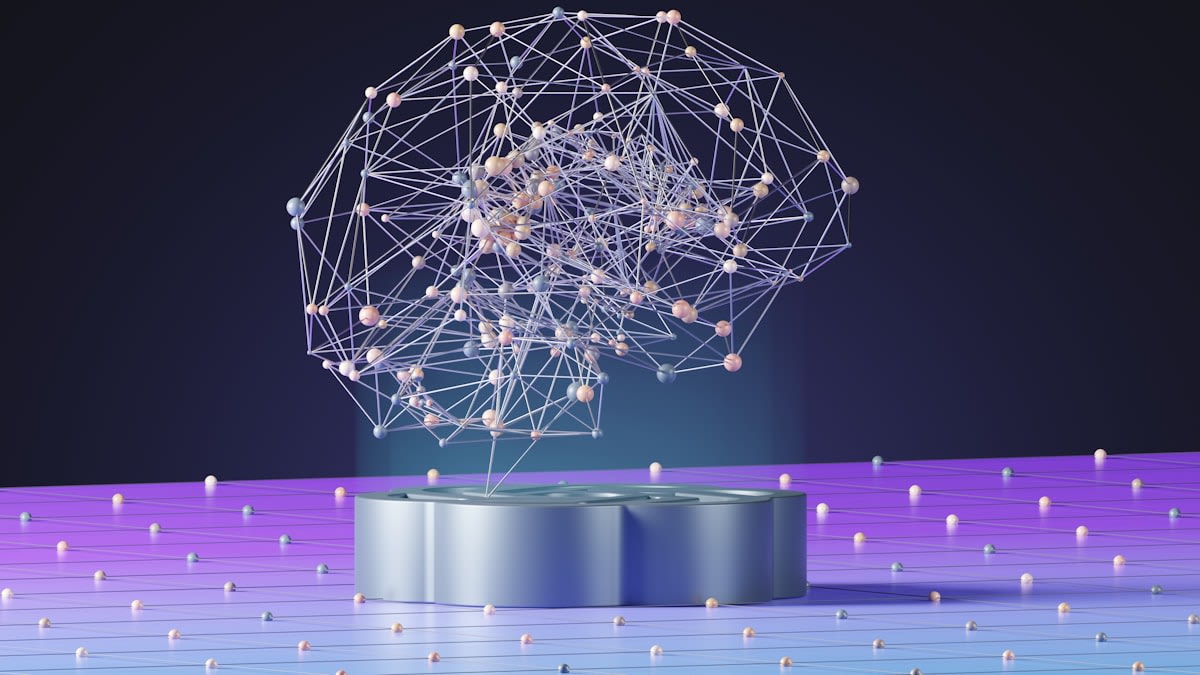
To understand why we are so susceptible, we must look at the neurochemistry of reward. Studies on neuro-immune-metabolic homeostasis have highlighted the roles of dopamine and serotonin in regulating behavior. In rat models, the restoration of these neurotransmitters is linked to the attenuation of depression-like behaviors. This underscores a fundamental truth: our brains are biologically programmed to seek the chemical rewards associated with novelty and achievement.
The 'hit' of dopamine we get from a viral TikTok purchase is a biological shortcut. Our brains aren't distinguishing between the 'achievement' of finding a rare resource in the wild and the 'achievement' of snagging a limited-edition product before it sells out. Both trigger the same reward pathways. The problem is that in a digital world, these triggers are constant, leading to a state of chronic overstimulation.
Interestingly, there is evidence that neural states are not fixed. Research into ECT-like stimulation in mice has shown that mature neurons can undergo cellular dematuration, returning to a highly plastic, early postnatal state through the action of the protein Cyclin B. While we cannot currently 'reprogram' our financial habits with electrical stimulation, the principle of neural plasticity suggests that our responses to these dopamine triggers are not inevitable.
If our brains can be conditioned to respond to algorithmic triggers, they can also be conditioned to resist them. The path to resilience lies in intentionally introducing friction back into the buying process. By limiting the number of daily choices and recognizing the 'theatrical' nature of social commerce, we can begin to decouple the dopamine spike from the act of spending.
Strategic Adaptation in the Age of Algorithmic Desire
The Dopamine Tax is an inevitable consequence of the collision between ancient biology and futuristic technology. We cannot wish away the algorithms, nor can we rewrite our DNA. However, we can adopt a strategic approach to our cognitive ecology. The most successful individuals in this new economy will be those who treat their attention as their most valuable asset, protecting it with the same rigor they apply to their financial portfolios.
Adapting requires a shift in perspective: viewing 'friction' not as a nuisance, but as a safeguard. Whether it is by disabling one-click purchasing, limiting social commerce app usage, or consciously reducing the number of options we consider, the goal is to move from a reactive state to an intentional one. The opportunity lies in reclaiming the two hours of daily cognitive bandwidth that the Paradox of Choice steals from us.
Ultimately, the struggle against the Dopamine Tax is a struggle for agency. As AI continues to move from the infrastructure layer to the user experience layer, the pressure to consume will only increase. The resilience of the global consumer will depend on the ability to recognize the neurochemical hooks for what they are: not a reflection of personal desire, but a calculated optimization of human biology.