
We have entered an era of aggressive optimization. From the super-apps of East Asia to the hyper-efficient logistics hubs of Northern Europe, the modern world is designed to eliminate friction. We call this progress, but from a systemic perspective, we are witnessing the rise of Privilege Creep. This isn't about wealth in the traditional sense; it is about the psychological baseline of expectation. When the gap between a desire and its fulfillment shrinks to a few milliseconds, the brain recalibrates. What was once a luxury—instant access, seamless navigation, immediate gratification—rapidly becomes the mandatory baseline.
The danger lies in the atrophy of the resilience muscle. Resilience is not a static trait; it is a biological and psychological response to managed stress. By systematically removing the 'micro-stressors' of daily life—waiting in line, navigating a confusing map, or negotiating a disagreement without a digital intermediary—we are effectively removing the training weights from our mental gym. When a genuine crisis eventually hits, the individual lacks the calloused mind necessary to endure it. We are building a world that is functionally perfect but psychologically fragile.
The Mechanics of Hedonic Adaptation
At the core of this shift is the principle of Hedonic Adaptation. This psychological phenomenon suggests that humans quickly return to a stable level of happiness despite major positive or negative events. In the context of convenience, this means that the high we feel from a new time-saving technology is fleeting. Once a service like instant grocery delivery becomes available in cities like Mumbai or Sao Paulo, it ceases to be a 'benefit' and becomes the 'standard.' Any deviation from this standard—a delayed driver, a missing item—is no longer viewed as a minor inconvenience but as a systemic failure.
"The paradox of the modern condition is that by removing the friction that causes frustration, we have also removed the friction that creates competence."— Conceptual framework derived from Behavioral Economics and Resilience Theory
This shift is observable across diverse global contexts. In highly digitized societies, we see a rising trend of 'low-threshold anxiety,' where individuals report significant distress over minor logistical hiccups. This is not a failure of character, but a systemic outcome of an environment that has promised the end of waiting. When the environment guarantees a frictionless experience, the brain loses its ability to regulate the emotional response to delay. We are essentially trading long-term stability for short-term ease.
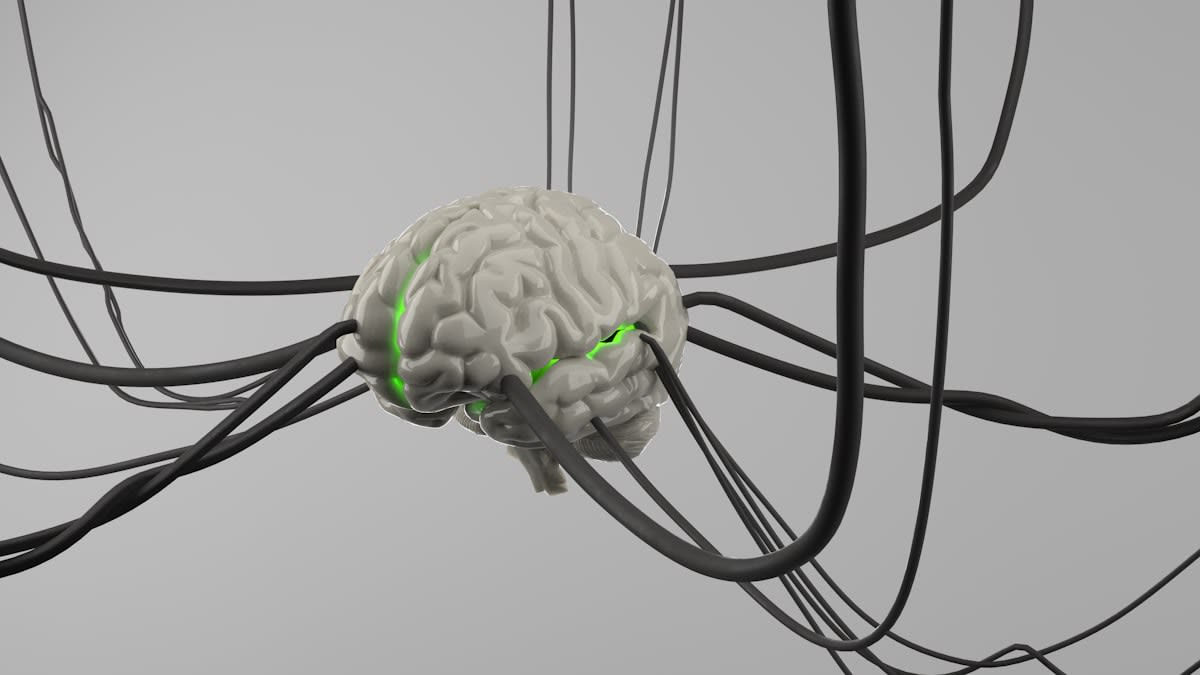
Why does this matter for the global workforce? Because resilience is the primary currency of leadership and innovation. Innovation requires the ability to sit with discomfort and navigate ambiguity. If a generation of professionals is raised in a 'frictionless' bubble, their capacity for deep work and complex problem-solving diminishes. They become experts at utilizing tools but novices at enduring the struggle that precedes a breakthrough.
The Practitioner's Debate: Optimal Friction
On the ground, this tension manifests as a clash between UX designers and behavioral psychologists. In the boardrooms of Silicon Valley and Shenzhen, the mandate is clear: remove every click, every second of wait time, and every moment of cognitive effort. However, practitioners in the field of mental resilience argue for 'Optimal Friction.' This is the theory that a certain amount of effort is required for a task to be meaningful and for the brain to encode the experience as a success. The debate is no longer about how to make things easier, but about where to strategically reintroduce difficulty to prevent cognitive decay.
I have seen this play out in corporate wellness initiatives across Singapore and London. Companies are moving away from simple 'stress management' (which focuses on calming the mind) toward 'stress inoculation' (which focuses on exposing the mind to controlled challenges). They are realizing that you cannot 'meditate' your way out of a lack of resilience; you have to build it through intentional struggle. The goal is to shift the internal narrative from 'this is too hard' to 'this is the process of growth.'
| Dimension | High-Friction Baseline (Traditional) | Low-Friction Baseline (Modern Convenience) |
|---|---|---|
| Problem Solving | Iterative trial and error; high tolerance for failure | Search-based solutions; low tolerance for ambiguity |
| Emotional Regulation | Patience developed through necessary waiting | Irritability triggered by minor delays |
| Cognitive Load | Active navigation and memory usage | Passive reliance on algorithmic curation |
| Success Perception | Achievement linked to effort expended | Achievement linked to speed of acquisition |
This divergence creates a systemic vulnerability. When the 'just-in-time' logistics of a city fail—due to a power outage in Lagos or a transit strike in Paris—the psychological shock is disproportionate to the event. The infrastructure of convenience has not just changed how we get our food; it has changed how we perceive our agency in the world. We have transitioned from being active agents who navigate the world to passive consumers who expect the world to navigate itself around us.

Adapting to the Convenience Trap
The solution is not a Luddite rejection of technology, but a strategic reintroduction of voluntary hardship. This is the practice of choosing the harder path not for the sake of suffering, but for the sake of capacity. Whether it is choosing to walk instead of ride, reading a physical book instead of a summarized feed, or engaging in difficult face-to-face conversations instead of texting, these acts serve as 'resilience anchors.' They remind the brain that discomfort is not a crisis, but a condition.
- Cognitive Diversification: Intentionally using analog tools to engage different neural pathways.
- Scheduled Friction: Creating 'no-tech' zones or times to force independent problem-solving.
- Exposure Therapy: Engaging in activities with unpredictable outcomes to rebuild tolerance for ambiguity.
- Agency Recovery: Taking ownership of the 'process' rather than just the 'result'.
As we look toward the next decade, the competitive advantage will shift. In a world where everyone has access to the same frictionless tools, the winners will not be those who are the most efficient, but those who can endure the most friction. The ability to stay calm when the system breaks, to think critically when the algorithm fails, and to persist when there is no 'instant' solution will be the ultimate differentiator in the global economy.
Fact-Check & Accuracy Note
The claims regarding Hedonic Adaptation and the relationship between stress and resilience are based on established psychological frameworks (e.g., Brickman & Campbell). The analysis of 'Privilege Creep' is a systemic synthesis of current behavioral trends in digitized urban environments. While specific 'Optimal Friction' metrics are currently a subject of debate among UX researchers and psychologists, the correlation between environmental stability and stress tolerance is widely recognized in clinical psychology.