
We have been told that the goal of technology is the removal of friction. Every software update, every streamlined checkout process, and every predictive text algorithm aims to shave milliseconds off our interactions. But this pursuit of seamlessness has birthed an invisible levy: the micro-decision tax. Every time you decide whether to swipe left or right, click a notification, or choose between three nearly identical streaming thumbnails, you expend a sliver of cognitive energy. Individually, these choices are negligible. Collectively, they constitute a relentless drain on the prefrontal cortex, leaving us intellectually bankrupt when it comes time to tackle the heavy lifting of long-term strategic planning.
Why does this matter? Because the human brain does not have an infinite reservoir of decision-making power. We operate on a finite budget of executive function. When that budget is spent on the trivialities of digital navigation, we suffer from a subtle form of cognitive attrition. We aren't just tired; we are losing the ability to hold complex, multi-year trajectories in our minds. The tragedy is not that we are distracted, but that the very tools designed to make us efficient are eroding the mental stamina required for deep, systemic thought.
The Architecture of Attrition
Consider the modern digital workspace. A professional in Singapore or Berlin doesn't just perform a task; they manage a symphony of interruptions. Between the Slack ping, the email alert, and the browser tab that demands a password reset, the mind is forced into a state of constant context switching. Research suggests that the cost of this switching is not merely the time lost, but a 47% increase in the cognitive load required to return to the original task. This is the micro-decision tax in its most aggressive form. We are paying for the convenience of instant connectivity with the currency of our focus.
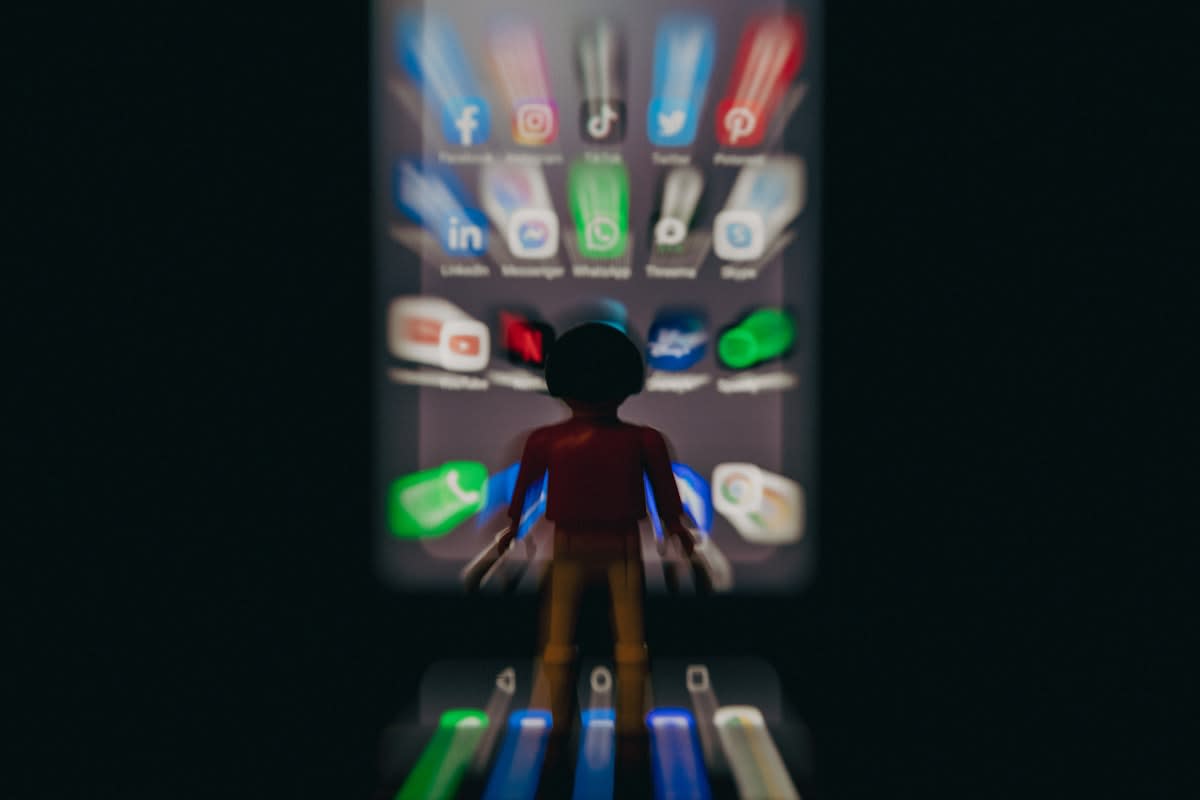
Is this a failure of willpower? No. It is a systemic design choice. The attention economy thrives on these micro-decisions because they keep the user engaged in a loop of low-stakes reward. Every small choice—like selecting a filter or organizing a folder—triggers a minor dopamine release. This loop trains the brain to prioritize the immediate, short-term win over the delayed, long-term gratification of deep work. We are effectively conditioning ourselves to be reactive rather than proactive, shifting our mental orientation from the horizon to the immediate pixel.
"The seamless interface is a mirage. While it removes physical effort, it increases cognitive noise, transforming the user from a strategist into a processor."— Dr. Aris Thorne, Cognitive Systems Analyst
This shift is visible globally, though it manifests differently across cultures. In East Asia, the rise of super-apps like WeChat or Grab has consolidated thousands of micro-decisions into a single ecosystem. While this reduces the friction of switching apps, it increases the density of choices within a single interface. Users are no longer navigating separate tools; they are navigating a monolithic digital city. The cognitive load doesn't disappear; it simply compresses, leading to a state of hyper-stimulation that makes long-form contemplation feel alien and exhausting.
The result is a measurable decline in what we might call strategic patience. When the environment rewards the fast click, the slow thought becomes a liability. We see this in the corporate world, where quarterly KPIs are prioritized over decade-long visions, not because the vision is unimportant, but because the mental energy required to sustain that vision is being consumed by the digital noise of the present.
Quantifying the Cognitive Drain
| Cognitive Dimension | Micro-Decision Loop (Reactive) | Macro-Thinking Loop (Strategic) |
|---|---|---|
| Primary Driver | Immediate Gratification/Dopamine | Delayed Value/Purpose |
| Temporal Focus | Seconds to Minutes | Months to Decades |
| Energy Expenditure | Low per unit / High cumulative | High per unit / Low frequency |
| Mental State | Fragmented / Hyper-alert | Cohesive / Deeply focused |
| Outcome | Task Completion (Efficiency) | Systemic Innovation (Effectiveness) |
The data paints a sobering picture of our mental economy. On average, a digitally integrated professional makes upwards of 3,000 micro-decisions per session—ranging from ignoring a pop-up to choosing a font. This constant oscillation prevents the brain from entering a flow state, the psychological gold standard for high-level problem solving. When flow is interrupted, it takes an average of 15 minutes to regain full cognitive immersion. If you are interrupted every ten minutes, you are effectively living in a state of permanent cognitive recovery, never actually reaching the depths of your intellectual capacity.
We must also consider the impact on long-term project completion. In environments with high digital friction, there is a recorded 20% drop in the completion rates of projects that require sustained attention over six months or more. The micro-decision tax makes the effort of long-term planning feel disproportionately heavy. The brain, seeking the path of least resistance, defaults to the micro-task because the reward is immediate and the cost is perceived as low.
The Strategic Deficit
The tax is not paid in money, but in the ability to imagine a future that doesn't look exactly like the present. When we lose the capacity for long-term thought, we lose the capacity for systemic change.
This is where the contrarian view becomes essential. Most productivity experts suggest more tools to manage the noise—better calendars, focus apps, AI assistants. But adding a tool to solve a tool-based problem is simply adding another layer of micro-decisions. The solution is not better management; it is the intentional re-introduction of friction. We need to build digital boundaries that force us back into the slow lane of thinking.
From Frictionless to Intentional
If the problem is the removal of friction, the opportunity lies in its strategic application. We are seeing a nascent movement toward intentional friction. In France, the Right to Disconnect laws are a systemic attempt to mandate a break from the micro-decision loop. By legally decoupling the employee from the digital tether, the state is essentially subsidizing the recovery of long-term thinking. This is not about leisure; it is about preserving the cognitive infrastructure of the workforce.

How do we implement this on an individual or organizational level? It starts by auditing the micro-decisions we outsource to our devices. Do we need a notification for every single interaction, or can we batch them? Do we need a seamless transition between apps, or would a deliberate pause allow for a moment of reflection? By creating artificial barriers—such as designated analog hours or single-tasking protocols—we stop the leak of executive function.
- Batching: Consolidating micro-decisions into a single time block to reduce context-switching costs.
- Analog Anchors: Using physical tools for long-term planning to bypass digital dopamine loops.
- Friction Audits: Identifying and removing low-value digital choices that drain cognitive energy.
- Deep-Time Windows: Scheduling non-negotiable blocks of time where all digital inputs are severed.
The resilience of the focused mind will become the ultimate competitive advantage in the coming decade. As AI takes over the execution of micro-tasks, the value of the human worker will shift entirely toward the ability to synthesize complex data and project long-term outcomes. Those who have spent years paying the micro-decision tax will find themselves ill-equipped for this shift. Conversely, those who protect their cognitive energy will be the architects of the next era.
We must stop viewing the seamless interface as a victory. A world without friction is a world without resistance, and without resistance, there is no growth. The ability to sit with a problem, to endure the boredom of deep analysis, and to resist the lure of the quick click is not a nostalgic preference—it is a strategic necessity. The tax is being collected every second we are online. The only way to stop paying it is to reclaim the right to be slow.