
The Underground Ledger
Soil is not merely a medium for plant growth; it is a sophisticated, high-frequency trading floor. In this hidden economy, plants trade carbon—the currency of photosynthesis—for essential nutrients like phosphorus and nitrogen, brokered by complex fungal networks. For decades, industrial agriculture ignored this market, opting instead to flood the system with synthetic inputs. We treated the soil as a warehouse rather than a marketplace. Now, a systemic shift is occurring. The goal is no longer just to feed the plant, but to optimize the trade itself.
Why does this shift matter now? Because climate shock has exposed the fragility of synthetic dependence. When the biological trade fails, the crop fails. The contrarian view is that we aren't just 'saving the soil' for the sake of the environment; we are upgrading the infrastructure of food production to be more resilient. We are moving from a model of extraction to one of strategic asset management. The 'mycelial market' is the original decentralized finance system, and we are finally learning how to read its ledger.

Digitalizing the Biological Trade
The primary bottleneck in scaling this biological market has always been visibility. You cannot manage what you cannot measure. This is where artificial intelligence enters the fray. According to a recent analysis from BCC Research, AI is rapidly disrupting the carbon farming market by solving the Measurement, Reporting, and Verification (MRV) problem. For too long, carbon sequestration was a guessing game based on coarse models. AI changes the equation by providing precision monitoring that allows farmers to maximize their participation in agricultural carbon markets.
Venture capital is pouring millions into these digital agriculture solutions because the incentive is clear: verified carbon is a tradable commodity. By using AI to improve soil carbon measurement, we are essentially creating a real-time API for the earth's crust. This isn't about a vague commitment to sustainability; it is about the financialization of soil health. When a farmer can prove exactly how much carbon is being sequestered via AI-driven MRV, the soil transforms from a cost center into a revenue generator.
"Canada wants an agricultural sector that can anticipate, withstand and adapt to disruption."— Mathieu Lipari, National Risk Management Lead, Farm Management Canada
This transition toward 'anticipatory' agriculture is a global necessity. In Canada, for instance, Farm Management Canada has proposed a National Strategy for Education and Communication on Agricultural Risk Management. The insight here is critical: the tools for resilience already exist, but the communication gap prevents their adoption. The systemic failure isn't a lack of technology, but a lack of coordination. To survive climate shock, the industry must move beyond reactive programs and embrace proactive risk management that strengthens long-term resilience.
| Feature | Traditional Soil Management | AI-Driven Carbon Farming |
|---|---|---|
| Nutrient Delivery | Synthetic/Broad-spectrum | Precision/Biological-led |
| Carbon Tracking | Estimated/Static | AI-Verified/Real-time (MRV) |
| Risk Approach | Reactive (Insurance-based) | Proactive (Resilience-based) |
| Economic Model | Yield-only Revenue | Yield + Carbon Credit Revenue |
The Logistics of Nutrient Cycling
If AI is the ledger, then nutrient cycling is the logistics. Consider the specific requirements of cotton production. As highlighted by AgWeb, the window for fall soil testing is critical for identifying pH issues and residual nutrients before the spring planting. This isn't just routine maintenance; it is a strategic audit. If the pH is off, the biological trade stops. Lime applications in the fall provide the necessary time for the soil to react, ensuring that the 'market' is open for business when the seeds hit the ground.
The role of cover crops in this system cannot be overstated. A well-established cover crop does more than prevent erosion; it supports active nutrient cycling and improves soil structure. By coordinating soil testing with cover crop plans, growers create a closed-loop system that reduces reliance on external inputs. This is the practical application of the mycelial market: using biological proxies to maintain the soil's fertility budget.
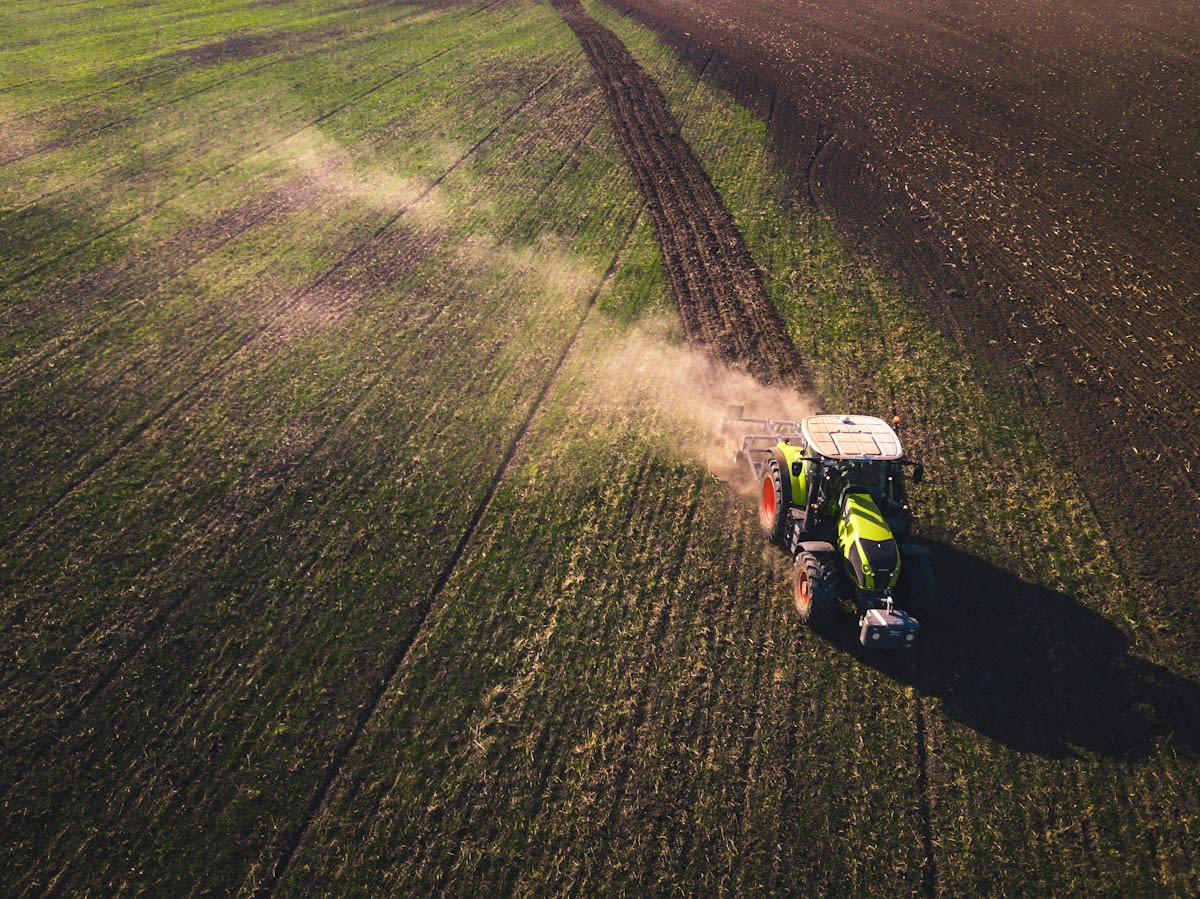
The integration of variable-rate applications (VRT) further optimizes this process. Instead of treating a field as a monolith, VRT allows farmers to apply lime and fertilizer only where the soil audit indicates a deficit. This precision prevents nutrient runoff and protects the very biological networks that facilitate carbon trading. It is a move from blunt-force chemistry to surgical biology.
The Convergence Revolution
The Convergence Shift
We are witnessing a 'connective intelligence layer' where AI integrates with biotechnology and nanotechnology to redefine competitive advantage in agriculture.
This biological optimization is part of a broader 'Convergence Revolution.' As noted in Forbes, the blending of AI with biotechnology and nanotechnology is creating a new paradigm of adaptive intelligence. In the context of the soil, this means we are moving toward a future where digital twins of entire farm ecosystems can simulate the impact of different nutrient strategies before a single seed is planted. This simulation economy allows for the testing of resilience strategies without risking the actual harvest.
The strategic implication is profound. The countries and companies that master this convergence—AI for measurement, biotech for nutrient optimization, and strategic risk frameworks for implementation—will dominate the future of food security. This is no longer about farming in the traditional sense; it is about managing a complex, bio-digital system. The competitive advantage now lies in the ability to synchronize the digital ledger with the biological reality.
Beyond the Crisis: The Opportunity of Resilience
It is easy to frame the current state of agriculture as a crisis of climate shock. However, a strategic analyst sees an opportunity for a total system reboot. The pressure to sequester carbon and reduce synthetic inputs is forcing an innovation cycle that was stalled for half a century. We are rediscovering the value of the mycelial market, but this time, we are augmenting it with AI and precision data.
The shift from reactive to proactive management, as advocated by Farm Management Canada, is the blueprint for this new era. By closing the gaps in education and communication, the agricultural sector can transform from a vulnerable industry into a resilient network. The goal is a system that doesn't just survive disruption but thrives because of it.
Ultimately, the 'mycelial market' is a metaphor for a larger truth: everything is connected. The carbon in the atmosphere, the nutrients in the soil, the AI in the cloud, and the risk strategies in the boardroom are all part of the same exchange. Those who recognize this interdependence will be the ones to lead the next agricultural revolution.