
The Cognitive Tax: Why Your Brain Shuts Down
Every choice you make, from the moment you wake up to the second you close your eyes, consumes a finite amount of mental energy. This is not a metaphor; it is a biological reality. When you spend your morning debating which shirt to wear or which email to answer first, you are effectively spending your cognitive currency. By the time you reach the critical decisions of your afternoon, your brain is operating on a deficit. We call this decision fatigue, and it is the silent killer of high-level performance.
The danger lies in the invisibility of the drain. Most professionals believe they are failing due to a lack of discipline or motivation. In reality, they are simply exhausted. When the mental energy required for self-regulation evaporates, focus declines and the ability to follow through on complex tasks vanishes. It is a systemic failure, not a personal one. To fix it, we must stop treating willpower as an infinite resource and start treating it as a precious commodity that requires a strict budget.
The Breaking Point
The 6 PM Wall: By Tuesday evening, after a day of professional fires and traffic, your brain doesn't want to make another choice—especially one involving the complexity of chopping vegetables. This is where most health and productivity goals collapse.
Prerequisites for the Neural Reset
Before implementing these steps, you must accept a fundamental shift in perspective: motivation is a lie. Relying on the 'feeling' of wanting to be productive is a recipe for inconsistency. Instead, you need to build an infrastructure that makes the right decision the only decision. You are not looking for a new habit; you are building a system of defaults.
- A commitment to 'Defaulting': The willingness to eat the same meal or wear the same style of clothing to save brain space.
- Objective Data Tools: Access to trackers (like Whoop or similar) to monitor recovery and strain rather than guessing your energy levels.
- An Audit Mindset: The ability to look at your daily routine as a 'display' that needs to be streamlined for efficiency.
- A Balanced Nutritional Baseline: A pre-determined list of whole foods to avoid the pitfalls of food monotony.
With these prerequisites in place, we can move from the theory of cognitive load to the practice of neural preservation. The goal is to create a 'low-friction' existence where the mundane is automated, leaving your peak intelligence available for the work that actually matters.
Step 1: Map Your Cognitive Workload
To eliminate fatigue, you must first identify where the leaks are occurring. We can learn a great deal from the development of the MV-75 Cheyenne pilot display. In high-stress maneuvers or degraded visual environments, pilots cannot afford to hunt for information. The Army and Bell engineers focused on how information was prioritized and layered to avoid information overload. They discovered that grouping related performance cues—such as power management data—directly reduced the time needed to make critical decisions.

Apply this 'cockpit logic' to your own life. Look at your digital and physical environment. Are your most critical tools grouped together? Do you have to navigate five different menus or folders to find a primary document? If you are spending mental energy on 'navigation,' you are wasting bandwidth. Streamline your 'symbology'—your notifications, your desktop layout, and your physical workspace—so that the most important data is layered on top and the noise is filtered out.
"Grouping power management data with related performance cues reduced the time needed to make critical decisions, directly supporting safer and more effective operations."— US Army / Bell Feedback on MV-75 Cheyenne
Once you have streamlined your environment, you must address the most frequent source of daily decision leakage: the kitchen.
Step 2: Deploy Food Monotony
Food choices are a constant drain. Between planning menus, shopping, and cooking, the average person makes thousands of food-related decisions. The solution is 'food monotony'—the practice of eating the same balanced meals every day. By establishing a 'default' breakfast and lunch, you remove an entire category of decision-making from your morning and afternoon, preserving that brain space for higher-order problem solving.
| Meal Type | The High-Fatigue Choice (Avoid) | The Neural Reset Default (Adopt) |
|---|---|---|
| Breakfast | Bacon, eggs, and hash browns (High prep/heavy) | Yogurt or oatmeal with fresh fruit (Low prep/steady energy) |
| Lunch | Ordering from a menu (Decision heavy) | Salad with olive oil and vinegar (Consistent/nutrient-dense) |
| Dinner | Daily recipe searching (High cognitive load) | Prepped macro-friendly meals (Systemized) |
However, monotony without strategy is dangerous. Nutrition experts warn that the risk of nutritional deficiencies increases if your defaults consist of ultraprocessed foods, high salt, or sugary snacks. The goal is not just simplicity, but 'balanced simplicity.' A daily habit of oatmeal and fruit provides the mental clarity needed to start the day without the crash associated with processed meats and white bread, which offer little beneficial fiber.
When you automate your nutrition, you aren't just saving time; you are protecting your self-control. Research shows that after a long run of decisions, our ability to stick to goals declines. By removing the choice, you make it easier to maintain your health goals regardless of how stressful your workday becomes.
Step 3: Transition from Motivation to Systems
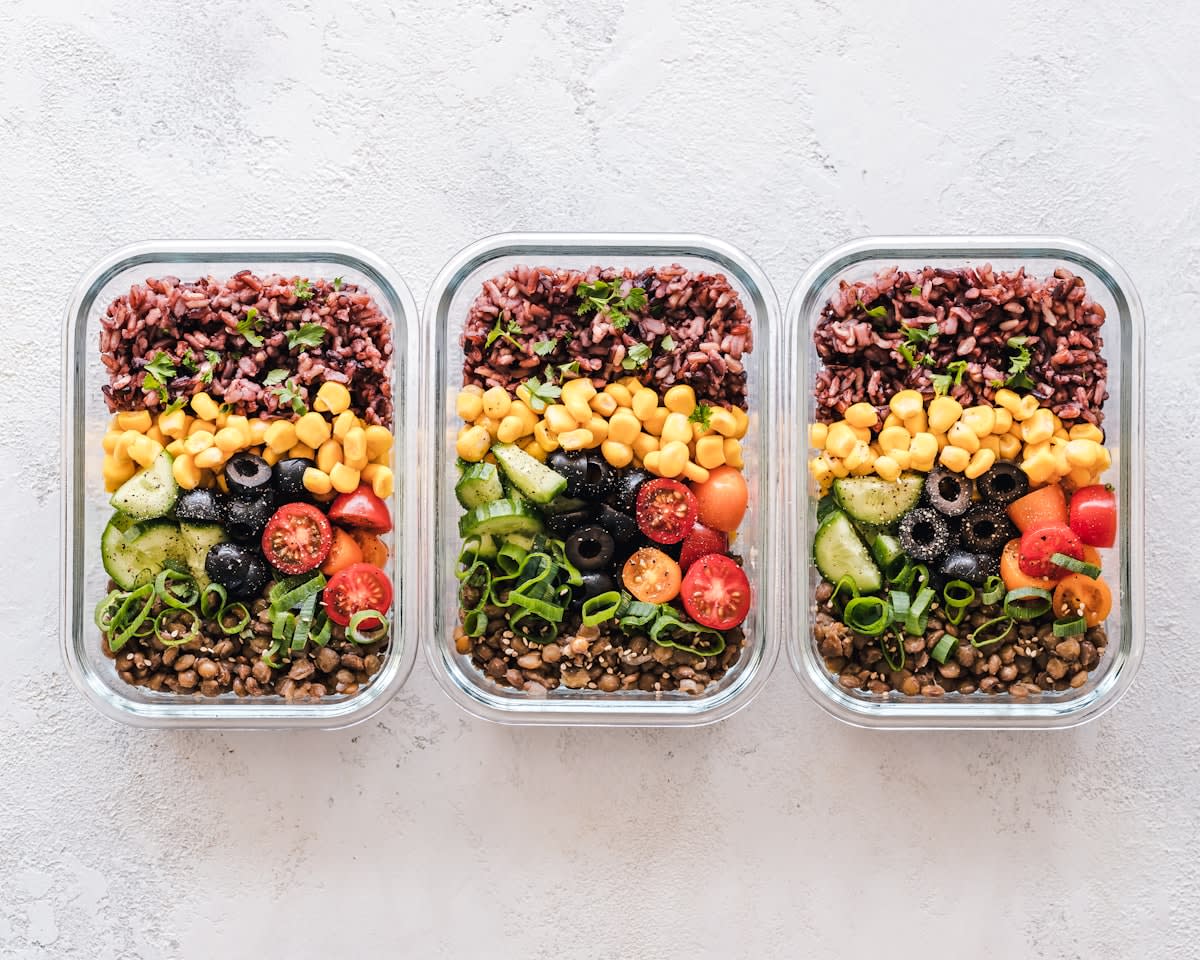
Most people fail because they rely on motivation—a fickle emotional state. The Master Practitioner relies on infrastructure. Meal prep is the primary example of this shift. It is not about the aesthetics of containers; it is about making healthy eating realistic in the middle of a chaotic week. When the food is already prepared, the decision is already made. You have moved the effort from the high-stress moment (Tuesday at 6 PM) to a low-stress moment (Sunday afternoon).
- Identify your 'Danger Zones': Pinpoint the times of day when your willpower is lowest (e.g., late afternoon).
- Build the Infrastructure: Dedicate one block of time per week to remove all decisions for those zones (meal prep, outfit planning, calendar blocking).
- Integrate Objective Data: Use health trackers to monitor sleep quality and recovery capacity. If your data shows high strain, further reduce your decision load for that day.
- Create 'If-Then' Protocols: Instead of deciding how to handle a crisis, create a system (e.g., 'If a meeting runs over, then I skip the gym and do 10 minutes of stretching').
- Review and Refine: Every 30 days, audit your systems to ensure they are still serving you and not becoming a source of rigidity.
The ultimate goal is awareness. Using tools like Whoop allows you to see invisible patterns in your recovery and strain. When you have objective data, you no longer have to 'decide' if you are too tired to push through; the data tells you. This removes the internal conflict and the decision fatigue associated with second-guessing your own physical and mental state.
Common Pitfalls of the Neural Reset
While systemic automation is powerful, it can be misapplied. The most common error is 'over-optimization,' where the act of building the system becomes more stressful than the decisions it was meant to replace. Your systems should be invisible, not a second job.
- The Monotony Trap: Eating the same thing every day but choosing low-nutrient, processed options that lead to brain fog.
- Rigidity Over Resilience: Creating a system so strict that it breaks during a vacation or family emergency. Remember: systems should support life, not constrain it.
- Ignoring the Data: Tracking recovery and strain but failing to adjust the workload accordingly, leading to burnout despite the 'system'.
The Neural Reset is not about becoming a robot; it is about automating the robotic parts of your life so you can be more human where it counts. By treating your cognitive energy as a finite resource and applying the principles of cognitive workload management, you ensure that your best self is available for your most important challenges.