
You know the feeling. It is not the racing heart of anxiety or the heat of anger. It is a cold, heavy stillness. Your mind feels like it is wrapped in cotton wool, your limbs feel leaden, and the world seems to recede into a distant, blurry background. This is the freeze response—a sophisticated biological survival mechanism designed to protect you when fighting or fleeing is no longer viable. While this state saved our ancestors from predators, in the modern world, it often manifests as chronic procrastination, emotional numbness, or a pervasive sense of burnout that no amount of sleep can fix. The problem is that you cannot reason your way out of a state governed by the brainstem.
Prerequisites for the Reset
Before initiating the Reset Protocol, you must accept a fundamental truth: your body is not broken; it is simply executing a program it believes is necessary for your survival. To move through this, you will need a physical space where you feel relatively safe—even if that safety is only 10% real. You will need a willingness to experience brief flashes of discomfort, as the transition from freeze (dorsal vagal) to safety (ventral vagal) often requires a brief passage through mobilization (sympathetic). Finally, you need a commitment to titration. We do not smash through the freeze; we melt it, layer by layer, to avoid overwhelming the system and triggering a full-blown panic attack.
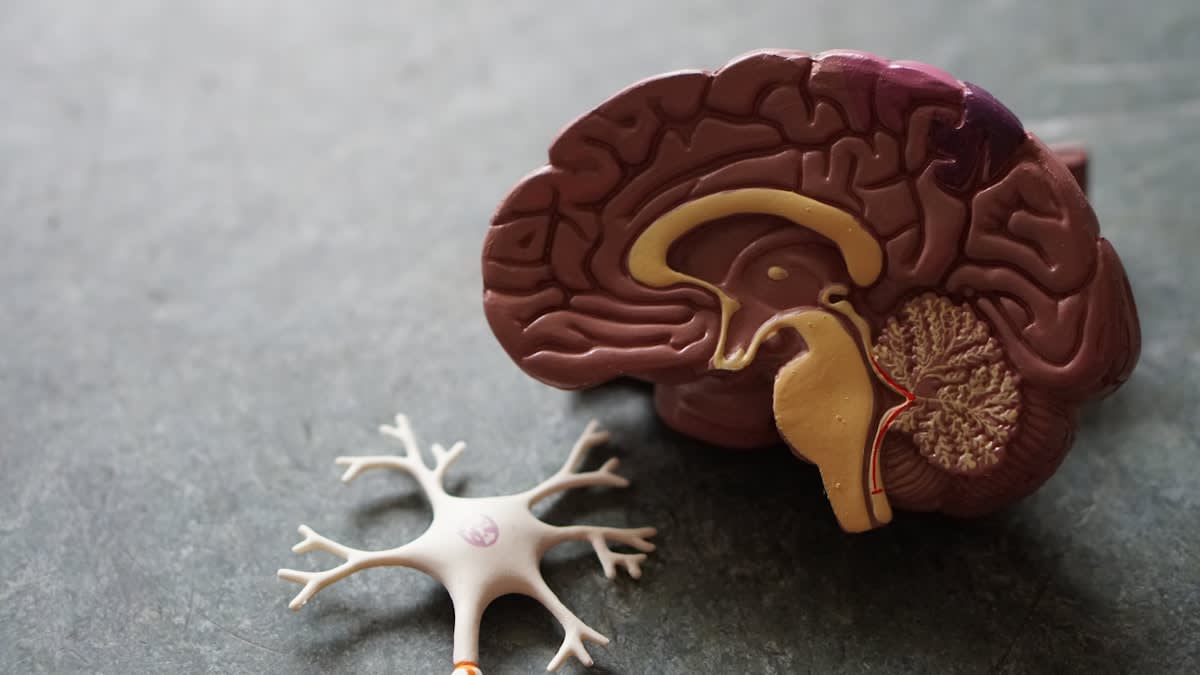
The Biological Architecture of Shutdown
To master the reset, you must understand the map. According to Polyvagal Theory, the nervous system operates in a hierarchy (Source: Stephen Porges, 2011). At the top is the Ventral Vagal complex, which allows for social engagement and healing. When we perceive danger, we drop into the Sympathetic nervous system—the fight-or-flight response. However, when the threat is perceived as inescapable or overwhelming, the body triggers the Dorsal Vagal complex. This is the 'emergency brake.' It drops your heart rate, lowers your blood pressure, and induces a state of dissociation. In clinical settings across the globe, from trauma centers in Rwanda to high-pressure corporate hubs in Tokyo, this state is often misdiagnosed as clinical depression when it is actually a physiological shutdown.
"The freeze response is not a lack of action, but a state of intense internal immobilization. The goal is not to force action, but to signal safety to the brainstem so the body feels it is permissible to move again."— Dr. Stephen Porges, Founder of Polyvagal Theory
Why does this matter? Because if you try to use 'willpower' to overcome a freeze response, you are essentially trying to use the prefrontal cortex to override the brainstem. It is like trying to use a keyboard to fix a power outage in the building. The electricity is off; the keyboard is irrelevant. We must address the biology first. By using somatic (body-based) inputs, we send a signal to the Vagus nerve that the environment is now safe, allowing the system to climb back up the hierarchy from Dorsal to Sympathetic, and finally to Ventral.
The Reset Protocol: Step-by-Step Execution
- The Internal Audit: Start by naming the state. Instead of saying 'I am lazy' or 'I am depressed,' say 'My nervous system is in a freeze response.' This creates a thin layer of distance between your identity and your physiology, reducing the shame that often keeps the freeze locked in place.
- Micro-Mobilization: Do not try to stand up or start working. Start with the smallest possible movement. Wiggle one toe. Rotate your wrists. Gently blink your eyes. These micro-movements signal to the brainstem that the body is still capable of movement without triggering a massive surge of adrenaline.
- Sensory Anchoring (The 5-4-3-2-1 Method): Shift your focus from the internal void to the external environment. Identify 5 things you can see, 4 things you can touch, 3 things you can hear, 2 things you can smell, and 1 thing you can taste. This forces the brain to re-engage with the present moment, breaking the dissociative loop.
- The Physiological Sigh: Take a deep breath in through the nose, and at the very top, take a second, shorter sip of air to fully inflate the alveoli in the lungs. Then, exhale slowly through the mouth. This specific pattern is one of the fastest ways to lower autonomic arousal and signal safety (Source: Stanford Medicine, 2023).
- Vagal Toning: Use a physical 'shock' or vibration to stimulate the Vagus nerve. Splash ice-cold water on your face or hum a low, resonant tone for 60 seconds. The vibration in the throat and the cold stimulus trigger the diving reflex, which can help 'kickstart' the system out of the dorsal slump.
- Co-Regulation: Once you have a glimmer of mobilization, seek a safe human connection. This could be a hug, a conversation with a trusted friend, or even just sitting in a crowded cafe. The presence of another regulated nervous system helps pull your own system back into the Ventral Vagal state of safety.
As a practitioner who has spent over a decade implementing these protocols in diverse settings, I have seen the 'titration' debate play out in real-time. Some clinicians argue for a more aggressive 'activation' approach to snap a patient out of freeze. I disagree. In my experience, pushing too hard, too fast, often sends the patient straight from freeze into a high-arousal panic state. The key is the 'slowness' of the ascent. I often describe it to clients as 'thawing a frozen lake.' If you pour boiling water on ice, it cracks violently. If you let the sun warm it slowly, it melts into a fluid, usable state. This is why the micro-movements in step two are non-negotiable.

Common Pitfalls and How to Avoid Them
- The 'Willpower Trap': Attempting to use logic, lists, or discipline to break the freeze. This usually increases internal shame, which actually deepens the Dorsal Vagal shutdown.
- Over-Stimulation: Jumping straight to high-intensity exercise or loud music. If the system is deeply frozen, this can trigger a 'sympathetic crash' where the body becomes overwhelmed and shuts down even harder.
- Ignoring the 'Thaw' Anxiety: When you begin to leave the freeze state, you will often feel a surge of anxiety or restlessness. Many people mistake this for a relapse and retreat back into the freeze. Recognize this as a sign of progress—you are moving from Dorsal to Sympathetic.
- Neglecting Co-regulation: Trying to do the entire reset in total isolation. While somatic tools work, the human nervous system is biologically wired to regulate in the presence of others.
The transition is rarely linear. You might find yourself moving from freeze to a burst of energy, only to slide back into numbness. This is not failure; it is the nature of nervous system recalibration. The goal is not to never freeze again—freeze is a valid survival tool—but to shorten the duration of the state and increase your agency in returning to a state of flow. By treating the process as a biological sequence rather than a moral failing, you reclaim the power over your own physiology.
Fact-Check & Accuracy Note
The core mechanisms of the Reset Protocol are based on Polyvagal Theory (Porges, 2011) and the principles of Somatic Experiencing. The 'Physiological Sigh' is a documented mechanism for rapid CO2 clearance and heart rate variability improvement (Source: Huberman Lab/Stanford Medicine, 2023). While these techniques are highly effective for general nervous system regulation, they are not a replacement for clinical treatment of PTSD or severe clinical depression. The debate regarding the speed of 'activation' versus 'titration' remains a central point of discussion among somatic practitioners worldwide.